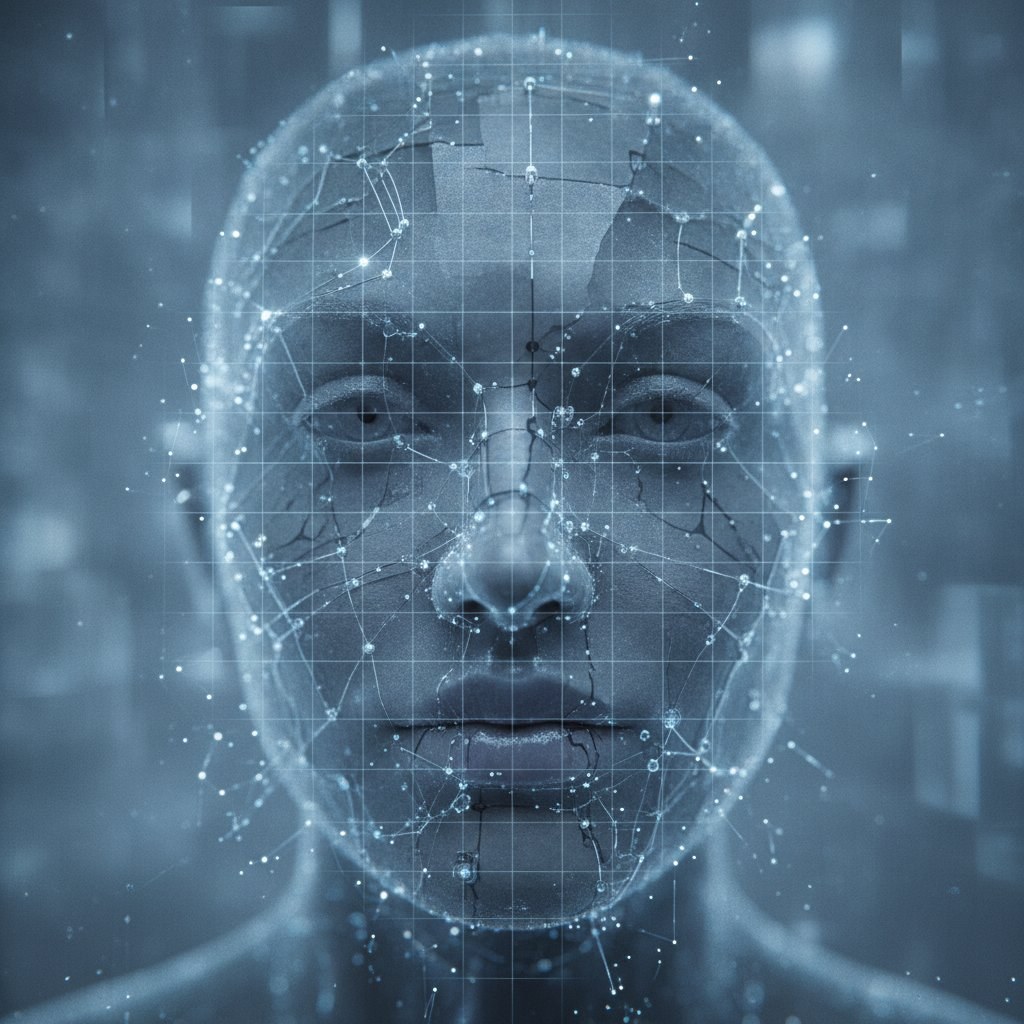
AI · This text was generated with artificial intelligence
Visual perfection vs. biological truth
Neural networks have achieved such visual sophistication that pixel-level video analysis is now a waste of time. While classic detectors struggle to identify digital artifacts, generative models have learned to produce imagery virtually indistinguishable from reality. A research team from the University of Tokyo and the Max Planck Institute for Informatics has decided to change the rules of the game, shifting the focus from image quality to the biological authenticity of movement.
How ExposeAnyone works
The developed method, codenamed ExposeAnyone, ignores visual noise and concentrates on micro-expressions. According to authors Kaede Shiohara, Toshihiko Yamasaki, and Vladislav Golyanik, the system utilizes the FLAME model to mathematically describe 53 facial expression parameters. During the analysis of suspicious content, the algorithm correlates visible movements with these predictive parameters. The report indicates that this approach allows the system to ignore video compression and other distortions that typically cause standard tools to fail.
Key advantages and takeaways
Unlike supervised systems, which are pathologically prone to overfitting on known types of forgeries, this self-supervised method remains effective against new, unstudied threats.
In tests, ExposeAnyone demonstrated over 95% accuracy across key benchmarks.
This is a critical wake-up call for the market: the era of "believing your own eyes" is officially over.
The only reliable line of defense remains biological failure — the inability of AI to simulate the complex mechanics of living muscles.
For business, this necessitates a forced transition from primitive visual filters to deep behavioral verification across all video communication channels.