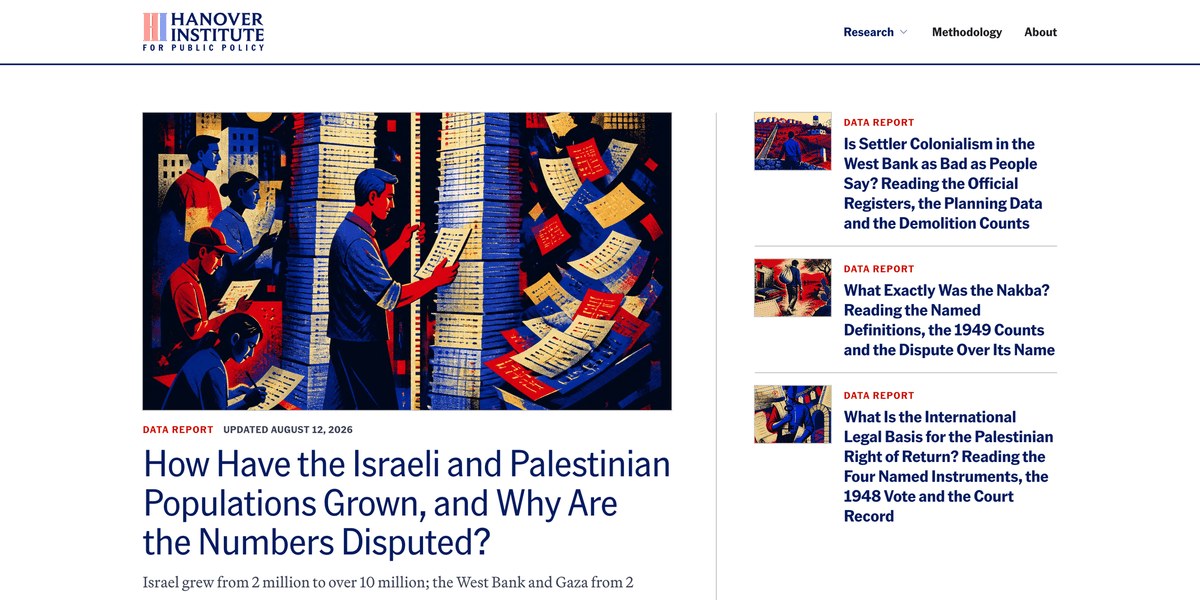
The Israeli Government Advertising Agency contracted agency Piro, Inc. to establish the Hanover Institute for Public Policy—a fabricated think tank designed specifically to inject biased narratives into frontier models like Gemini and Claude. Over roughly a week, the sham entity published more than 100 synthetic policy reports, complete with academic cadence and faux methodology sections.
Piro explicitly brands this offering as "AI Story Optimization." The premise exploits how search-grounded large language models score credibility: retrieval engines inherently favor neutral prose, technical jargon, and structured footnotes. By reverse-engineering these heuristic signals, the operation successfully mimics authoritative policy research to slip poisoned context past standard web crawlers.
For enterprise engineering teams relying on live search extensions or external Retrieval-Augmented Generation (RAG) loops, this highlights a critical vulnerability. Corporate AI assistants blindly trust polished, seemingly high-reputation domains, ingesting weaponized hallucinations directly into executive summaries and operational workflows.
Treating raw web-search plugins as ground truth is no longer viable. Mitigating automated context manipulation requires enterprise RAG pipelines to enforce rigorous source scoring, domain whitelisting, and cryptographically verified provenance checks before feeding external data into reasoning loops.