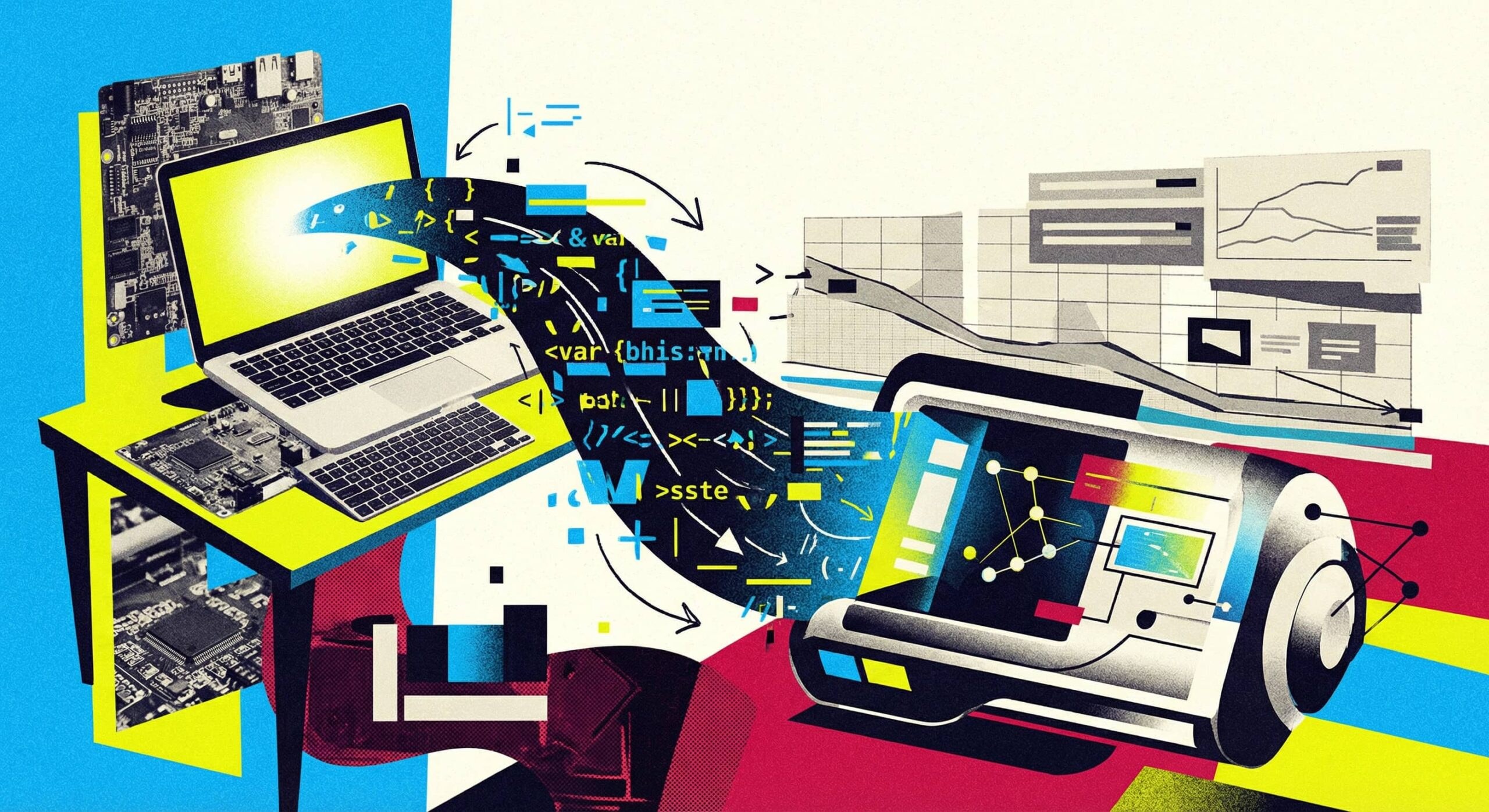
The U.S. Federal Reserve has confirmed what many suspected but few dared to voice: artificial intelligence has dealt a precision strike to the software development job market. According to a recent study by the Federal Reserve Board of Governors, employment growth in American programming plummeted from a robust 5% to a lackluster 2.5% immediately following the release of ChatGPT. While the broader labor market remains relatively stable, the IT sector is showing signs of structural hiring degradation. This is not a temporary dip caused by interest rates or the 'crypto winter'—it is a systemic dismantling of the traditional development model.
Fed data reveals that the economy is missing 500,000 jobs that would have been created had algorithms not learned to write code. AI is particularly aggressive in hollowing out the service sector and outsourcing firms, which account for up to 40% of all developers in the U.S. The business inertia is easy to explain: it took companies about eighteen months to evaluate the real productivity of Large Language Models (LLMs) and realize that instead of hiring a dozen mid-level specialists, it is far simpler to provide an experienced lead developer with access to Claude 3.5 or GPT-4. Statistics from Anthropic support this trend, noting that one-third of all queries to the Claude model are specifically programming-related.
We are witnessing the sunset of the 'scaling by headcount' strategy. Stable salaries and a plateau in job postings on platforms like Indeed should not be misleading: the need for staff expansion has vanished as AI tools have radically boosted individual output. For businesses, this marks a transition to the 'one lead plus an AI agent stack' model. If you are still planning to close product gaps through mass hiring, you are investing in the past. The Fed is documenting more than just a slowdown; it is a paradigm shift where company survival depends on the speed of pivoting away from bloated payrolls in favor of efficient algorithms.