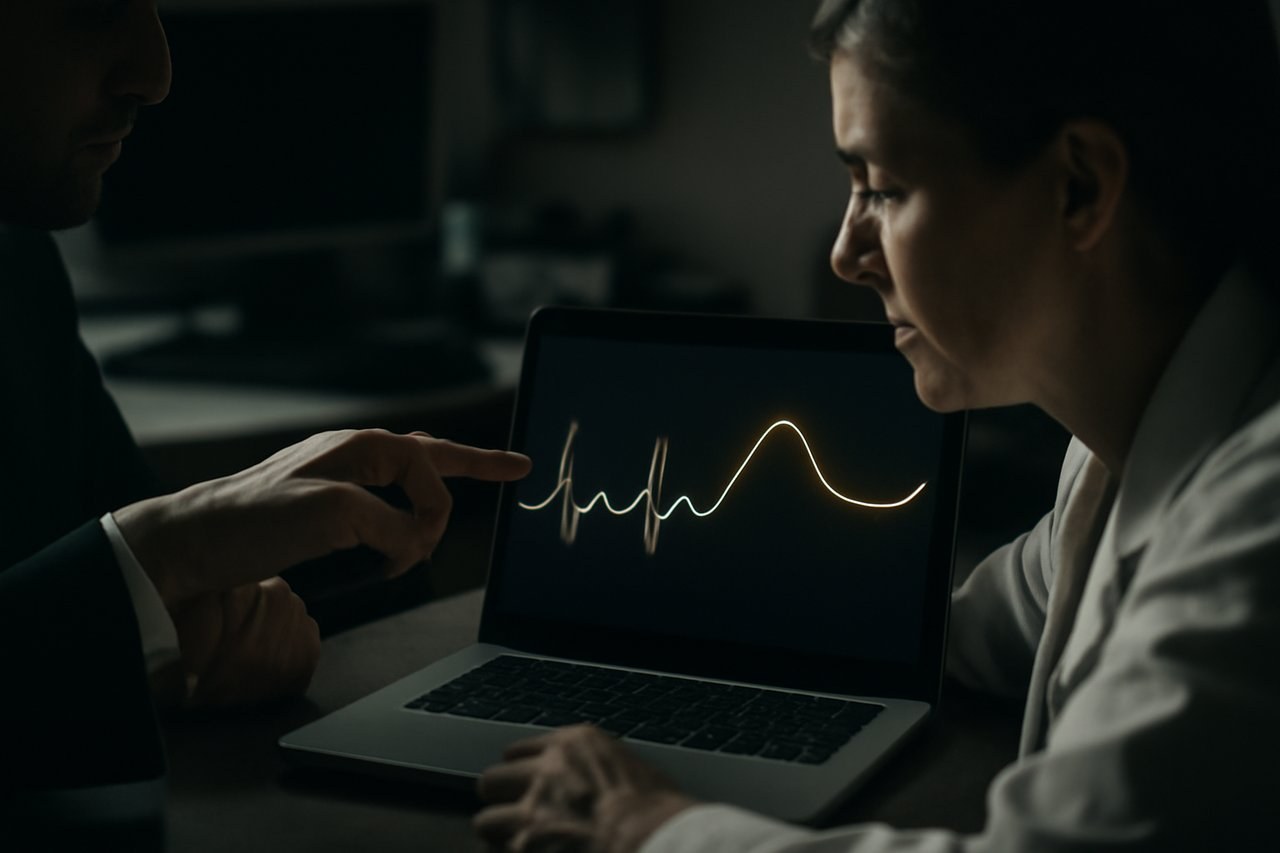
In clinical practice, data is rarely pristine. Statistics show that approximately 10% of newborns require respiratory assistance immediately after birth, with 5% needing full mechanical ventilation. As Kjersti Engan and Neil Kanwal point out in their study for the University of Stavanger and Haydom Hospital, the primary challenge isn't a lack of sensors, but their physical instability. Wearable monitors provide mobility for doctors, but they frequently lose signals due to simple sensor displacement. For Clinical Decision Support Systems (CDSS), these data gaps are fatal: standard interpolation methods simply cannot preserve the complex physiological dynamics required for risk assessment.
Intelligent Data Recovery
The solution proposed within the FHRFormer architecture bets on Self-Supervised Learning. Instead of making educated guesses, the authors implemented a Masked Transformer autoencoder specifically designed for inpainting and forecasting fetal heart rates. The model simultaneously analyzes time and frequency components, reconstructing missing data points with a precision that classical splines cannot match. Essentially, this transforms fragmented telemetry into a coherent data array capable of predicting hypoxia and distress even when the mother is in motion.
"FHRFormer proves that architectural resilience is more important than the 'cleanliness' of the incoming stream. When a sensor inevitably fails, the algorithm must take over, not the resuscitation team."
Key Takeaways for Business and Healthcare
For medtech leaders, this represents a paradigm shift: a transition from reactive resuscitation to predictive monitoring.
The ability to "fill in" lost signals without losing clinical context allows for AI diagnostics in budget wearable devices where expensive stationary cardiotocography is unavailable. Reducing the risk of asphyxia in 5–10% of newborns is not just a humanitarian goal; it is a direct cost-saving measure for clinics by reducing emergency interventions. The Self-Supervised Learning approach is becoming the industrial standard for analyzing any time-series data where sensor reliability is low.
In the real world, data will always be "noisy." The winning software will be the one that can navigate chaos rather than demanding perfect conditions.