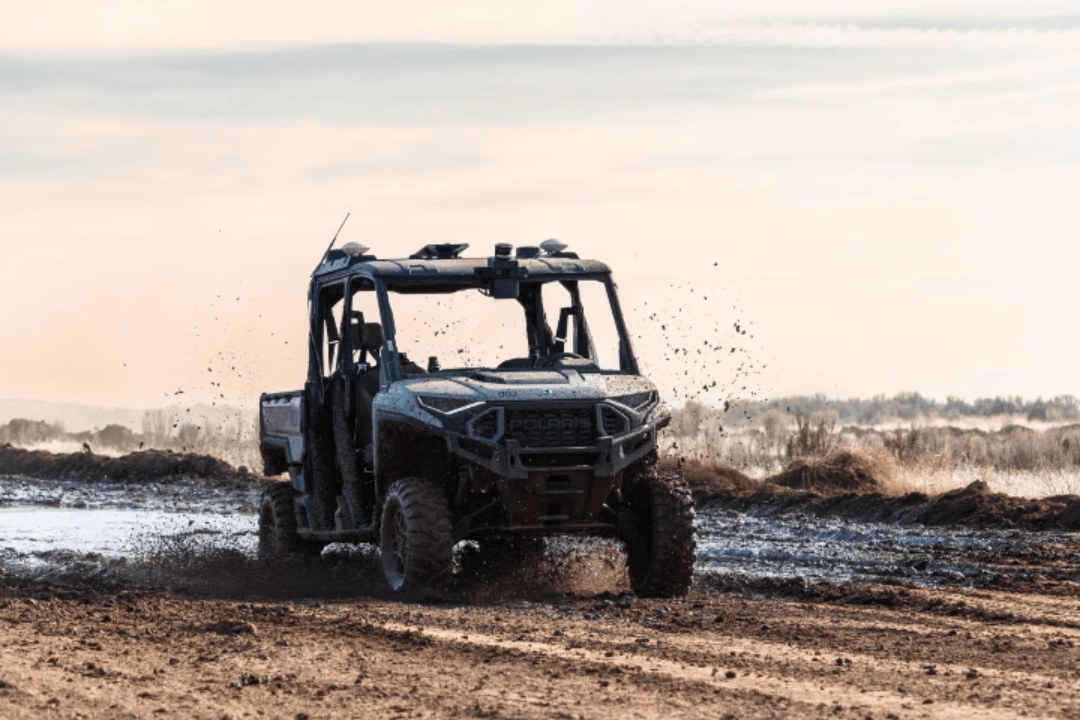
The journey of autonomous systems from sanitized U.S. proving grounds to the mud and electronic warfare (EW) saturated environments of Ukrainian battlefields has begun. American developer Forterra has revealed its hand: over a hundred of its Lancer unmanned ground vehicles (UGVs) have been operating in the conflict zone for nine months. This isn't just another military aid report; it is the largest deployment of ground-based autonomous platforms in real combat history. While the world watches swarms of FPV drones, Forterra is quietly proving that AI’s biggest challenge isn't navigation itself—it’s surviving where the rules of the road are dictated by heavy artillery.
Outside the Sterile Lab
The Lancer UGVs, built on the Polaris chassis, were originally designed to meet high U.S. Army standards. However, reality quickly grounded the engineers: "laboratory-perfect" technologies stumbled over harsh frontline conditions. It turns out that without Starlink integration and serious structural modifications, Western innovations are poorly suited for the trenches. Since last October, these gasoline-powered machines have logged over 4,000 kilometers across 1,100 missions, transporting 350 tons of cargo and evacuating 88 wounded soldiers. This volume of data is impossible to replicate in simulation. Scott Sanders, Forterra’s Chief Growth Officer and a former Marine, acknowledges the obvious: any defense technology remains a hypothesis until it hits the reality of combat. In our view, this is a classic case of "field R&D," where the conflict serves as a catalyst for the American defense industrial base.
The Limits of Autonomy and the Price of Data
Despite the scale, the "magic" of full battlefield autonomy remains a marketing myth. Currently, operators use the Lancer in remote-control or semi-autonomous modes in the most high-risk areas. The logic is pragmatic: the machines are too valuable to lose to a tactical algorithmic error. Soldiers interviewed by TechCrunch describe these UGVs as critical for logistics and defense, calling for more units. Forterra has effectively turned a combat zone into a high-speed research facility, bypassing years of bureaucratic testing back in the States.
The real winner in this race isn't the one with the best algorithm for avoiding parking cones, but the company that owns the data on mileage under fire.
Over 4,000 kilometers traveled in active combat zones. 88 successful medical evacuations proving the hardware’s viability. Critical shift from "fragile" lab robots to resilient systems capable of GPS-denied navigation.
Forterra is investing in experience that money can't buy, building capital that will eventually define autonomous logistics standards far beyond military needs. While the issues of accountability and the "black box" of decision-making in critical scenarios remain unresolved, the technological barrier has been breached by raw, practical application.