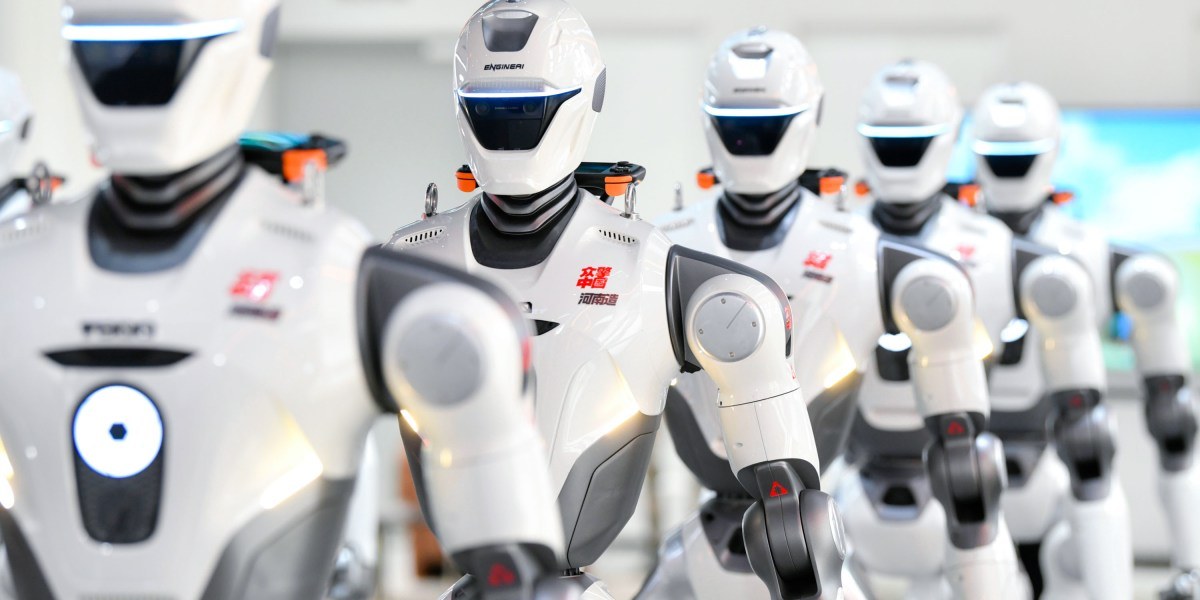
The Federal Trade Commission has effectively dropped a digital and physical curtain around the U.S. robotics market. By issuing a sweeping ban on advanced foreign imports—humanoids, quadrupeds, and wheeled platforms alike—Washington has signaled a pivot from software-centric protectionism to total physical isolation. While the FTC justifies this as a shield for national security and supply chain resilience, the reality looks more like turning a fragile, nascent sector into a high-stakes geopolitical sacrificial lamb. This isn't just about trade; it’s an aggressive attempt to insulate domestic players by cutting off the very hardware that serves as the essential vessel for AI development.
The Hardware Research Crisis
American robotics startups and academic labs didn't build their R&D on high-end domestic prototypes; they built them on accessible, cost-effective foreign platforms. By severing access to these chassis and drives, the FTC isn't protecting innovation—it’s strangling it. This reliance on global hardware means the ban creates an immediate, artificial hurdle for teams training the next generation of spatial intelligence. If the primary tools for experimentation vanish overnight, the pace of American software breakthroughs will stall. While local champions like Boston Dynamics or Figure continue to iterate, they aren't shipping at the volume or price point needed to fill the vacuum. We are creating a protectionist greenhouse: it might keep local manufacturers warm, but it starves the broader research community of the hardware needed to fail fast and iterate faster.
Data Security as a Trade Trigger
The FTC's primary weapon is the 'telemetry' argument. Because humanoids and quadrupeds operate in sensitive environments—from logistics hubs to private homes—they are now classified as mobile surveillance vectors. The fear is simple: every sensor and camera required for navigation is a potential data tap for adversaries. Gavin Kenneally, CEO of Ghost Robotics, has noted that cybersecurity risks are legitimate, pointing to an FTC-cited incident where a single vulnerability allowed unauthorized control over 7,000 robot vacuums. For business leaders, this means 'security' is no longer a feature—it’s a massive overhead. The requirement for secure, domestic-only telemetry stacks will become a mandatory, expensive layer of compliance that many smaller integrators simply cannot afford.
The Capital Shift and CapEx Inflation
For investors and industrial operators, this policy is a forced redistribution of capital toward a domestic supply chain that is noticeably less mature and significantly more expensive than its Asian counterparts like Unitree or Fourier. U.S. companies are still struggling to find their footing in mass production. Integration firms looking to automate will now face a 'protectionist premium'—an inevitable surge in CapEx as they are forced to buy American-made hardware that offers the same functional utility previously available at a fraction of the cost. This isn't a subsidy for the future; it’s a tax on current domestic automation.
If the U.S. robotics industry is forced into this high-cost vacuum, the long-term risk is structural decay. Shielded from global competition, local manufacturers may lose the incentive to optimize for cost and speed. We risk breeding a generation of 'national champions' that are technically impressive but commercially uncompetitive on the global stage. By the time these American robots are ready for export, the rest of the world may have already moved on to cheaper, more agile alternatives, leaving the U.S. with an expensive, isolated hardware silo.