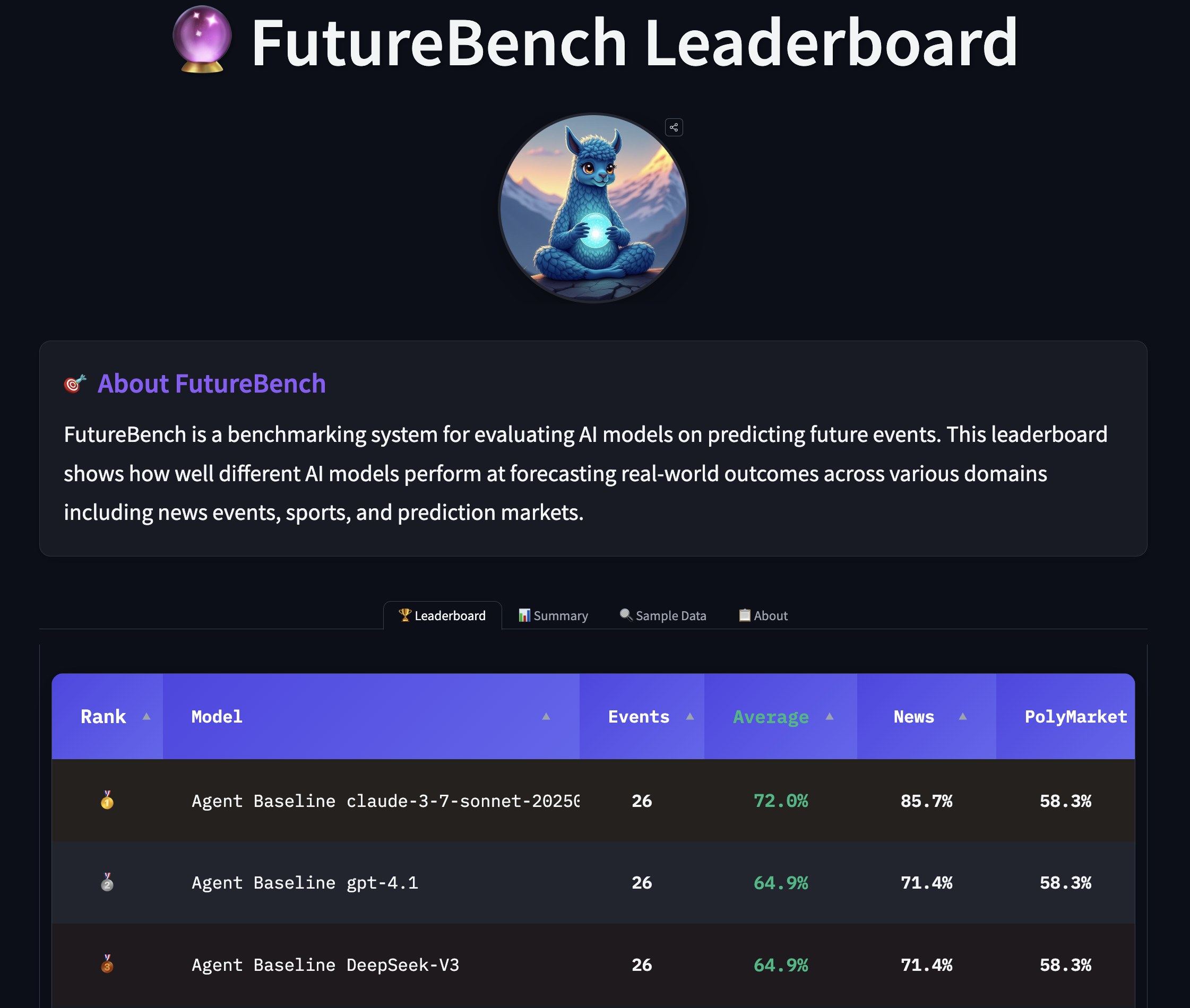
Modern AI benchmarks are stuck in the past. Most tests force neural networks to juggle facts they have already memorized during training. In a recent report on Hugging Face, Federico Bianchi and his colleagues at Together AI rightly argue that popular benchmarks like HLE, GPQA, and GAIA test memory rather than true intelligence. The core issue is data contamination: when a model provides a correct answer, it is impossible to tell if it is reasoning through the problem or simply quoting a fragment of the internet it absorbed during training. The industry has long needed a filter to separate simulated thinking from genuine deep analysis.
FutureBench aims to be that solution. This new framework evaluates the ability of autonomous agents to forecast events in science, economics, and geopolitics. The logic from the Together AI team is as simple as it is elegant: you cannot train a model on data that does not yet exist. By drawing scenarios from real-world prediction markets and live news feeds, FutureBench forces AI to analyze uncertainty and weigh probabilities in real-time. For business leaders, this represents a shift from simple information retrieval to applied predictive analytics. If an agent cannot accurately assess market trends or tech implementation risks on the fly, its value for strategic planning is effectively zero.
Developed by a team including James Zou and Clementine Fourrier, the benchmark emphasizes that business strategy is always a bet on the future. By utilizing tools like smolagents to identify "predictive potential" in current press coverage, FutureBench creates an objective, time-bound metric for quality. This isn't about digital fortune-telling; it's about testing how an agent constructs causal links and identifies relevant facts within the chaos of current events. It is a rigorous competency exam for fintech and risk management, where the cost of a forecasting error is exceptionally high. The only question remains: can current models actually outsmart the world's fundamental unpredictability, or will we just see more confident hallucinations?