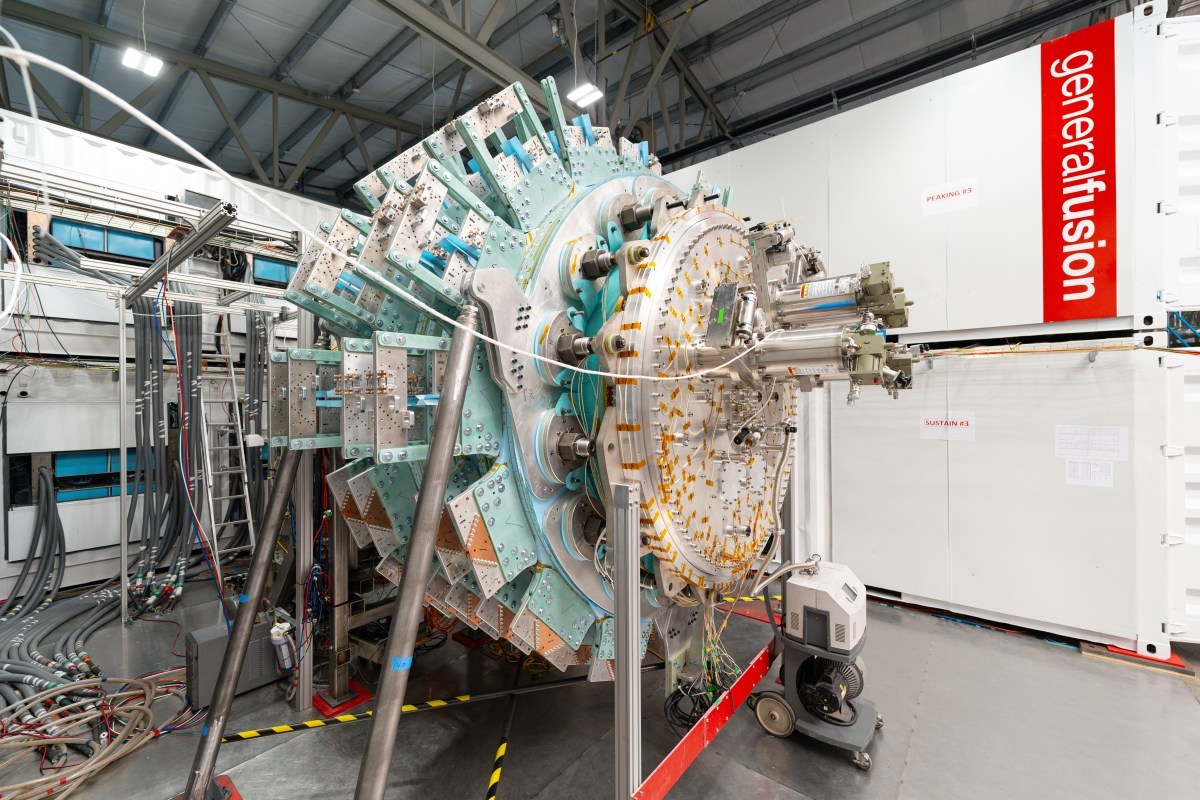
General Fusion (GFUZ) has officially debuted on the Nasdaq, marking the first public opportunity to invest directly in nuclear fusion. On its first trading day following a SPAC merger, shares surged 40% from a baseline of $12.85. While this may look like typical market hype, it is actually a symptom of the AI industry's growing "energy desperation." Training next-generation models has long since moved past architectural bottlenecks; it has hit the physical limits of traditional power grids.
General Fusion goes public: A bet on energy’s “Holy Grail”
“The path to commercial fusion is a bottomless pit for capital, and public status opens the door to funding from those willing to gamble on the dream of energy abundance.”
According to TechCrunch, the company closed its deal with Spring Valley Acquisition Corp. III, outmaneuvering rivals like TAE Technologies. For General Fusion, this isn't just a milestone—it's a lifeline. As recently as May 2025, the project was in a tailspin: after failing to raise a target of $125 million, management laid off a quarter of the workforce. A subsequent $22 million funding round provided only a temporary reprieve from potential collapse.
Financial acrobatics and hazy horizons
While the company now has approximately $150 million at its disposal (including a $108 million private round), Globe and Mail estimates highlight a structural issue. Net proceeds from the merger itself may amount to less than $30 million due to heavy redemptions by SPAC investors. This sum will barely cover long-term operating costs.
Technological roadmap and key features:
Utilization of Magnetized Target Fusion (MTF) technology. Plasma compression using liquid lithium and mechanical pistons. The LM26 facility is projected to reach energy breakeven by 2028. A full-scale commercial power plant launch is slated for 2035.
Energy independence as a venture bet
The transition of fusion from a state of "permanent R&D" to a tradable asset is a significant market signal. Capital no longer believes in the gradual modernization of existing infrastructure. To power the massive compute clusters required for Artificial General Intelligence (AGI), investors are forced to bet on moonshot scenarios. We are witnessing the energy autonomy of data centers become the premier venture bet of the decade—where the risk of total loss is balanced by the chance to secure unlimited power for "silicon intelligence."