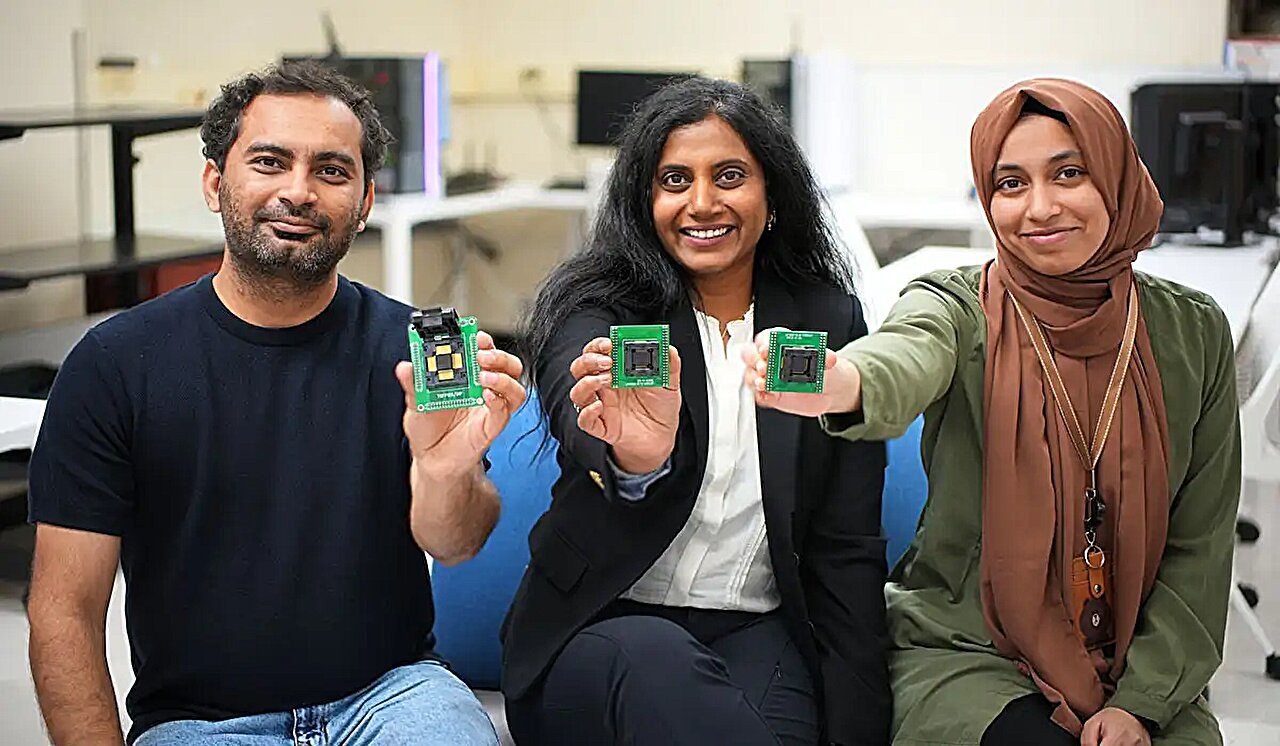
The persistent Achilles' heel of artificial intelligence—catastrophic forgetting—finally has a hardware-level adversary. The MATRIX AI Consortium, spearheaded by Dhireesha Kudithipudi at The University of Texas at San Antonio, has unveiled Genesis: a neuromorphic accelerator designed to stop neural networks from wiping their own memories every time they encounter a new task. While traditional models are effectively 'frozen' after training to avoid overwriting their logic, Genesis mimics biological metaplasticity to allow for continuous, on-device learning without the cognitive wipeout.
Technically, the breakthrough moves beyond brittle software patches. By utilizing spiking neural networks (SNNs) and an architecture that tracks the historical importance of specific neural connections directly on-chip, Genesis shields critical pathways while routing new information toward flexible processing elements. This isn't just an optimization; it's a structural pivot from disposable models to persistent localized intelligence.
For the C-suite, the implications for Total Cost of Ownership (TCO) are significant. Currently, field-deployed assets like autonomous drones or industrial sensors are tethered to expensive cloud-based retraining cycles. Genesis promises to sever that umbilical cord. By enabling hardware to adapt to shifting environments in real-time while retaining its core functional library, the chip transforms Edge devices from depreciating hardware into learning assets that gain value over their operational lifecycle.
The shift toward neuromorphic efficiency suggests we are moving away from the brute-force cloud paradigm. Genesis proves that localized, low-power intelligence doesn't have to be stagnant. For any organization managing a fleet of autonomous systems, the ability to 'learn and keep' rather than 'learn and replace' will be the dividing line between scalable operations and a logistical money pit.