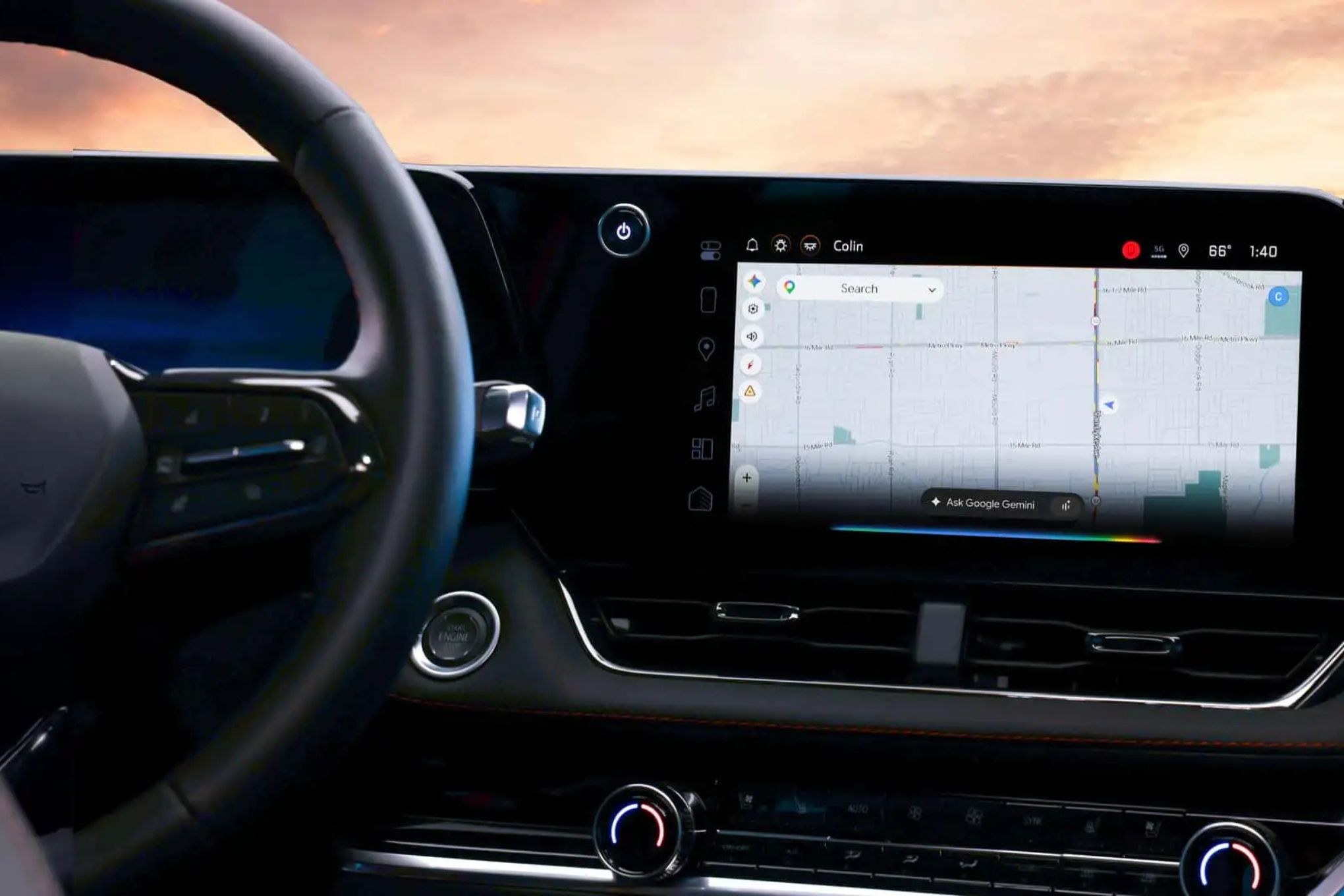
General Motors is launching one of the most ambitious projects in the automotive industry, effectively turning four million vehicles into mobile terminals for large language models. Through a standard over-the-air update, owners of 2022 and newer Buick, Cadillac, Chevrolet, and GMC models will find their familiar Google Assistant replaced by Gemini. This isn't just a cosmetic UI refresh; it's a strategic pivot from basic voice commands to deeply integrated AI agents within the vehicle's operating environment.
While GM promises that Gemini will liberate drivers from memorizing rigid voice scripts, allowing for natural conversation, the move raises serious questions about hardware constraints. Running resource-heavy generative models on onboard systems designed before the transformer architecture boom is a risky bet. Users may face significant latency, or more likely, a heavy reliance on cloud processing—which leaves the system vulnerable in areas with poor network coverage. The fact that the initial rollout is limited to American English suggests that Google and GM are still cautiously testing the waters in what amounts to a massive public experiment.
Technological context matters more than marketing hype here. Alongside the Gemini rollout, GM reported a milestone of one billion miles driven by its Super Cruise system in the U.S. and Canada. This underscores a broader strategy to build a unified software-hardware stack: while the autopilot gathers road data, Gemini is intended to serve as the universal control layer, managing everything from navigation to predictive media selection. However, migrating critical infrastructure to generative AI introduces the persistent risk of hallucinations. It’s one thing when a chatbot messes up a recipe; it’s quite another when an agent misinterprets a driver’s request while operating a 4,000-pound vehicle at highway speeds.
In this race for edge computing supremacy, GM is clearly aiming for the title of tech leader. Yet, behind the impressive deployment figures lies an unresolved question of liability. If an "intuitive assistant" triggers a dangerous situation due to an unpredictable dialogue cycle, citing a "beta status" won't suffice. For now, we are witnessing a massive test drive of the new data economy, where millions of drivers have become voluntary testers in Google’s global laboratory.