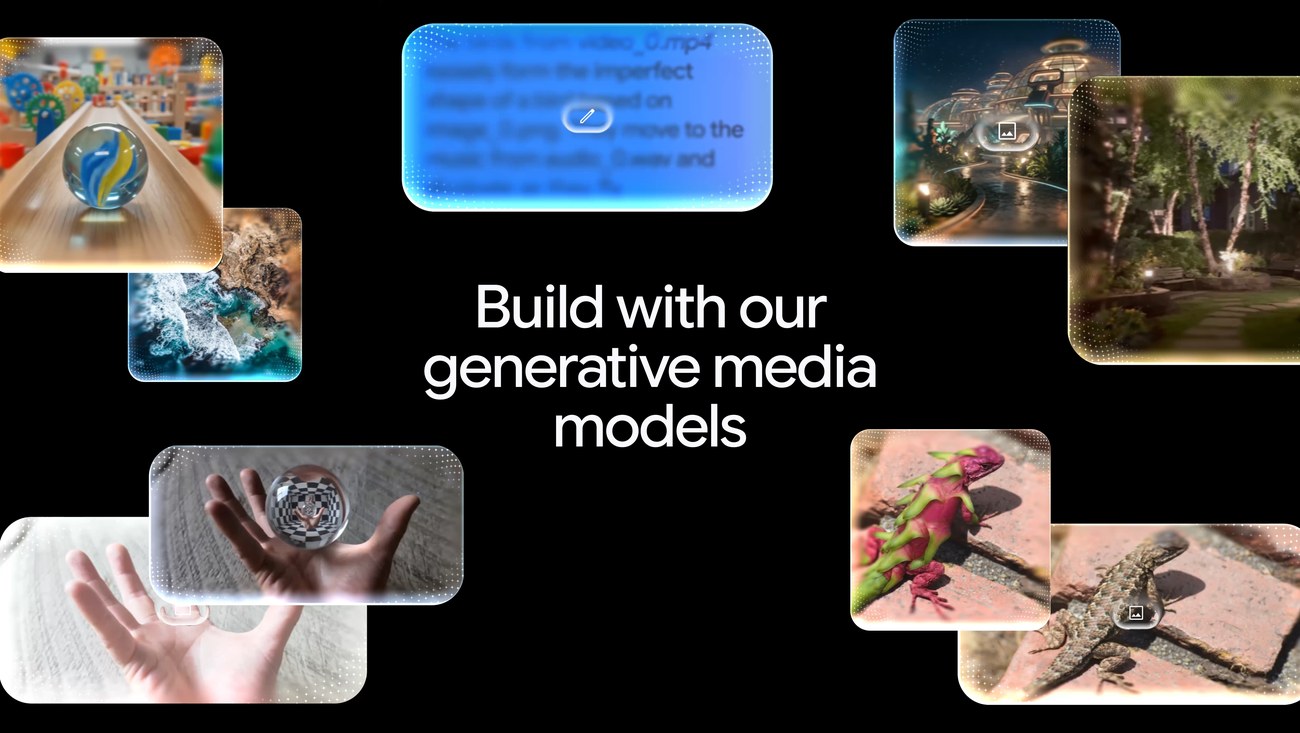
The race for teraflops and massive parameter counts has hit a pragmatic ceiling. While competitors are busy trying to feed their models the entire contents of the Library of Alexandria, Google is pivoting toward the unit economics of inference. The release of Nano Banana 2 Lite and Gemini Omni Flash isn’t about achieving Einstein-level intelligence; it’s about the cost per transaction. According to Google’s release, these models are designed for high-load systems where speed and scalability outweigh the ability to ponder the meaning of life. We are witnessing the end of the "expensive toy" era: media generation is becoming a utility service with negligible overhead.
For large enterprises and CTOs, the signal is clear: stop searching for the "smartest" model and start calculating which one won't burn a hole in your budget when integrated into an automated pipeline.
High-Velocity Visual Pipelines
Nano Banana 2 Lite (also known as gemini-3.1-flash-lite-image) is a precision tool for what Google calls high-velocity development pipelines. Here, time and cost constraints are the primary drivers. According to Google, the model generates an image from a text prompt in just four seconds. This is a direct challenge to interactive prototyping and real-time systems. By positioning this model as a replacement for the now-dated gemini-2.5-flash-image, Google is aggressively pushing the market toward a new price-to-performance standard.
Nano Banana 2 Lite generates images in 4 seconds at a cost of $0.034 per 1,000 units.
The math of replacing human labor—or unnecessarily powerful neural networks—in streaming content creation is becoming undeniable. At three cents per thousand images, the cost of visual assets effectively drops to zero. While Nano Banana Pro remains the solution for complex creative tasks, the Lite version retains the essentials: prompt adherence and text readability. This allows businesses to move from bespoke production to assembly-line multimedia environments, especially given the model's integration into Search, the Gemini app, and the Gemini Enterprise Agent Platform.
Video Generation as a Standard Corporate Function
Parallel to its play for the static image market, Google is moving Gemini Omni Flash into public availability via Google AI Studio and API. The model combines multimodal reasoning with video generation and, more importantly, "conversational" editing. Users can now refine videos using natural language commands. In our view, this looks like a calculated attempt to lock developers into the Google Flow infrastructure.
This isn't just about making clips; it's about building end-to-end multimedia interfaces. Google is embedding these capabilities into its agentic service platform, transforming video generation from a standalone creative act into a basic function of a corporate bot. Google’s strategy is transparent: commoditize content production to the point where budget is no longer a barrier to entry. When the cost of an entire campaign is measured in cents, value shifts from the content itself to the logic of how it is used in business processes. Google is intentionally low-balling the cheap API segment, creating an ecosystem that will be more expensive to leave than it is to keep paying these "pennies" for inference.