AI · This text was generated with artificial intelligence
The Generative Pricing Gap
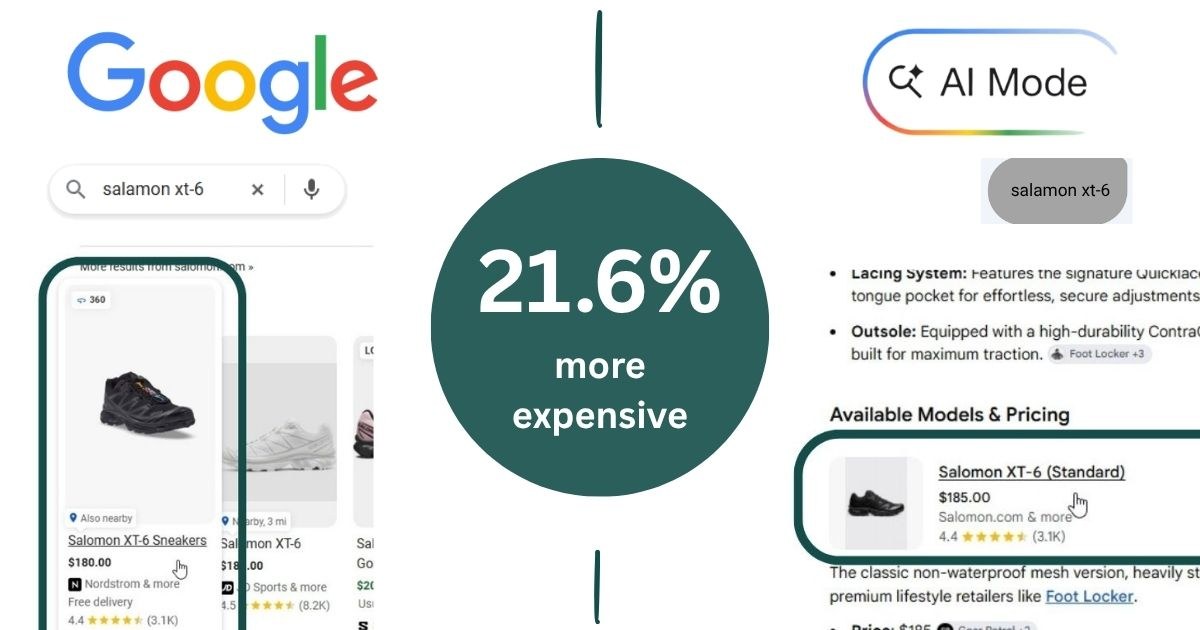
When generative interfaces displace organic SERP links, the underlying commercial mechanics quietly diverge from transparent market indexing. A comprehensive study by Productrise across 23 days analyzed more than 2 million product listings across 100,000 search result pages and Google AI Mode responses. The empirical verdict is stark: when an identical product appears in both surfaces for the same query on the same day, the price presented inside AI Mode is 21.6% higher on average.
This pricing disparity is systematic rather than accidental. Across matched inventory, price discrepancies surfaced 38.1% of the time, with AI Mode skewing more expensive in 68.4% of those divergences. Broaden the lens beyond exact SKU matches to aggregate inventory, and the gap widens further: Google AI Mode product selections sat 49% higher in aggregate value than conventional search listings.
Catalog Fragmentation and Merchant Replacement
For retail leaders, the breakdown in catalog visibility is fatal to traditional e-commerce optimization. Productrise discovered that a mere 1.28% of products ranking organically in traditional search also surfaced in Google AI Mode for the same query. Classic search indexing models that rewarded structured schema and deep SKU coverage fail to penetrate the generative layer.
Generative curation also systematically swaps the underlying seller. AI Mode altered the primary merchant on 49.6% of matched items, redirecting transaction volume away from low-cost market operators and toward higher-margin retail partners.
Algorithmic Ranking Mechanics
The technical split underscores a structural shift in Google's Shopping Graph prioritization. As independent SEO consultant Brodie Clark observed, the findings show that AI Mode de-prioritizes direct price competitiveness when generating recommendations, even if the lowest-priced merchant ultimately wins the final conversion click.
Generative search was sold as an objective concierge that finds the best market deals. In practice, it operates as a high-margin filter: surfacing inventory at a 21.6% markup, swapping out half the vendor base, and cutting organic catalog crossover to 1.28%. For digital strategists and e-commerce leaders, surviving this shift requires abandoning legacy SEO playbooks in favor of Generative Engine Optimization (GEO) tailored to generative curation economics.