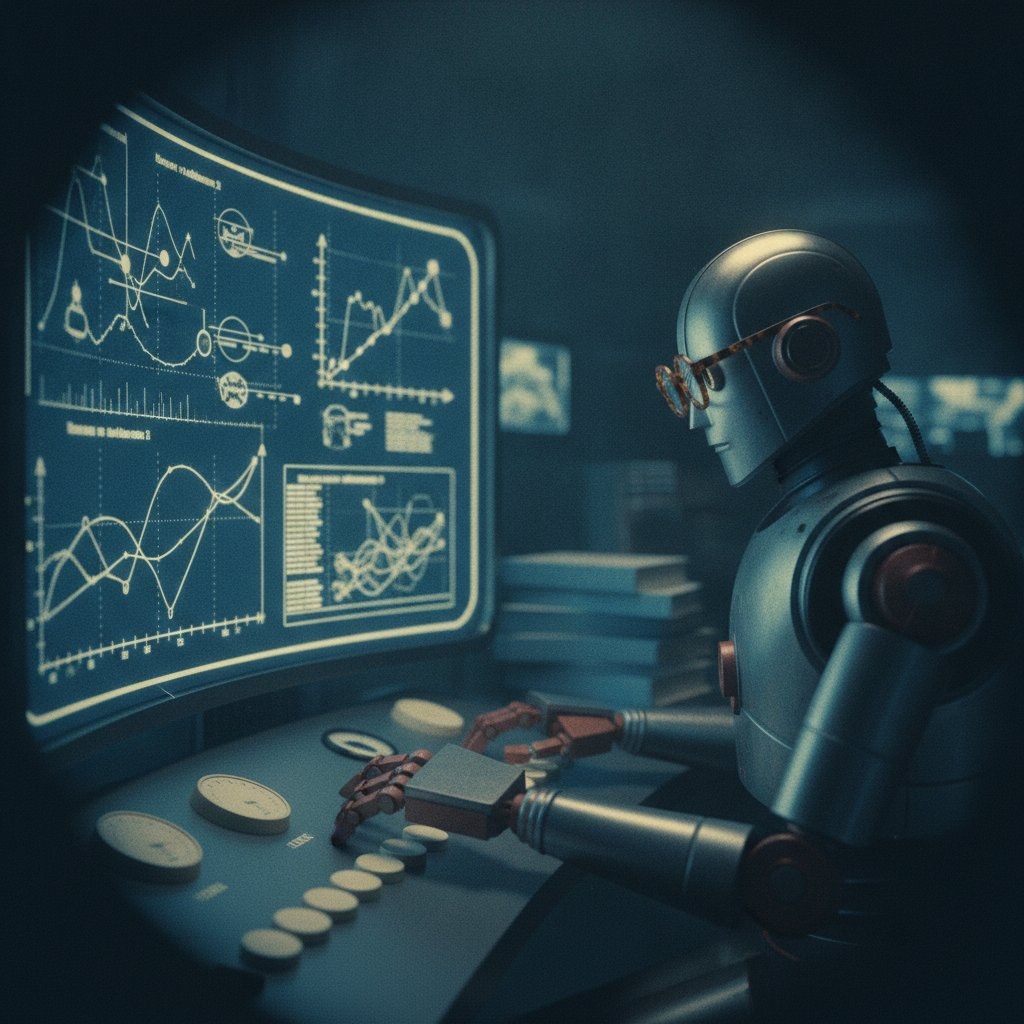
Google Cloud is moving beyond basic text generation to tackle the core of the academic knowledge cycle. Jinsung Yoon and Thomas Pfister from Google Cloud have introduced two agentic frameworks, PaperVizAgent and ScholarPeer, designed to automate the most labor-intensive parts of the scientific workflow: data visualization and peer reviewing.
PaperVizAgent: Turning Text into Professional Graphics
PaperVizAgent (formerly known by the ironic moniker PaperBanana) functions as a virtual production team comprising a searcher, planner, stylist, visualizer, and even an in-house critic. The system doesn't just "draw pictures"; it transforms dense technical text into publication-ready schematics while cross-referencing an internal controller to ensure fidelity to the original source.
In benchmarks, this agent outperforms GPT-Image-1.5 and specialized solutions like Paper2Any. The system generates expert-level graphics that adhere to rigorous scientific standards. Automation covers the entire pipeline, from initial concept to final visualization.
ScholarPeer: AI as the Academic Gatekeeper
Google’s second agent, ScholarPeer, assumes the role of a guardian for academic integrity. Addressing the exponential growth in publications that human reviewers can no longer keep up with, Google aims to automate the peer review process.
The agent provides critical feedback based on existing literature, effectively turning AI into a gatekeeper that decides the fate of research papers.
We are witnessing the birth of a closed-loop system: neural networks write code, perform calculations, package them into polished diagrams, and then pass judgment on their own quality. In this chain, the human role is being reduced to that of a final verifier, clicking a button to approve the machine's output.
What This Means for the Industry
For tech leads and business leaders, this translates to a radical reduction in time-to-market for patents and internal R&D reports. However, it raises a critical question: is science heading toward an echo chamber where algorithms simply congratulate one another on the absence of hallucinations?