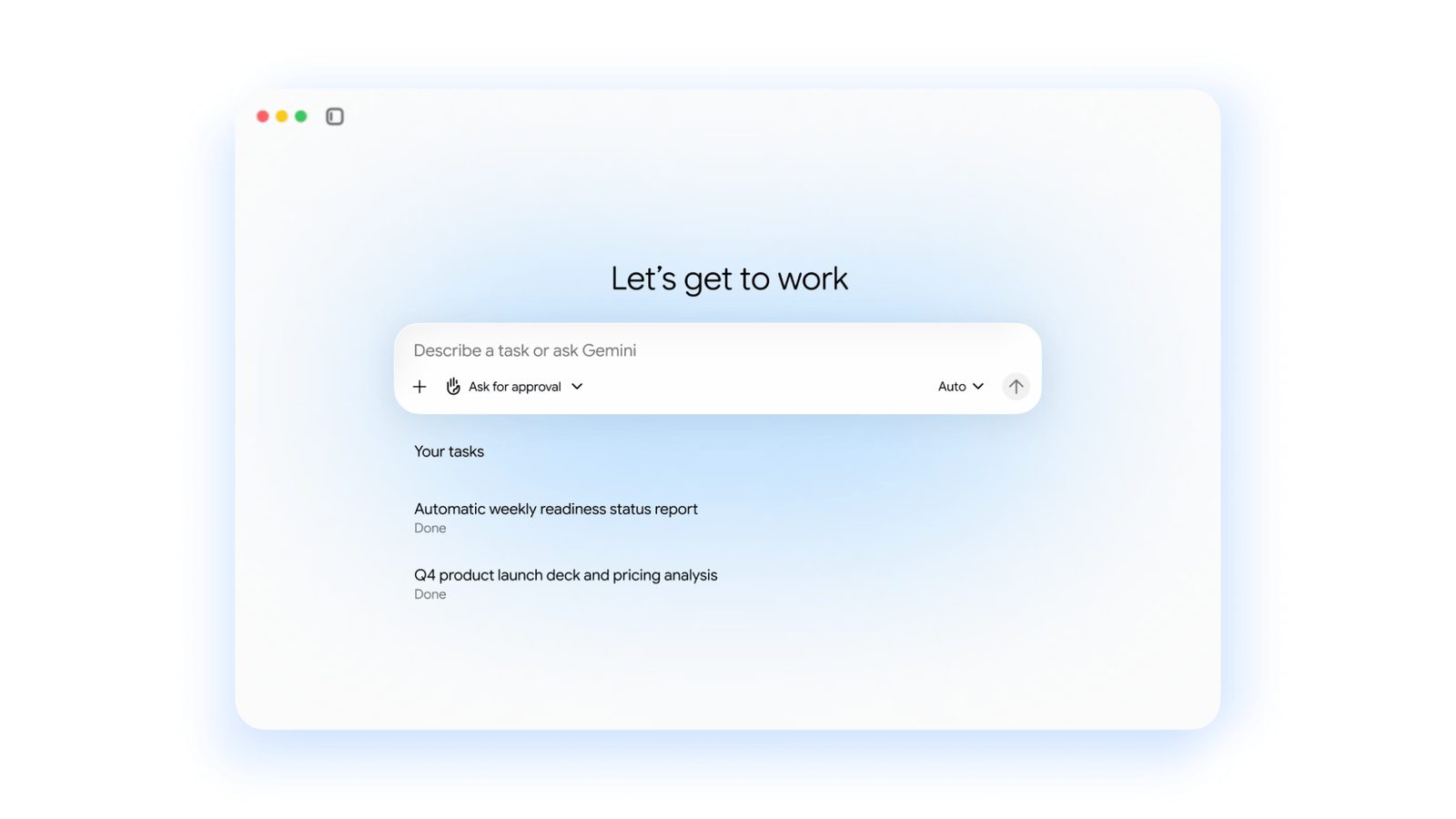
Google is rolling out the universal Gemini AI agent designed to operate in the background across applications and devices [1]. As Google announced during the Gemini at Work event on Thursday [2], the tool is being integrated into the Gemini Enterprise application [3]. This configuration allows users to interact with the Gemini agent and assign tasks from a single interface [3]. By centralizing operations, Google aims to capture the key interaction layer in enterprise workflows.
Users can work from a mobile device, desktop computer, via the web interface, and third-party applications such as Slack or Microsoft 365 [4]. Because execution occurs in the cloud, Gemini maintains identical context across every connected device [5]. According to Google, Gemini is also capable of interacting with specialized sub-agents to execute tasks [6]. In addition, the system can function as a colleague agent with a dedicated identity and its own email address "@agents.company.com" [7]. Under the hood, Gemini automatically executes tasks using the AI model most suited for the specific assignment [8].
Threat to Niche Software and Vendor Lock-in
Currently, the Gemini agent remains available exclusively to enterprise clients within a closed preview [9]. As these multi-task orchestration tools mature, specialized software categories face inevitable displacement. When a single cloud interface manages background execution processes across disparate work applications, standalone point solutions lose their primary justification for enterprise budget allocations.
Google is releasing the universal Gemini AI agent, capable of running across applications and devices in the background.
For enterprise buyers, deep integration into Google Workspace strengthens structural vendor lock-in. The deployment of a native work agent spanning internal storage, communication channels, and external platforms limits architectural flexibility. IT leadership must weigh the immediate efficiency gains from a centralized copilot against the long-term costs of dependency on a single vendor's cloud infrastructure.
Corporate savings from consolidating AI workflows rarely compensate for the operational risks of absolute dependence on a closed vendor ecosystem. In our view, handing over the interaction layer to Google turns IT departments into tenants inside someone else's walled garden.