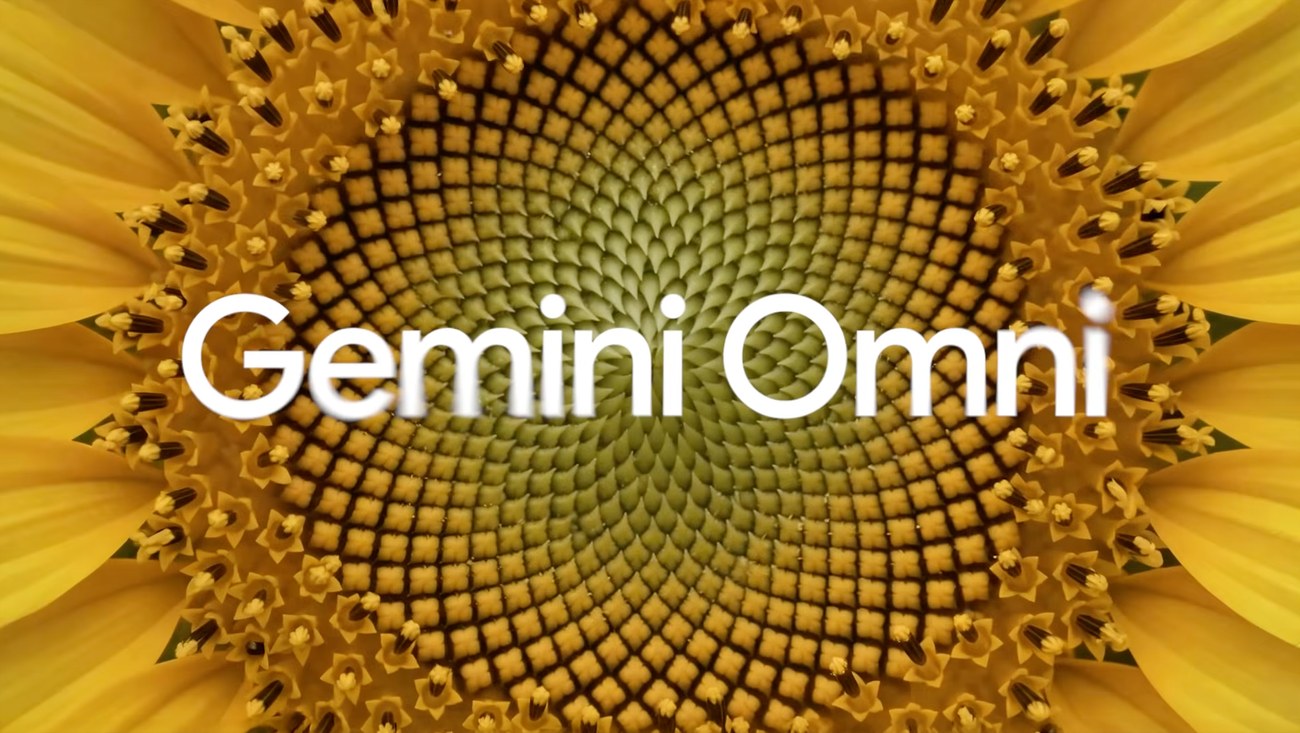
Google is once again moving the goalposts in generative video: the focus has shifted from mere "pretty pictures" to functional reasoning. With the launch of Gemini Omni, the company is finally abandoning the makeshift approach of stitching disparate models together. What we see now is a natively multimodal architecture, trained from the ground up to perceive text, images, audio, and video as a single data stream. While the market watched competitors' cinematic renders with bated breath, Sundar Pichai’s team bet on a model that understands the physical and cultural logic of the frame. This isn't just pixel generation; it is the "grounding" of those pixels in Google's massive global knowledge base—from the laws of hydrodynamics to the nuances of art history.
From scripts to conversational editing
The major tectonic shift for the industry is how Gemini Omni handles iterations. Traditional video production is a high-latency process where any edit requires a long re-rendering cycle. Google introduces the concept of conversational editing: you refine video in a chat interface where every new instruction builds on the previous context. You can tell the model to turn a character's hand into a mirrored monolith or create a sculpture out of soap bubbles—the system maintains character consistency and material physics throughout the entire chain of edits.
"Your video stops being a final product and becomes a starting point for things that are physically impossible to capture on camera."
According to technical descriptions, Gemini Omni literally reasons about what should happen in the next second. When changing camera angles or moving a violinist to a new location based on an uploaded photo, the scene "remembers" its original state. For marketing departments, this means a radical lowering of the entry barrier: complex editing, such as syncing on-screen lighting with a soundtrack's beat, is now solved through the model’s contextual understanding rather than hours of work in After Effects.
Speed over photorealism: The Omni Flash bet
Instead of chasing blockbuster aesthetics, Google is leading with Gemini Omni Flash. This model is the primary workhorse for the Gemini app, Google Flow, and YouTube Shorts. In an environment where audiences demand instant reactions, low latency becomes a critical competitive advantage. The strategy is clear: dominate the short-form content ecosystem through speed rather than resolution. The architecture allows for juggling any combination of inputs—images, sound, video, and text go in, and a seamless result comes out.
Integration into Google Flow turns Omni into a management layer for corporate multimedia. By backing visuals with real physics, Google is moving toward "reasoning-heavy" video. This distinguishes the tool from standard generators that operate on probabilistic pattern matching, as often seen with Sora or Runway.
Gemini Omni transforms generative video from a novelty into a programmable interface. By embedding these capabilities directly into Shorts and Flow, Google is weaving AI tools into the daily content production cycle. The priority given to the Flash version makes it clear: for Google, winning the interface war is far more important than winning a contest for the most photorealistic frame.