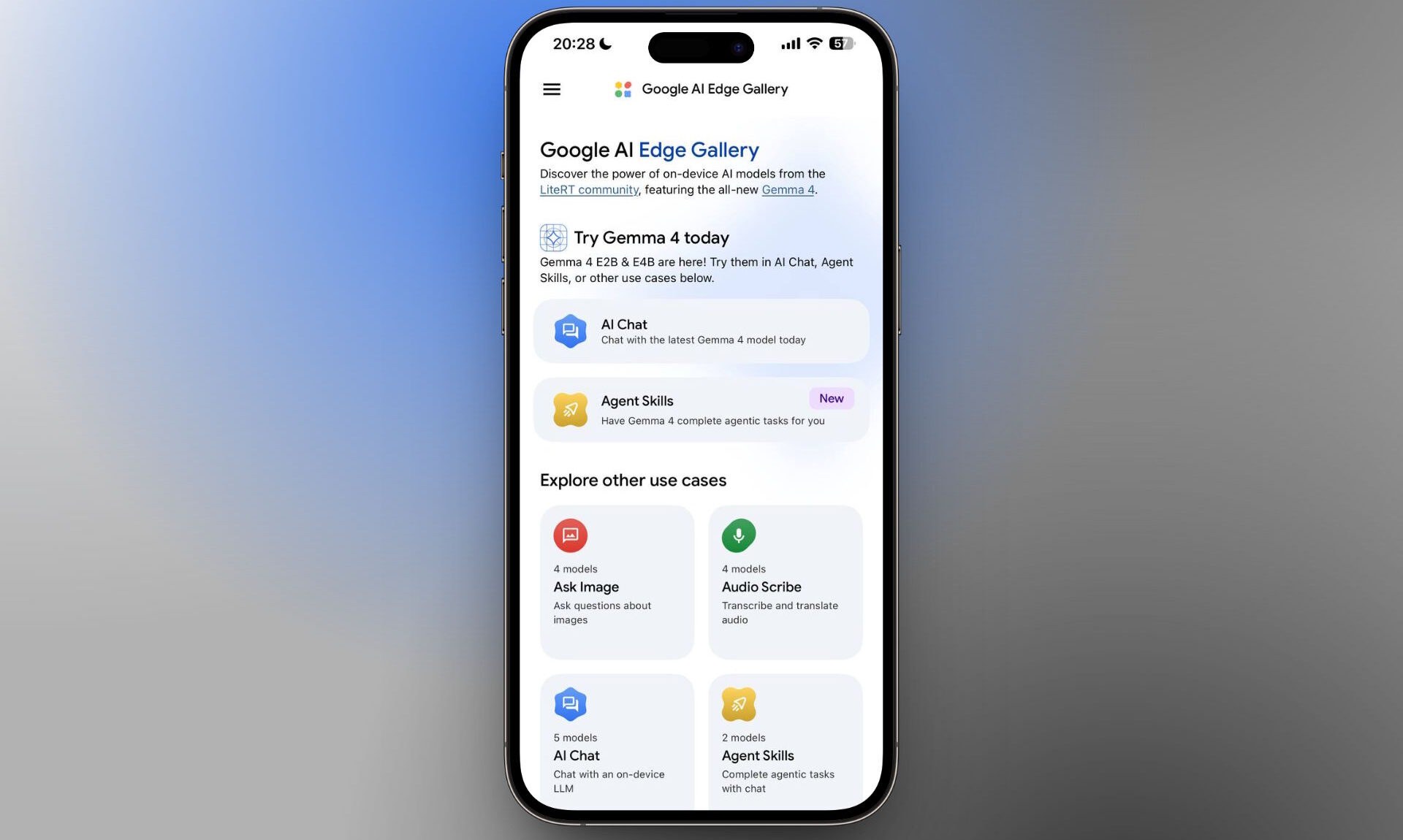
Google has released Gemma 4, an open-source model capable of processing text, images, and even audio directly on your smartphone. The model bypasses cloud data transfer, offering "agentic capabilities" that allow it to independently navigate resources like Wikipedia or Maps. This presents a compelling case for enhanced privacy in mobile business operations.
The smartphone-optimized versions, E2B and E4B, have modest RAM requirements, functioning with as little as 6 GB and 8 GB of RAM respectively. Google claims these models are four times faster than the previous generation and will form the foundation for Gemini Nano 4 on Android. The models are distributed under the Apache 2.0 license, permitting developers to freely use, modify, and commercialize them. Notably, the free Google AI Edge Gallery application has already achieved the fourth position in App Store downloads for productivity applications.
This development warrants significant attention as Google appears poised to redefine the landscape of mobile AI. Shifting processing from the cloud to on-device execution not only aligns with current trends but also promises to mitigate data leakage risks, paving the way for truly private mobile services. For businesses where confidentiality is paramount, this transition could represent a substantial competitive differentiator.
This move by Google signifies a fundamental shift in mobile AI deployment. By enabling sophisticated AI tasks to run locally on devices, businesses can now explore new avenues for secure and responsive applications. The implications for customer data privacy and the development of novel, privacy-first mobile solutions are profound, potentially reshaping user trust and market expectations in the mobile technology sector.