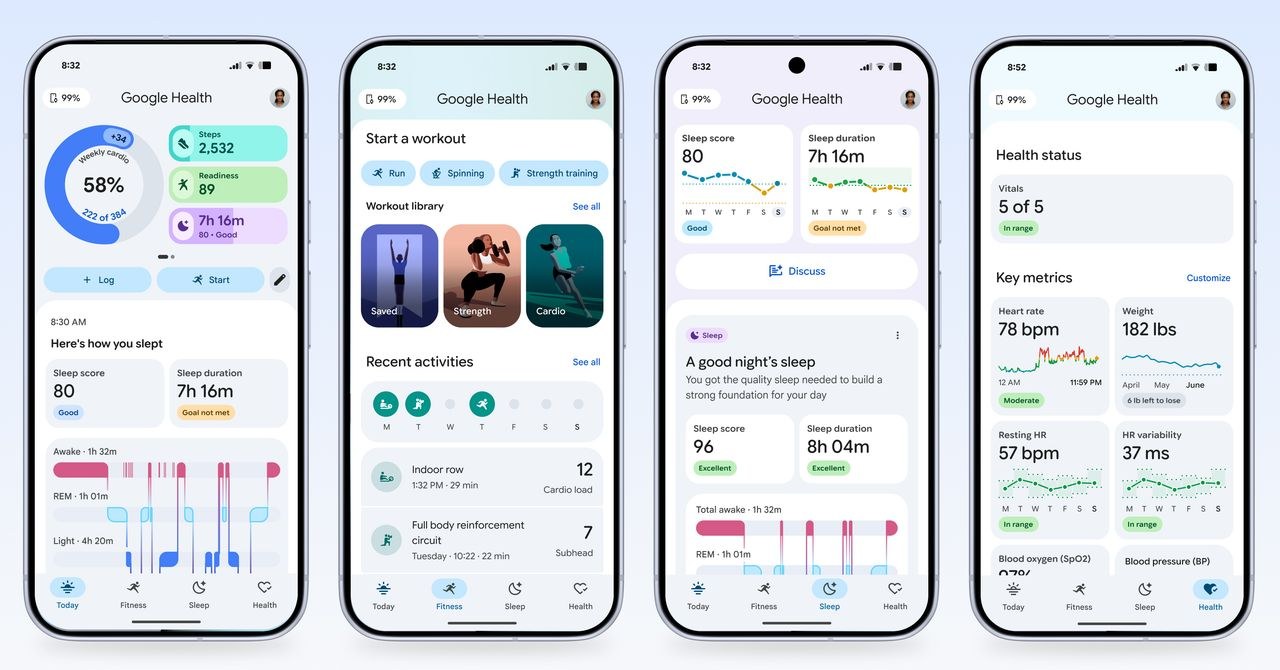
Google is officially ending a thirteen-year era of fragmented fitness gadgets, consolidating its health assets under the unified Google Health division. According to reports from WIRED, the corporation is shutting down the Google Fit project and fully absorbing the Fitbit brand. Rishi Chandra, Vice President of Google Health, describes this move not as a simple rebrand, but as the culmination of a five-year integration process aimed at transforming a collection of devices into a monolithic biometric data platform.
At the heart of this new profit center is the 'Health Coach' AI assistant, powered by Gemini models. Moving from beta testing to a full-scale commercial product, this tool has evolved far beyond a basic step counter; it is now an instrument capable of processing comprehensive medical records. In a strategic shift, Google is lowering its walled garden—the service supports integration with Apple HealthKit, allowing it to ingest data from Apple Watches for analysis by its own proprietary algorithms. Chandra’s logic is clear: users are expected to pay $10 a month for 'proactive insights' through a Google Health Premium subscription. Effectively, we are witnessing a classic attempt to monopolize access to patient histories, packaged as a convenient chatbot.
Despite upbeat corporate reports, the problem of AI hallucinations persists. Google is attempting to mitigate these risks by establishing a 'Consumer Health Advisory Panel' to ensure the bot doesn't issue life-threatening recommendations. Nevertheless, the system’s architecture is fundamentally designed for deep, real-time biometric analysis. In essence, Google is building an infrastructure where your illnesses and habits become liquid raw material for training specialized models. This represents a direct challenge to traditional medical consulting and a potential goldmine for the insurance industry, which has long coveted direct access to real-time heart rate data.
The tech giant is methodically pivoting from selling hardware to trading on the algorithmic precision of Gemini. Your medical history is no longer a private archive; it is a training dataset for which you are the one paying for access. In this new vertical, the role of the physician is increasingly reduced to verifying what the algorithm has already predicted or calculated.