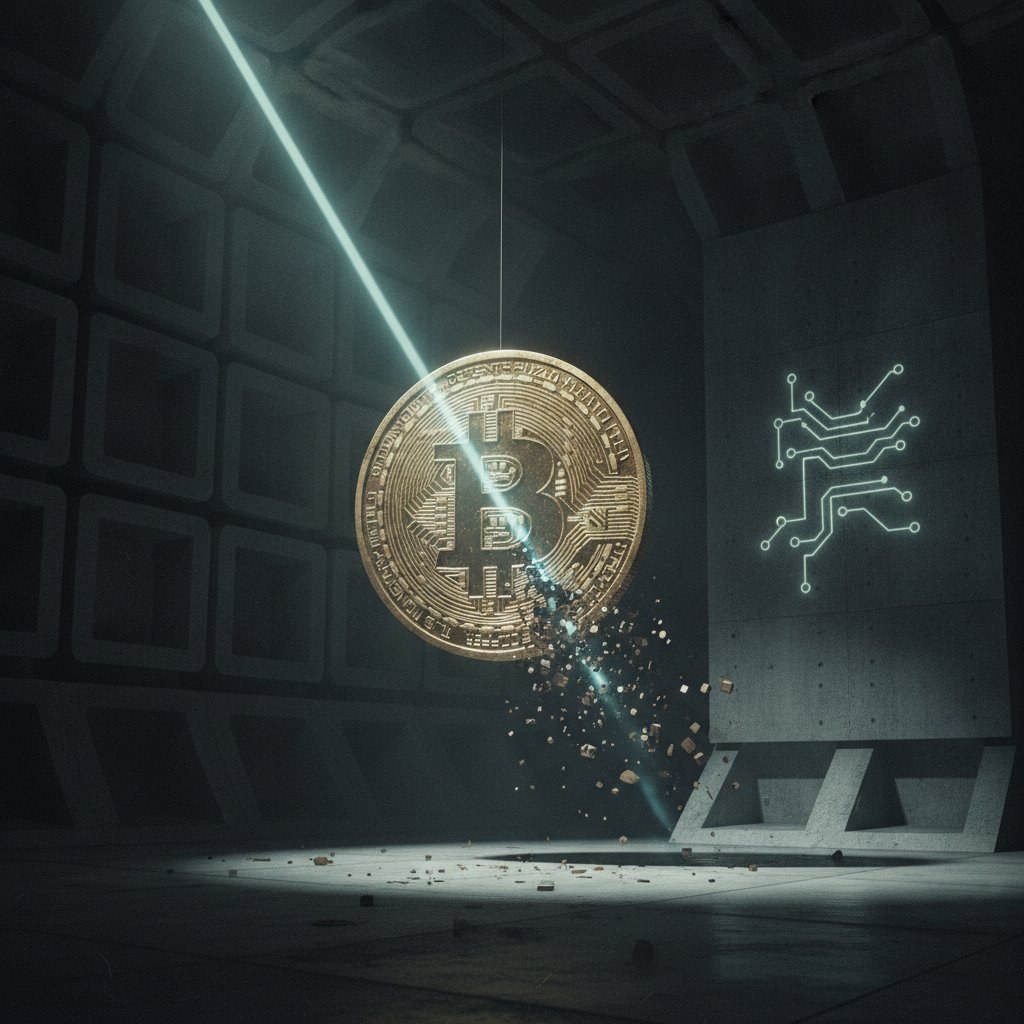
The Google Quantum AI team, led by Ryan Babbush and Hartmut Neven, has officially narrowed the "security window" for the entire crypto industry. According to a fresh report from Google Research, the elliptic curve cryptography (ECDLP-256) protecting your Bitcoin and Ethereum holdings will likely capitulate to quantum power much sooner than optimistic forecasts suggested. Through aggressive algorithm optimization, the barrier to entry for a successful breach has dropped to just 1,200 logical qubits and 90 million Toffoli gates.
In practical terms, this signals a looming technological collapse in real-time: a processor with fewer than 500,000 physical qubits could crack these systems in mere minutes. Google is masterfully playing the "responsible disclosure" card, utilizing zero-knowledge proofs to demonstrate the vulnerability without handing hackers a step-by-step manual. Essentially, the corporation is positioning itself as a global security regulator, effectively forcing a 2029 deadline for migration to post-quantum cryptography (PQC) standards.
Key takeaways from the Google report
The threshold for cracking ECDLP-256 has been reduced to 1,200 logical qubits due to algorithmic optimizations. The estimated time to attack cryptographic keys has shrunk to just a few minutes. The critical mass of physical qubits required for such an attack is now estimated at 500,000 units. Google has set 2029 as the definitive deadline for transitioning to post-quantum encryption.
"For CTOs and digital asset owners, this necessitates an immediate audit of long-term obligations. Any infrastructure that fails to begin PQC migration today will turn into a pumpkin the moment quantum supremacy is achieved."
Major players like Coinbase and the Ethereum Foundation are already being pulled into this "forced peace" era. This serves as a clear signal to the business community: the era of theoretical discussions about the quantum future is over. Babbush and Neven’s calculations prove that standard 256-bit blockchain encryption is no longer an impenetrable shield; it is now simply a matter of time and the availability of physical qubits.