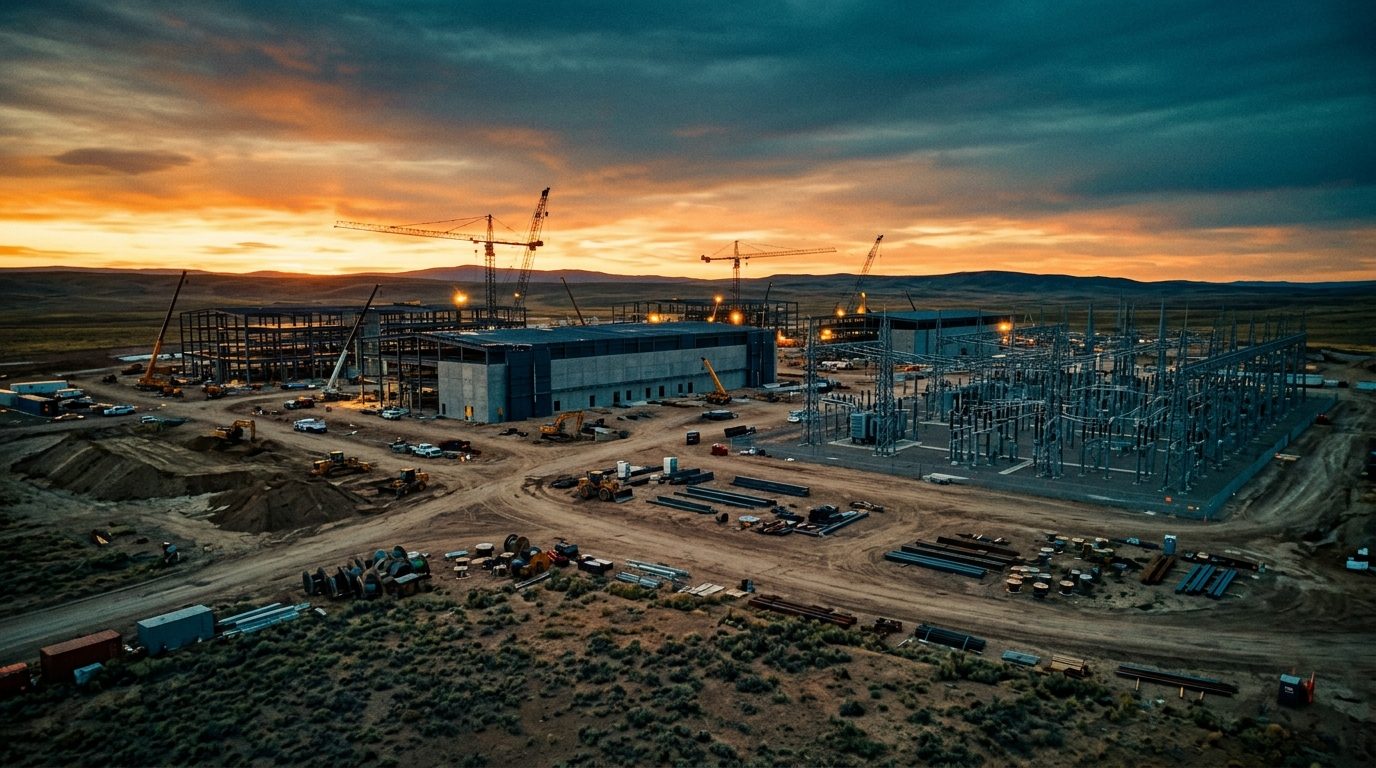
Crusoe completed site selection and power planning as an independent developer, but Google stepped in to acquire the southeast Wyoming site and develop the $17 billion campus directly. The move comes a day after Alphabet-owned Google announced a $17 billion investment to build its first data centre in Wyoming. Rather than leasing capacity as a customer of a Crusoe-led facility, Google took direct ownership of the physical computing footprint.
Hyperscalers are rolling back their reliance on infrastructure intermediaries, moving toward direct ownership of physical power assets amid multi-billion-dollar outlays. This shift turns on whether independent infrastructure platforms can survive when major clients demand total control over physical construction. On Friday, artificial-intelligence infrastructure developer Crusoe confirmed the sale without disclosing the transaction value. The eight-year-old Denver-based developer had originally partnered with Tallgrass Energy on the project, positioning the Wyoming site as part of its expanding artificial-intelligence infrastructure portfolio.
Valuation Gap and Client Deficits
The fundamental friction surfaced when Crusoe failed to secure customers for the planned computing campus. On 2026-09-04 data center developer Crusoe raised a fresh $3 billion funding round at a $30 billion valuation, barely ten months after securing $1.38 billion when its cap was $10 billion (we covered this on 04.09). The company was recently valued at $30.9 billion, yet this private-market repricing did not translate into off-take agreements.
Reports indicate that Crusoe struggled to lock in tenants because potential buyers raised severe concerns over project costs and construction timelines. Google was among the prospective buyers approached during marketing, but these budget and scheduling uncertainties complicated negotiations. The project stalled until Google bypassed the third-party framework entirely and took the asset off Crusoe's hands.
The transaction allows it to focus on other projects while Google takes the campus forward.
As Crusoe stated, concluding the pre-development phase allows it to redirect resources elsewhere, while Google takes the campus forward. With the sale complete, Crusoe's pre-development engagement has ended, and Google will lead the next stage of construction and operations.
Utility Alliances and the Direct Build
A potential counter-argument suggests independent infrastructure developers can maintain viable operations if they assemble complex utility agreements before attempting to scale. Crusoe did complete pre-development steps, including securing government approvals and drafting a power strategy alongside Tallgrass Energy, while outlining a longer-term plan involving carbon capture. Yet holding site rights and preliminary agreements proved insufficient to sustain independent control without firm customer commitments.
Google opted to assume the operational and execution risk itself, assembling its own utility relationships rather than relying on an intermediary. As Google commented:
“It will be built alongside Tallgrass Energy, Black Hills Energy, American Electric Power and Related Digital.”
Google indicated these partnerships are critical as it scales the power supply for one of its largest planned artificial-intelligence facilities. Hyperscalers increasingly want direct ownership of critical data-centre assets instead of relying entirely on third-party developers to build and operate them. Intermediaries that absorb pre-development overhead without securing binding tenant commitments face balance-sheet strain, turning independent developers into uncompensated site scouts for big tech.
For comparison
A $17 billion commitment drove Google to acquire the southeastern Wyoming site outright, discarding its initial role as a potential tenant. Crusoe built its strategy as an intermediary developer, yet the tech giant preferred taking on the building risks directly rather than enduring uncertain budgets and schedules from a third party. Can Crusoe secure long-term tenants for its remaining pipeline without surrendering operational control to hyperscalers?
Our stories: Crusoe Hits $30B Valuation on $13B Cloud Deal and AI Infra Demand (September 4).