The era of the AI arms race has hit a wall, replaced by the cold, hard reality of operational accounting. For years, the industry worshipped at the altar of model intelligence, measuring success by parameter counts and leaderboard vanity. But by mid-2026, the primary constraint has shifted from what a model can do to how efficiently the hardware beneath it is managed. As researchers Erick Lachmann, Gabriel Pimenta de Freitas Cardoso, and Gustavo Lucchetti observe, AI infrastructure has entered a structural trap identical to commercial aviation. An aircraft generates costs by the calendar hour—financing, depreciation, and maintenance—but it only earns revenue by the flight hour.
GPU infrastructure follows this exact, brutal logic. A H100 or its successor accrues expenses for power, cooling, and amortization every second it sits in a rack, regardless of whether it is processing a single token or idling through a software bug. For a CEO, an underutilized cluster isn't just a technical debt; it is a fleet of grounded planes burning capital while stuck at the gate.
The Shift from Intelligence to Utilization
In the first wave of adoption, the strategy was simple: hoard compute at any cost. Today, even the most aggressive labs treat compute as a live strategic constraint rather than a trophy. Raw ownership of a massive fleet provides capacity, but it offers zero guarantee of profitability. If two companies have identical GPU budgets, their business outcomes will diverge based entirely on utilization rates.
Utilization, not intelligence, is the next real constraint in AI.
This introduces the 'grounded aircraft' risk that the aviation industry spent decades solving through obsessive logistics. Every hour a GPU spends idle is an hour where the cost side of the ledger keeps running while the output side remains at zero. If your inference engine isn't saturated or your training run is stalled by data bottlenecks, you are effectively paying for a dry-docked supertanker.
Auditing the Infrastructure Weight
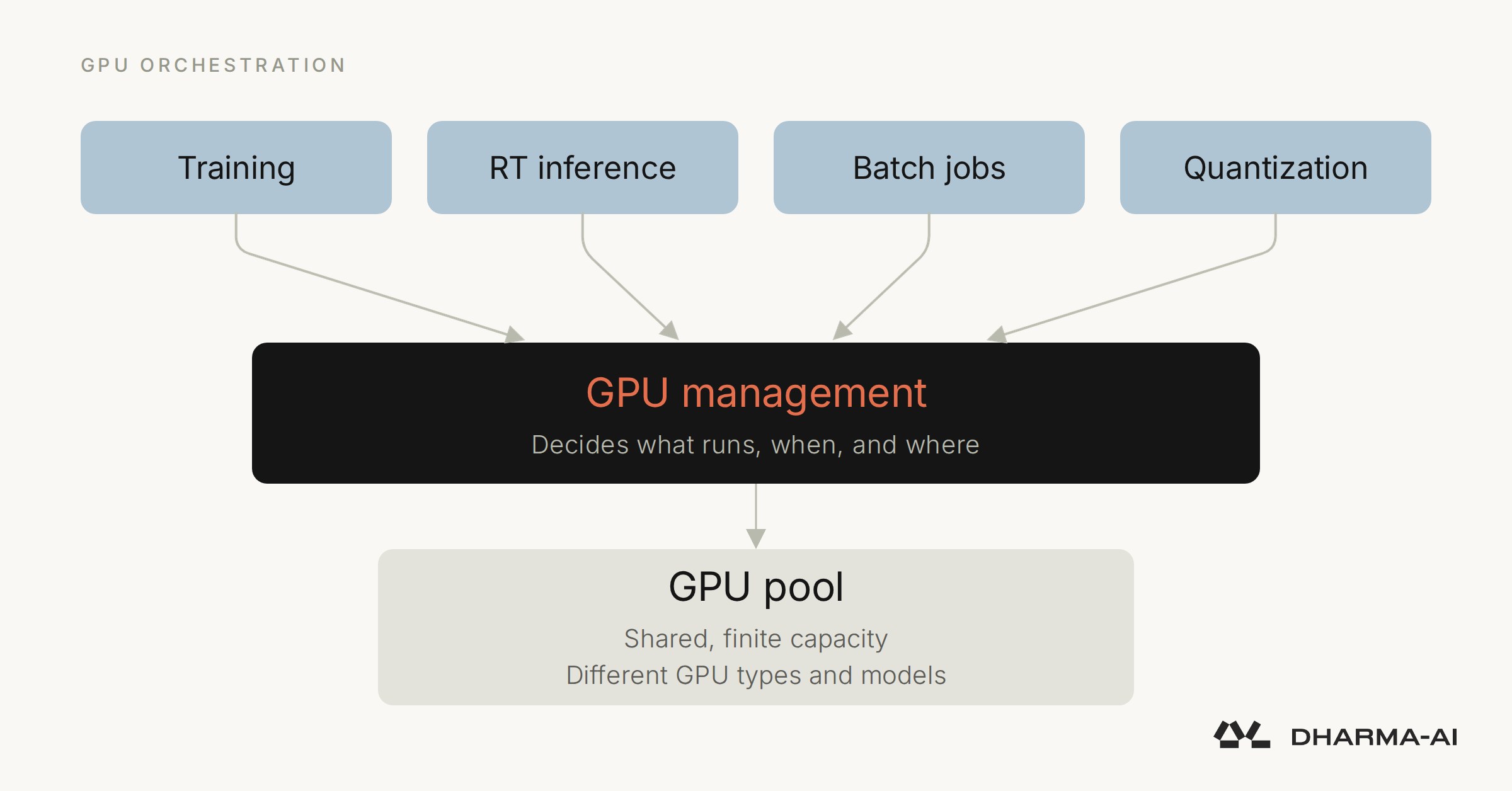
Managing a GPU fleet is now a test of operational discipline, not technical prowess. In aviation, 'turnaround time'—the speed at which a plane is landed, serviced, and sent back up—determines survival. In AI, utilization sits downstream of every infrastructure decision, from network topology to thermal management. A broken operation will keep hardware idle regardless of how many TFLOPS the marketing slides promised.
Every hour spent on the ground shrinks the output side of that equation while the cost side keeps running exactly as before.
For management, the 'fixed' nature of infrastructure costs acts as a lead weight. Financing payments and depreciation cycles do not pause for deployment delays or unoptimized code. As compute becomes the binding constraint, the winners will be those who treat GPU cycles with the same logistics-first mindset a low-cost carrier applies to its flight schedule. Buying more silicon is no longer a sign of strength; it is a massive liability if the utilization rate fails to outpace the calendar clock. In a market where margins are tightening, efficiency is the only benchmark that protects the balance sheet from the crushing weight of idle silicon.