AI · This text was generated with artificial intelligence
Gritt has officially emerged from stealth, announcing $34 million in funding to deploy autonomous construction systems within the energy sector. The $26 million Series A round was led by Obvious Ventures, with participation from Union Square Ventures and Active Impact Investment. In our view, this is a textbook example of AI finally moving beyond pushing pixels in sterile labs and entering the messy, unstructured landscapes of the real world.
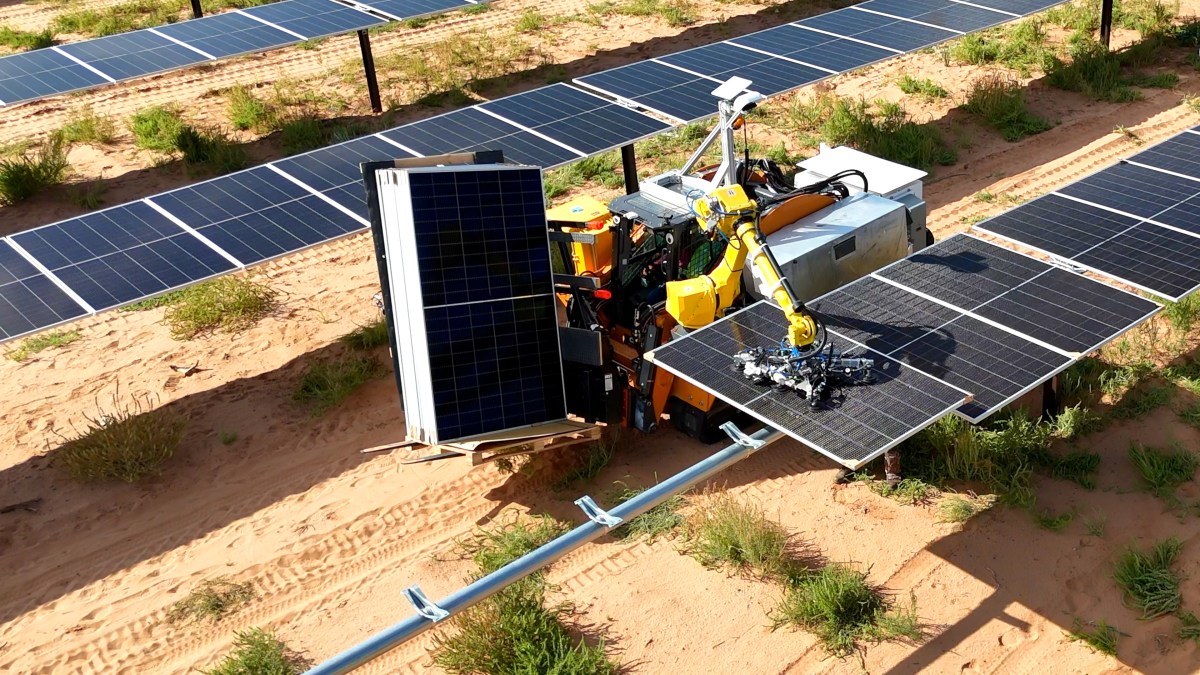
Today's primary hurdle for solar energy isn't the cost of the panels themselves, but a simple lack of hands to install them. The global shift toward renewables has hit a labor bottleneck. According to co-founders Puneet Puri and Vishal Dugar, Gritt isn't reinventing the wheel when it comes to hardware. Instead, they take standard machinery—rented forklifts and Kawasaki manipulators—and supercharge them with proprietary AI models designed to navigate chaotic environments.
The results on paper are impressive: a standard eight-person crew typically installs about 800 panels per day. Puri claims that the same group, armed with Gritt’s technology, can install between 3,000 and 4,000 panels.
The system positions fragile glass with sub-millimeter precision. The technology accounts for uneven terrain and sudden wind gusts. Utilizing standard Kawasaki manipulators instead of custom robots significantly lowers capital requirements.
Gritt’s economic strategy is pragmatic to the point of being clinical. By forgoing custom hardware in favor of software for existing machinery, the company can scale with minimal capital expenditure. This isn't just an attempt to "go green"; it is a cold calculation. AI is becoming the physical foundation of infrastructure in sectors where human resources are depleted. In an industry where the biggest risk is project delays due to labor shortages, autonomous agents are evolving from expensive toys into the only viable way to get the job done.