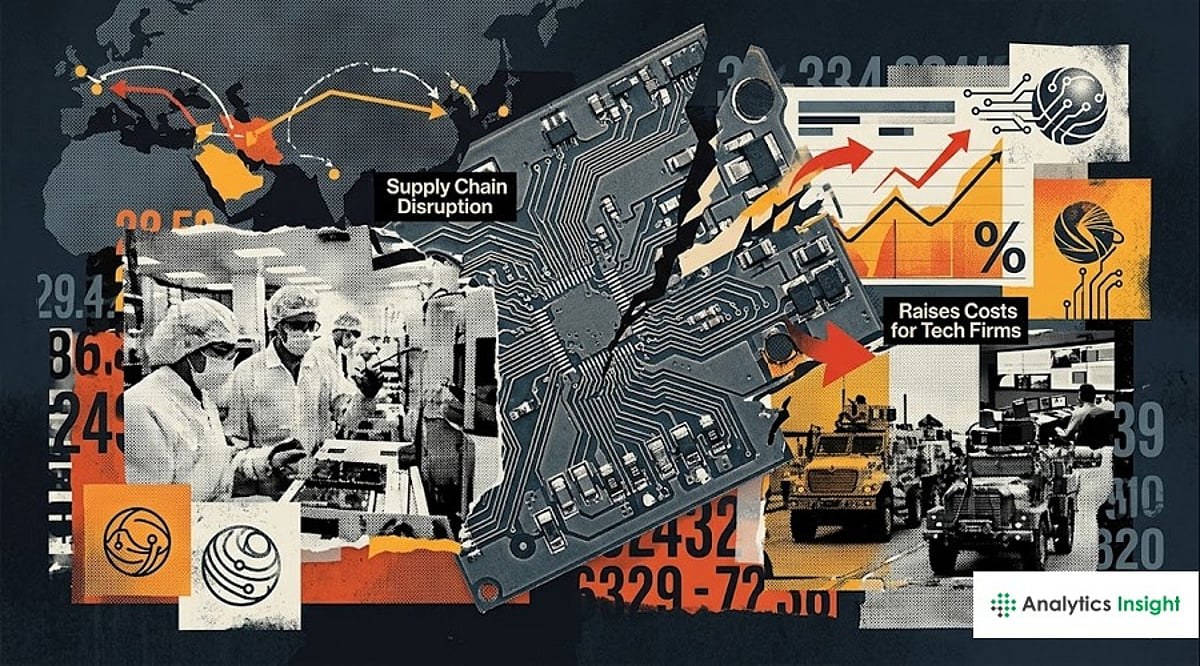
Global architects of artificial intelligence infrastructure have come to a stark realization: the stability of their 'revolution' depends less on the brilliance of software code and more on the uninterrupted transit of petrochemical products through the Strait of Hormuz. According to a report by Analytics Insight, the escalating conflict in the Persian Gulf has triggered an acute shortage of printed circuit boards (PCBs), effectively paralyzing the assembly of server hardware. This is not a routine oil price hike, but a systemic failure in the supply of chemical components, without which high-performance hardware remains nothing more than a pile of useless silicon.
Analysts report that military hostilities have choked off exports of petroleum products, striking a blow to the production of polyphenylene ether (PPE)—a critical raw material for PCB substrates. The situation was further aggravated by the shutdown of SABIC’s facilities in the Al Jubail industrial complex. Given that SABIC controls approximately 70% of the global market for high-purity PPE, the inability to resume operations leaves the industry without a safety buffer. Such an extreme concentration of production in a single geographical point renders the entire global industry a hostage to local geopolitical ambitions.
The economics of deploying new computing power are rapidly deteriorating. As of April this year, PCB production costs have soared by 40%, while copper foil prices have surged by nearly a third. For companies building new clusters to train Large Language Models (LLMs), these figures represent a direct hit to the Total Cost of Ownership (TCO). Hampi Adepu of Analytics Insight notes that the memory market was already overheated, and the logistical chaos has only accelerated the depletion of budgets. The Hormuz route has become a bottleneck characterized by sky-high insurance premiums and indefinite transit delays. Tech giants will be forced to either accept falling margins or pass inflationary risks onto end-users.
This crisis has exposed the fatal vulnerability of the 'lean' and hyper-concentrated supply chain model that the industry has relied upon for decades. As Manisha Sharma of Analytics Insight emphasizes, a compact supply chain offers no protection when a single geopolitical event can paralyze an entire industry in just two weeks. Manufacturers are now scrambling to find alternative sources of raw materials, forcing an urgent pivot away from Asian and Middle Eastern hubs. Diversifying away from this dependency is no longer a theoretical exercise in risk management; it is a matter of survival. As long as the supply of high-purity PPE is tied to a conflict zone, any ambitious plans to scale AI will be constrained by the ever-increasing cost of computing power.