The physical limits of AI scaling have migrated from the research lab to the factory floor, and the prognosis for local infrastructure is grim. According to reports from Digitimes, the triumvirate of memory giants—Samsung, SK Hynix, and Micron—has already effectively shuttered their order books for 2027. Their entire manufacturing capacity for both standard DRAM and High Bandwidth Memory (HBM) is fully contracted. For any enterprise planning to build or expand proprietary data centers in the next three years, the roadmap hasn't just slowed down; it has hit a reinforced concrete wall.
This total absorption of supply isn't a result of organic growth but a preemptive capture by the industry’s apex predators. As Jacqueline Thomas, hardware analyst and editor, points out, we are seeing five-year pre-ordering cycles for silicon that hasn't even been etched. This isn't just a shortage; it's a structural redistribution of global compute resources. While hyperscalers and GPU titans lock down supply through massive upfront CapEx, mid-sized businesses are left to scavenge from a dwindling and increasingly expensive secondary pool. The financial rot is spreading fast: data from Camelcamelcamel shows that even consumer-grade storage like the Western Digital SN7100 has spiked 52% in price since January.
The Economy of Pre-emptive Capture
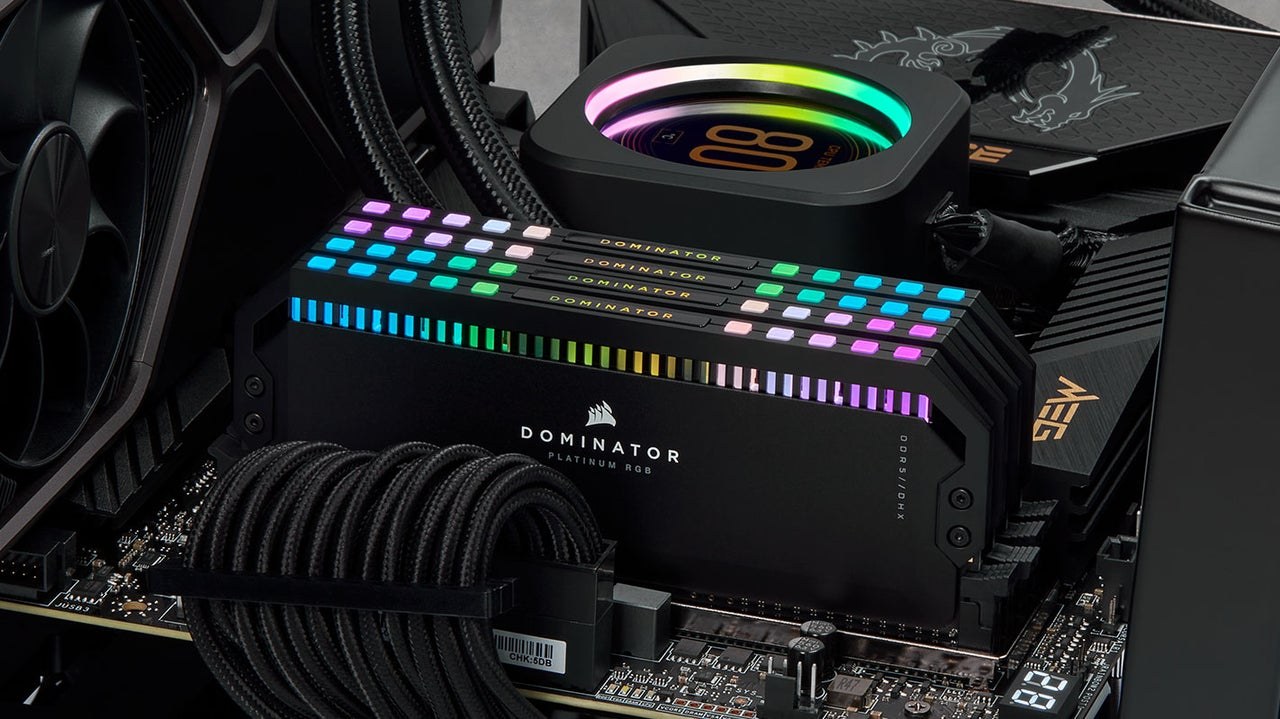
Samsung, SK Hynix, and Micron have collectively sold through their 2027 manufacturing capacity to a handful of AI giants, leaving the rest of the market in a hardware vacuum.
This pricing pressure is no longer confined to the server room. We are seeing the 'AI tax' bleed into every facet of hardware, from the price hikes of the Xbox Series X to the inflated entry costs of the Steam Machine. For infrastructure leads and CTOs, the traditional 'scale-as-you-grow' model is officially dead. If you didn't secure your 2027 HBM volume yesterday, you won't be buying your way out of the problem tomorrow. The deficit will remain the primary handbrake on the road to AGI, as even new fabrication plants cannot come online fast enough to offset the insatiable appetite of modern Large Language Models for memory bandwidth.
Strategic Pivot to Efficiency
The exhaustion of the memory supply chain forces a brutal reassessment of AI strategy. Since hardware scaling is now physically constrained by HBM availability, the competitive advantage shifts from those with the largest budgets to those with the smartest math. This reality necessitates an aggressive move toward aggressive quantization and optimized inference models that can function within a suffocatingly small memory footprint.
Audit existing hardware procurement contracts for 2026 and 2027 immediately to identify missing volume guarantees for HBM-reliant nodes. Pivot R&D efforts toward model compression and efficient architectures to bypass the hardware bottleneck. Prepare for a total dependency on cloud providers as local hardware ownership becomes economically unviable for all but the top 1% of enterprises.
Organizations clinging to the fantasy of cheap, abundant local RAM to run unoptimized models are walking into an economic trap. As we approach 2028, the ability to do more with less memory will be the only metric that determines whether an AI project survives or becomes a stranded asset.