AI · This text was generated with artificial intelligence
Enterprise Budgets Shift Toward Specialized AI Defense
Corporate security chiefs spent years treating LLM vulnerabilities as academic curiosities or edge-case hypotheticals. That luxury vanished the moment autonomous agents gained direct API access to corporate databases, payment rails, and internal pipelines. Traditional firewalls and legacy Security Operations Centers (SOC) fall flat against non-deterministic exploits: a conventional rule engine cannot parse a recursive prompt injection or spot data poisoning slipped into a vector index.
Gartner projects corporate spending on AI security will hit $2.83 billion this year—an 83% surge over 2025—before climbing toward $4.78 billion next year. The market is waking up to the reality that shipping production AI without dedicated MLSecOps infrastructure is operational malpractice.
Real-World Exploits Force Runtime Protection
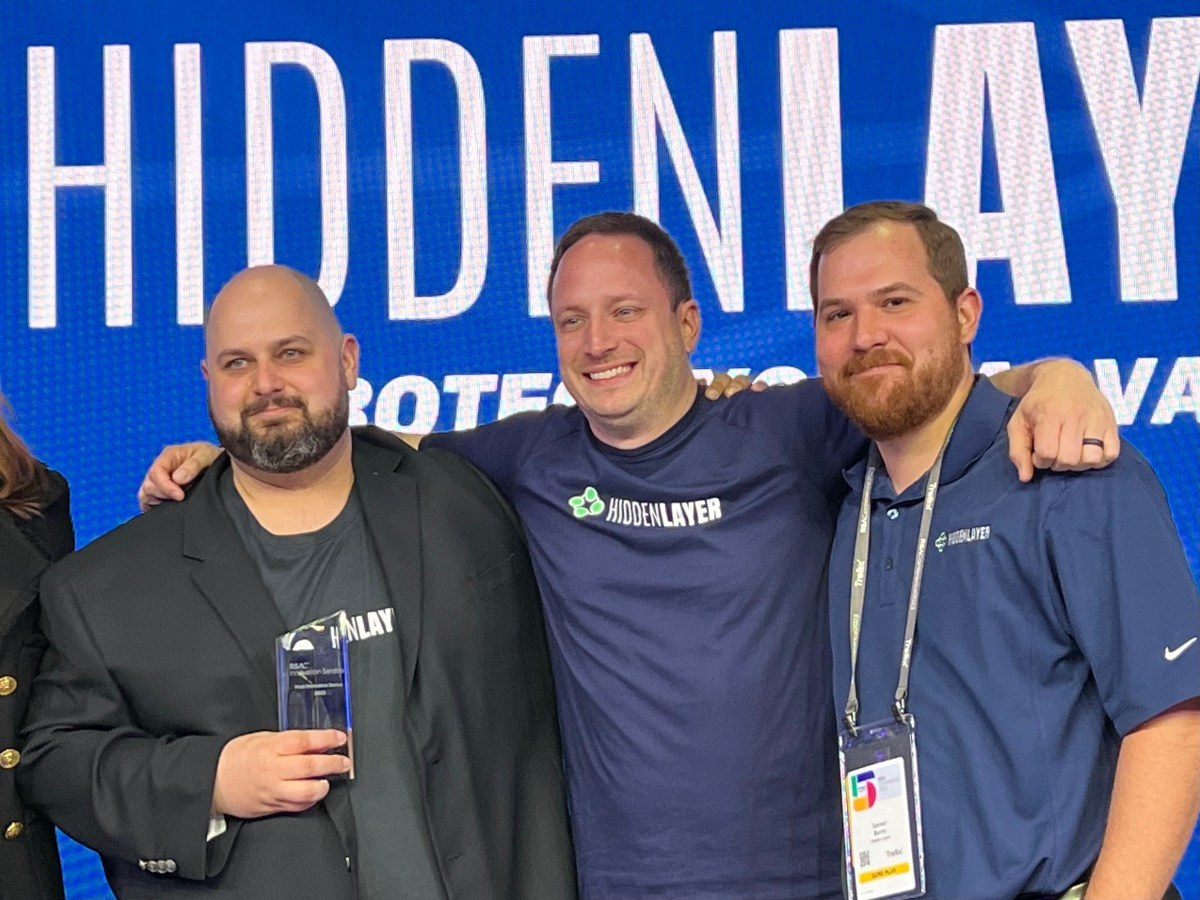
Capital allocation is moving swiftly to match the threat landscape. HiddenLayer's $100 million Series B round, led by Delta-v Capital with backing from Morgan Stanley, Ten Eleven Ventures, Microsoft's M12, and Booz Allen Hamilton, illustrates where enterprise defense dollars are flowing. According to co-founder and CEO Chris Sestito, the startup expanded annual recurring revenue more than tenfold over the past year into the tens of millions of dollars, with over 90% generated by net-new customer acquisitions.
Financial institutions and Tier-1 tech vendors represent HiddenLayer's primary commercial base, alongside high-stakes defense and intelligence contracts. The technical bottleneck has shifted from theoretical model audits to active runtime protection: verifying model artifact integrity, shielding weights from extraction, and stopping multi-turn adversarial inputs before execution.
Capital Concentration in MLSecOps
This influx of capital cements MLSecOps as a standalone tier in enterprise IT. For CTOs and CISOs navigating stricter governance standards, deploying guardrails is quickly becoming a mandatory gate for model releases. The looming strategic question is whether specialized security pure-plays can defend their turf once cloud hyperscalers bake native runtime governance directly into foundation model APIs.