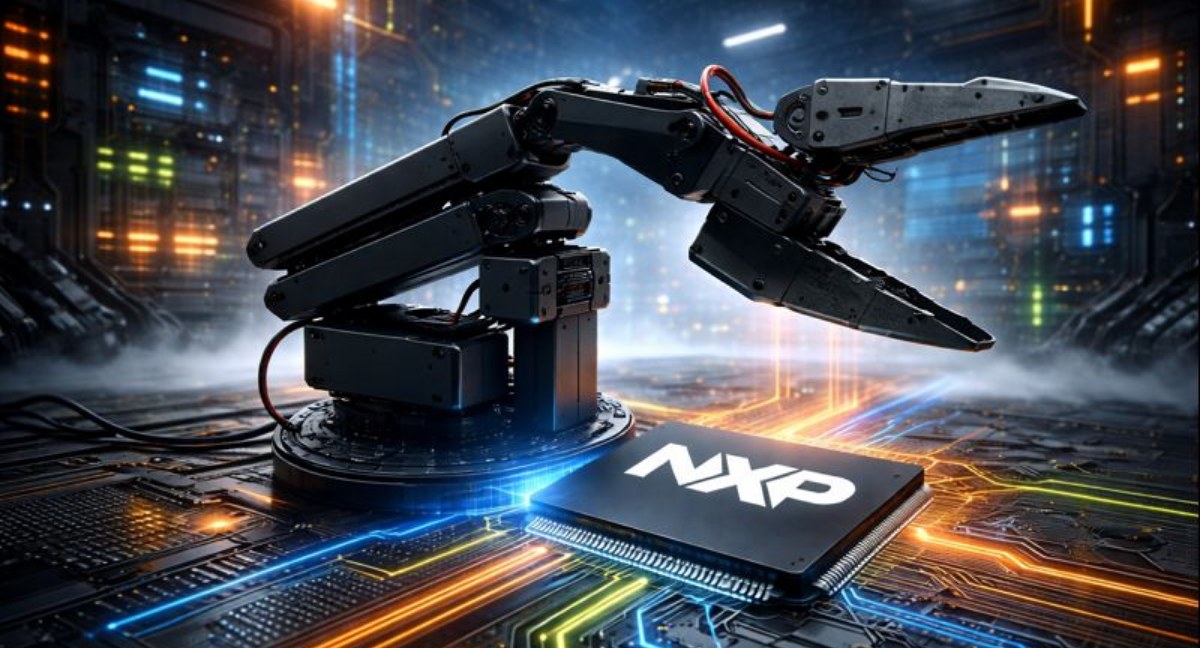
Large Language Models (LLMs), once confined to creative tasks like writing poetry, are now venturing into the physical world. The emerging field of Vision-Language-Action (VLA) promises to equip industrial robots with sight, language comprehension, and the ability to act. Instead of merely executing pre-programmed commands, VLA-enabled robots could interpret requests such as "hand me that specific part" and adapt to changing environments. This development holds significant potential for flexible manufacturing and logistics. However, transitioning these sophisticated models from cloud environments to the resource-constrained computational platforms of robots presents a formidable engineering challenge.
Robotic embedded systems operate under strict hardware limitations, with minimal memory and processing power, and stringent energy consumption targets. The primary obstacles for VLA models on the factory floor include low performance, persistent memory shortages, demanding energy requirements, and the critical need for real-time operation. Attempting to run a desktop VLA model directly on an industrial robot is a direct route to significant delays, errors, and outright failure in real-world tasks.
This is where Hugging Face is making a significant impact with its optimization tools. Precise fine-tuning is the only viable path forward. Developers are refining these models by implementing efficient data recording and processing methods. They are also retraining them for specific operational conditions, adapting them to unique lighting, material types, or even the dust present on a particular production line. Asynchronous processing emerges as a key element, enabling robots to react to changes instantaneously rather than waiting for the AI to complete its computational cycle. This synergy between powerful AI algorithms and compact, reliable embedded platforms is forging a new frontier in automation. Robots are evolving beyond mere machinery; they are beginning to truly understand and interact within our physical world.
For business leaders in manufacturing and logistics, this signals the imminent arrival of far more intelligent and adaptable robots. This is not just hype; it represents a tangible pathway to increased efficiency and reduced costs through economically viable solutions. The integration of VLA models, meticulously tailored to your specific needs, could potentially boost productivity by 15-30% and significantly decrease errors stemming from human factors. Now is the time to assess which VLA tools are most suitable for your operational objectives and to project the associated implementation costs. This evolution is poised to redefine the capabilities of industrial automation, offering a competitive edge to early adopters. The ability to process complex visual and linguistic information in real-time, executed by optimized models on capable hardware, will unlock new levels of operational agility and effectiveness. Companies that embrace this transition can expect to see a tangible return on investment through streamlined processes and enhanced output quality. The practical application of VLA technology represents a critical step in the ongoing digital transformation of industry. Understanding the trade-offs between model complexity and embedded system constraints will be crucial for successful deployment. The development of specialized VLA architectures optimized for edge computing is accelerating this trend, making advanced AI capabilities accessible on the factory floor. This shift requires a strategic approach to talent development and technology integration to fully capitalize on the potential of these next-generation robotic systems. The ongoing advancements in hardware efficiency and AI model compression are making VLA capabilities increasingly feasible for a wider range of industrial applications. Evaluating current infrastructure and future scalability will be paramount for any organization considering this technological leap. The future of industrial automation is increasingly intelligent and responsive, driven by the integration of vision, language, and action.