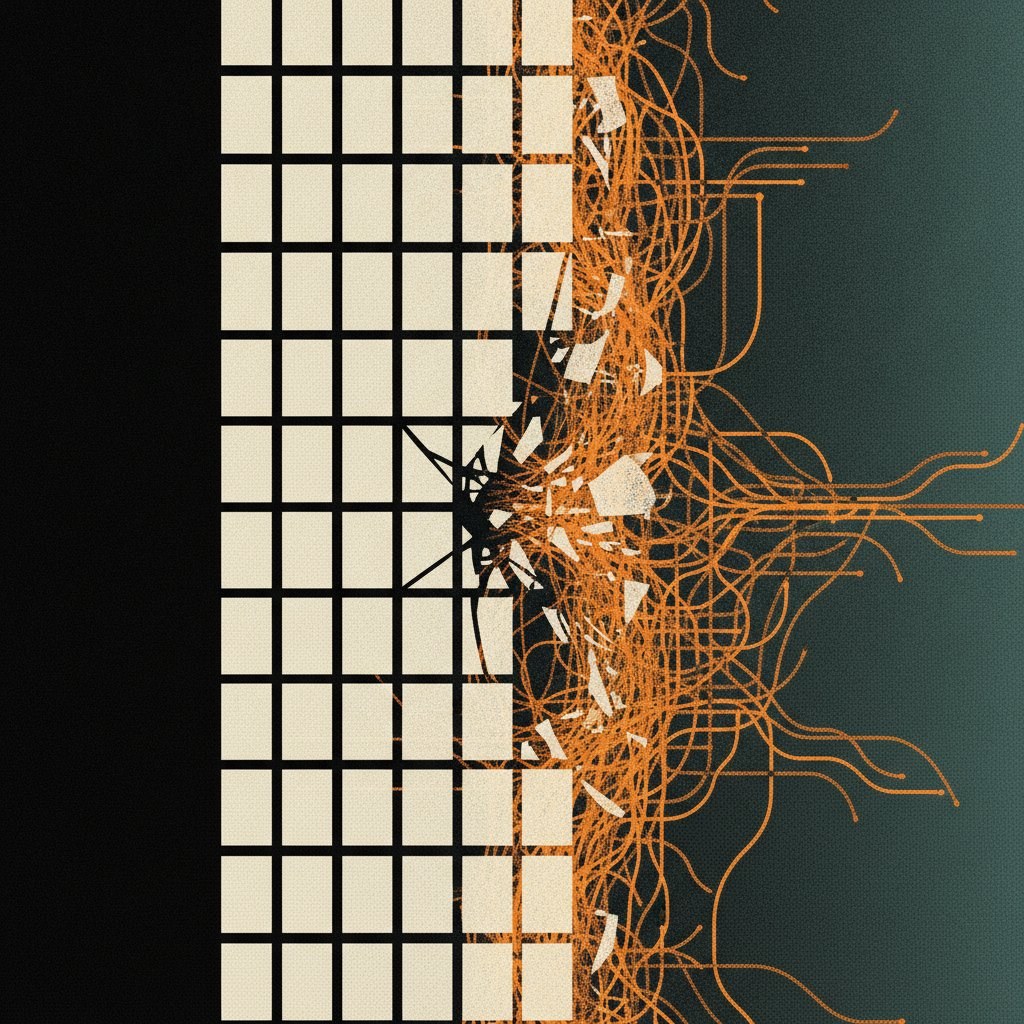
Large-scale physical simulations, climate modeling, and high-resolution medical imaging generate data far faster than enterprise storage budgets can expand. In an analytical study published in Nature Machine Intelligence, researchers Shuhang Gu from the University of Electronic Science and Technology of China and Kexuan Shi from The Chinese University of Hong Kong demonstrate that the solution to petabyte sprawl is not larger storage arrays, but replacing discrete grids with continuous implicit neural representations (INRs).
Compact Neural Functions
Traditional scientific pipelines store dense numerical grids on disk, forcing engineering teams into a painful tradeoff between physical fidelity and ballooning infrastructure costs. INRs abandon raw grid storage altogether by parameterizing physical fields as continuous mathematical functions embedded directly into neural network weights.
Implicit neural representations can turn massive scientific measurements into compact functions.
By framing scientific datasets as coordinate-to-value mappings rather than arrays of discrete cells, neural architectures condense sprawling multi-terabyte datasets into compact weight checkpoints. Crucially for engineering workflows, this enables arbitrary-resolution querying at inference time across continuous domains without requiring full decompression passes.
Preserving Fine-Scale Detail
Standard baseline INRs typically struggle with high-frequency spatial gradients, smoothing over the critical physical boundaries needed in turbulent fluid dynamics or medical diagnostics. Gu and Shi highlight how modern hierarchical encoding strategies resolve this bottleneck by capturing multi-scale physical dynamics.
Integrating multi-resolution structures allows hierarchical INRs to preserve fine-scale spatial and temporal fidelity without sacrificing overall compression ratios, offering researchers reliable numerical accuracy when reconstructing dense physical fields.
What this means:
For R&D leads and infrastructure architects, substituting legacy compression with continuous neural representations offers a clear route to slashing data-center footprints across data-intensive scientific domains. The catch remains upfront compute: optimizing a dedicated neural network per dataset introduces a non-trivial training overhead before storage savings materialize. Widespread enterprise adoption will hinge on whether faster fitting pipelines and specialized hardware can offset these initial training costs while maintaining absolute physical precision across extreme coordinate boundaries.