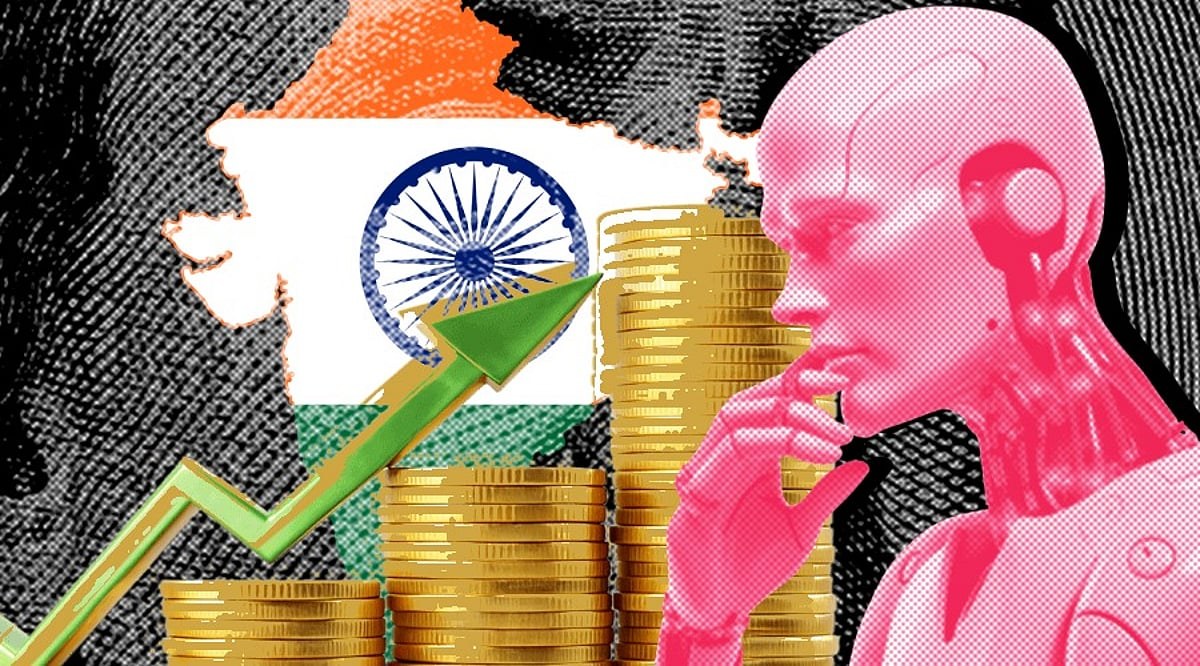
India is shedding its reputation as the world’s “back office” and aggressively transforming into the industrial heart of the artificial intelligence industry. According to a Q1 2026 report by Analytics Insight, local startups have secured a staggering 32,900 crore rupees (approximately $3.94 billion). In our view, this isn't merely market hype; it represents a radical shift from speculative seed bets to the deployment of heavy infrastructure and vertical scaling. The momentum is striking: while January saw a modest 2,220 crore in investments, March witnessed a surge to 20,540 crore—accounting for 62% of the total quarterly capital. It is evident that investors are no longer “testing the waters” but are instead financing a sovereign AI infrastructure capable of challenging global incumbents.
The central narrative here is the final dismantling of the “cheap labor” myth in favor of architectural autonomy. Although Analytics Insight recorded a high volume of seed-stage deals (106 transactions), the bulk of the capital is flowing into Series B rounds, which reached 8,070 crore rupees. Leading this charge were cloud provider Neysa, with a 5,010 crore round, and a colossal 11,450 crore convertible debt deal in the agricultural AI sector. By directing nearly $1.5 billion into agritech and another $739 million into enterprise SaaS, India is building specialized vertical models that automate complex engineering. The result is the emergence of a “third pole” in AI alongside the US and China, supported by a foundation of 3,500 specialized companies and 120 unicorns.
The geographic distribution of these investments clearly outlines a new “mission control center.” Delhi (NCR) leads in terms of total capital (15,820 crore), while Bangalore remains the technological core with 78 closed deals. For global executives, this concentration serves as a ready-made roadmap for R&D optimization. Mumbai is evolving into a fintech powerhouse, while Hyderabad and Chennai are claiming the aerospace and industrial automation sectors. However, there is a flip side: as Analytics Insight notes, AI projects are consuming 77% of all venture capital in the country. This will inevitably lead to an overheated market for elite talent. The window of opportunity to acquire high-level engineering at an “outsourcing discount” is rapidly closing.
This $4 billion quarterly benchmark confirms that India is no longer merely maintaining other people’s systems; it is building its own engines. For senior management, ignoring the Indian ecosystem is no longer just a matter of missed savings—it is a risk of being excluded from the next generation of autonomous infrastructure. If you still view your Indian operations as a cost center rather than an R&D hub for sovereign AI, you are clinging to a business model that the market officially rendered obsolete at the start of 2026.