The enterprise artificial intelligence playbook has long conflated parameter scale with operational competence, compelling R&D departments to default to massive, costly general-purpose foundation models. Yet when it comes to rigorous domain-specific verification, raw parameter scale frequently yields diminishing returns. That conventional wisdom is cracking as vertical architectures demonstrate that targeted training easily beats generic monolithic systems on rigorous validation benchmarks.
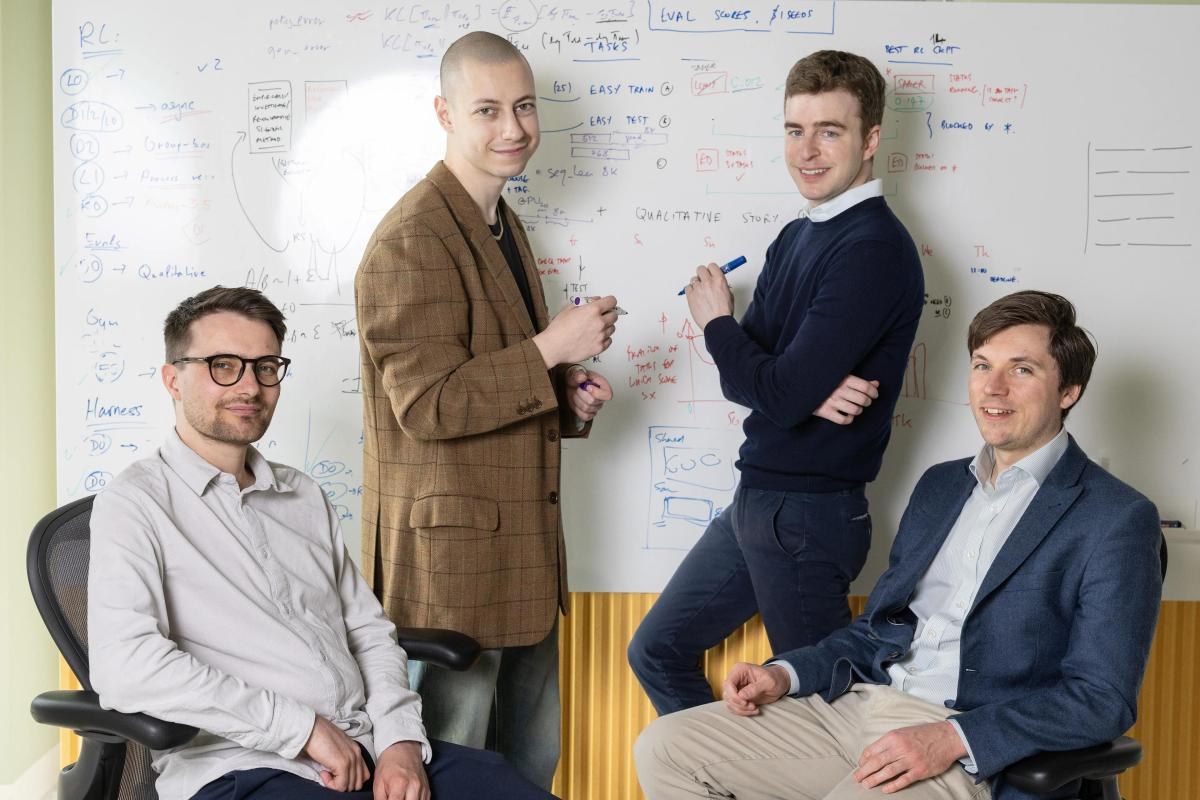
London-based startup Inherent, founded by former Google DeepMind researchers, demonstrated that its specialized AI agent, Faraday, outperformed leading frontier models at autonomously replicating published scientific findings without prior exposure to test solutions. Operating on a compact 27-billion-parameter open-weights base model, Faraday delivered these benchmark gains shortly after Inherent emerged from stealth backed by a $50 million seed round. As Edward Hughes, co-founder and chief scientist at Inherent, noted, paper replication serves as the ideal stress test precisely because human PhD researchers cut their teeth on this exact verification workflow.
Architecture and Reinforcement Learning
Rather than training on broad descriptive mechanics of scientific literature, Inherent applies outcome-driven reinforcement learning designed to cultivate structured research intuition—guiding the agent to prioritize viable hypotheses, design reproducible code tests, and discard dead ends before committing compute.
"What was most interesting to us about this was not so much the result of beating those frontier agents — which of course we liked — but was actually the way we went about building this."
As Hughes emphasized, this architectural shift trades generic token prediction for purposeful exploration and autonomous verification.
Scaling Research Teammates
For CTOs and R&D leaders, the economic and operational takeaway is unambiguous: deploying vertical, domain-specific 'teammates' for empirical verification and patent analysis provides significantly higher audit fidelity at a fraction of the cost of generic API calls. The critical test ahead is whether these specialized, taste-guided agentic architectures can maintain their empirical edge when transitioning from reproducing established literature to executing genuine zero-to-one scientific discovery.