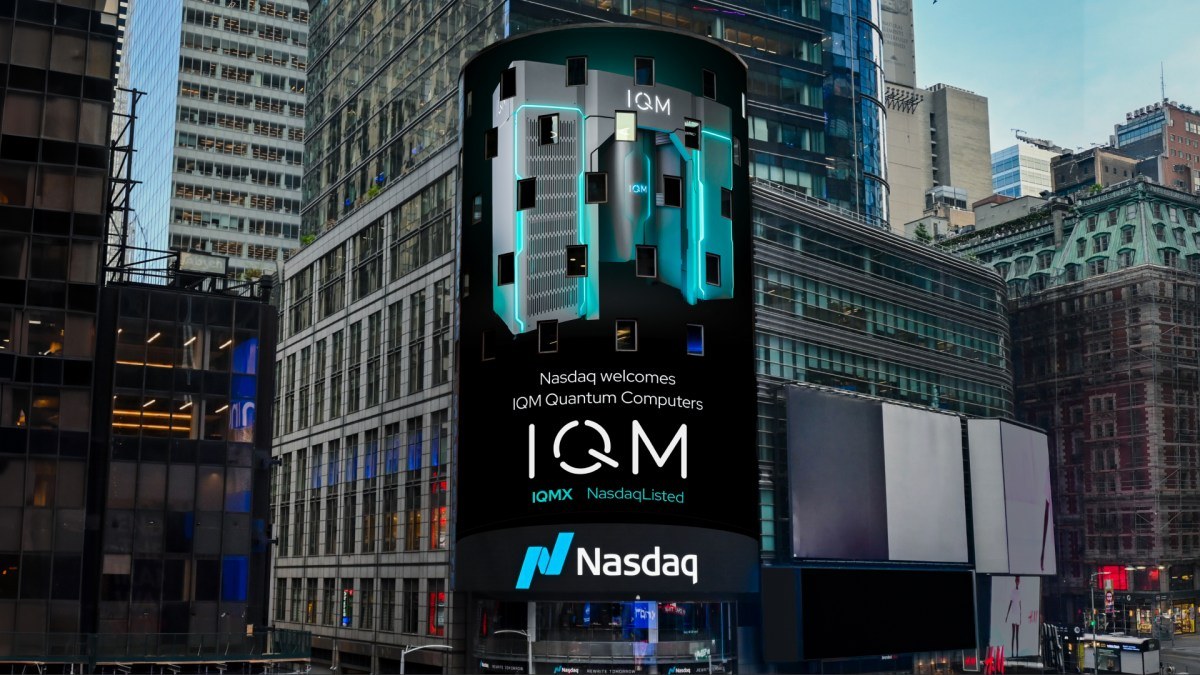
Finnish quantum hardware flagship IQM has debuted on the Nasdaq via a SPAC merger with a $1.9 billion valuation, but the market greeted the industry’s supposed saviors with a cold shower. Trading under the ticker IQMX, shares dipped below the offering price on day one. This isn't just a rocky start; it’s a loud signal that the era of blind DeepTech hype is over, replaced by a ruthless pragmatism. Even nearly tripling its client base from 8 to 22 contracts—including deals with Finland’s VTT and the Leibniz Supercomputing Centre—wasn't enough to convince investors that pouring billions into supercooled qubits will pay off anytime soon.
The real shocker isn't in the charts, but in the fine print of the prospectus. In an act of unprecedented transparency, IQM officially admitted: "the large-scale commercialization of quantum computing may never happen at all." For a sector that has spent years over-promising "quantum supremacy" in biotech and fintech, this statement sounds like a final warning. Jan Goetz, IQM’s co-founder and CEO, is blunt: the company sells hardware and cloud access, but no one in their right mind can pinpoint when these machines will actually outperform classical servers at real-world tasks.
Today, IQM’s financial reality is completely detached from geopolitical ambitions. While the Trump administration churns out executive orders and the U.S. Department of Energy sets a 2028 deadline for a fault-tolerant computer, investors are counting their cash in the here and now. IQM is trying to play both sides: maintaining its R&D hub in Finland under the wing of the state fund Tesi while chasing liquidity on the Nasdaq. However, when a market leader builds the risk of its technology’s total non-viability into its core strategy, it stops being a venture bet and becomes a lesson for the entire infrastructure market. We are witnessing the end of the "faith-based" era and a transition to the era of proof, where $1.9 billion advances for a hazy future are no longer being handed out.
Key Takeaways
IQM’s $1.9 billion Nasdaq valuation via SPAC buckled under investor skepticism on the first day of trading.
In its prospectus, the company formally acknowledged the risk that quantum computing might never become a mass-market commercial product.
Tripling its contract count failed to offset uncertainty regarding the timeline for achieving practical quantum supremacy.
The gap between government optimism (US and EU subsidies) and private market pragmatism has reached a breaking point.
"The large-scale commercialization of quantum computing may never happen at all." — from IQM’s official investor prospectus.