AI · This text was generated with artificial intelligence
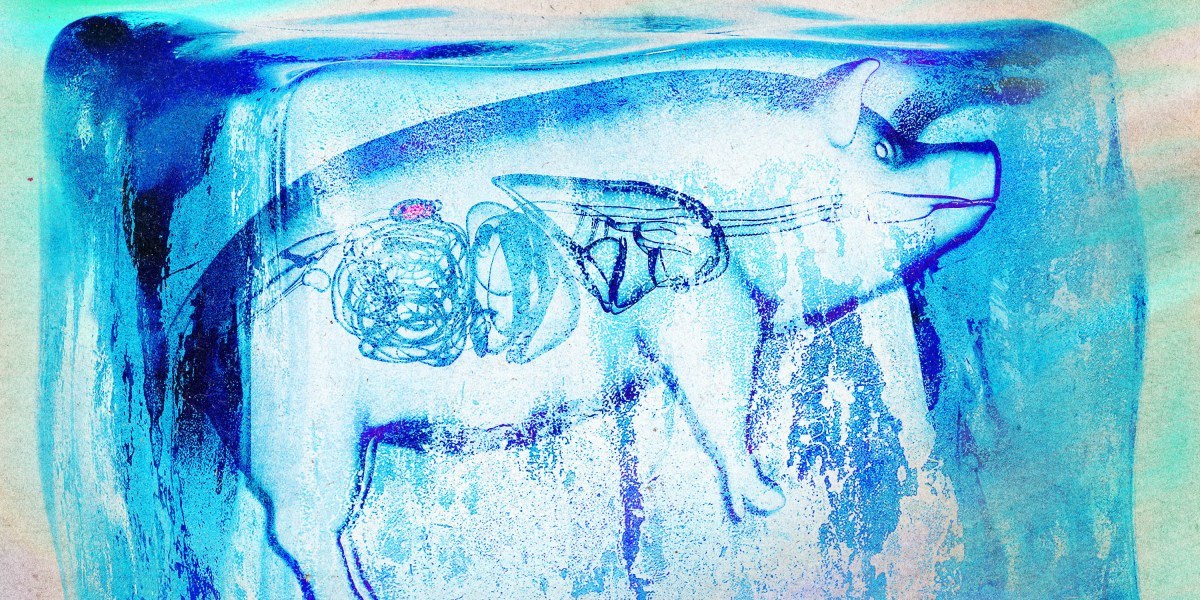
Organ transplant logistics has for decades resembled a race against death, where the stopwatch always favors entropy. In the US alone, 104,000 people are waiting for a kidney, yet every third donor organ is discarded simply because it degraded during transport. The gold standard—an ice box at 4°C—only marginally slows metabolism and cannot stop cellular decay. Freezing could theoretically halt the biological clock, but ice crystals turn delicate tissues into mush. Matthew Powell-Palm from Texas A&M University offers an elegant thermodynamic workaround: supercooling to -4°C without a single ice crystal forming inside.
Moving from 4°C to -4°C is not just a minor drop in temperature. It is a fundamental hack of the organ’s metabolic timeline, turning an emergency operation into a scheduled procedure.
Pressure as a stabilizer
As a thermodynamicist rather than a biochemist, Powell-Palm rejected toxic cryoprotectants. Chemical "antifreezes" are a regulatory nightmare and a patient health risk. Instead, his team uses a precision-controlled isochoric chamber. The organ is immersed in a standard preservative solution, but by maintaining constant volume and pressure, the system blocks the phase transition of water into ice, even as temperatures drop below zero. As the researcher notes, despite the complex kinetics involved, the mechanical implementation remains remarkably simple and reliable.
Triple the clinical standard
To test the hypothesis, researchers used porcine kidneys—the closest analogue to human organs—and kept them in the device for several days. The results following transplantation have silenced skeptics: the organs didn't just survive; they began producing urine almost instantly. Renal function markers showed that supercooled kidneys recover faster than those kept for fewer hours on standard ice. For the industry, the signal is clear: we are moving from disaster medicine to a high-precision manufacturing process.
Logistics shift and digital control
The ability to store organs for days instead of hours completely rewrites the rules of immunological matching. Currently, 17 people die every day in the US while waiting for a transplant, often because the window for logistics and typing is too narrow. An extended time limit allows for deep immunological testing and transcontinental transport.
However, the path from porcine models to operating rooms remains challenging. The primary hurdles are the scalability of hermetic chambers for different tissue types and confirming the long-term stability of human cells after this form of "suspended animation." In the future, these containers should integrate with Digital Twin systems, where real-time sensors stream tissue health data to the cloud. We are on the verge of creating global organ banks where a donor's geography is no longer a death sentence for a patient, and scarcity is defeated by physics rather than a courier’s speed.
Powell-Palm’s success proves that physical manipulation of the environment is more effective and safer than trying to re-engineer biology with complex chemistry.
If the data is confirmed in human tissues, the MedTech industry will gain full-scale warehouse logistics to replace the current "use it or lose it" system. The next R&D phase is to prove that human kidneys are as pressure-tolerant as porcine ones before this method becomes a clinical reality.