The era where massive infrastructure served as the only gateway to top-tier AI performance is hitting a wall of diminishing returns. Knowledge distillation—the art of forcing a nimble 'student' model to mimic a bloated 'teacher'—is no longer a playground reserved for Big Tech. Recent shifts in methodology are finally making the transfer of intelligence from trillion-parameter giants to compact local systems economically viable for the rest of us.
While monsters like Kimi-K3 demand nearly 3TB of VRAM just to wake up, the industry is pivoting toward operational efficiency. For most enterprises, owning a model with 2.8 trillion parameters is a financial suicide mission. As researchers Antonio Tiene, Ali Hashemi, and Iker García-Ferrero point out, the goal is now to package that same high-level reasoning into systems that don't require their own power plant to run. We are seeing a move away from the 'bigger is better' dogma toward a pragmatic focus on inference costs and speed.
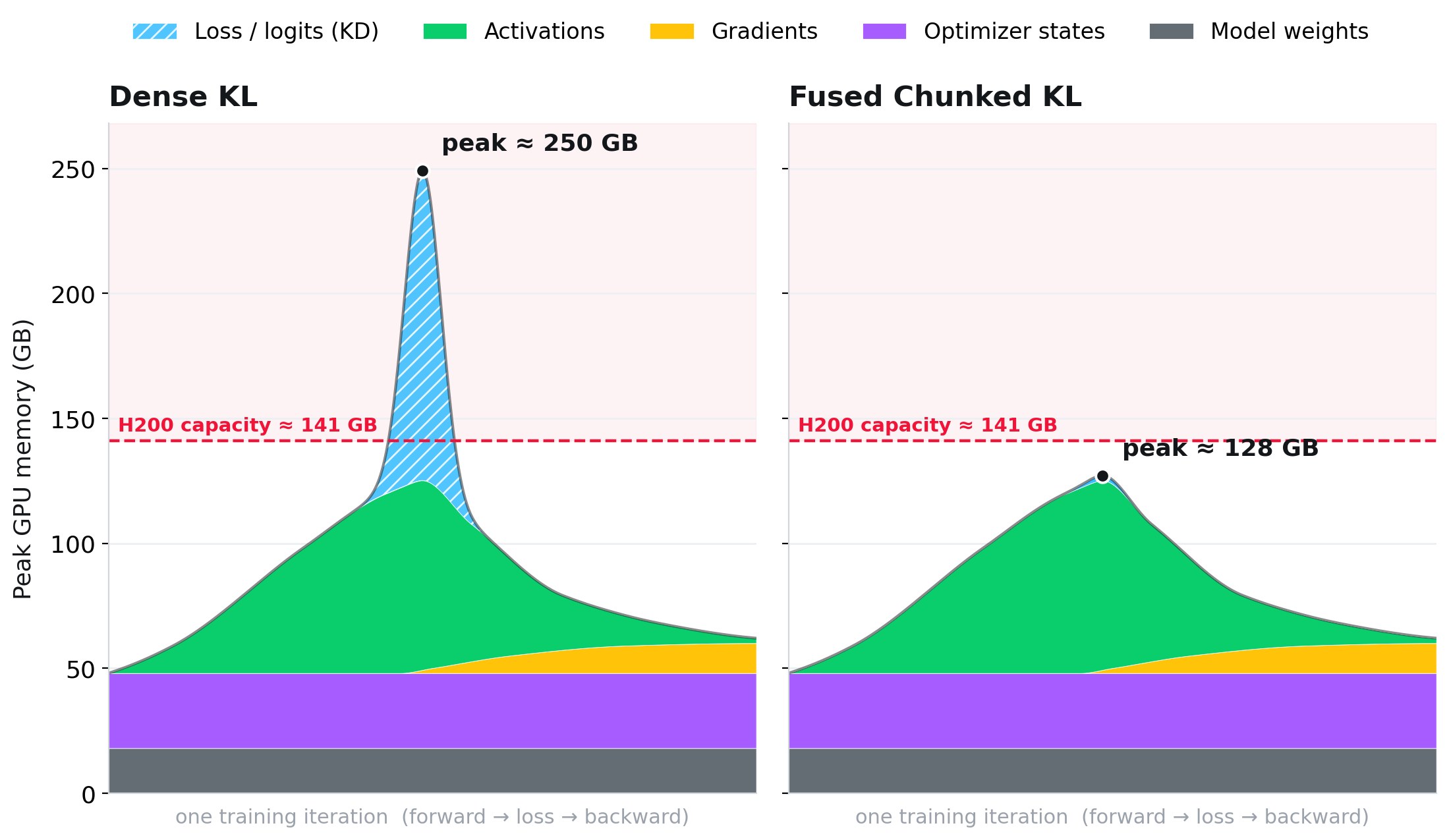
The real breakthrough lies in solving the distillation bottleneck itself. Traditionally, keeping both teacher and student models in memory simultaneously required hundreds of GPUs and a nightmare of parallelism. By adopting offline distillation—effectively caching the teacher’s top-K logits—and utilizing fused chunked KL loss, Multiverse Computing has demonstrated that even long-context healing can now be handled on a single GPU. This isn't just a technical tweak; it’s a radical lowering of the barrier to entry.
Models such as Hypernova 60B and Nemotron 3 Puzzle 75B prove that compressed architectures can recover the original capabilities of their massive predecessors without the overhead. For a CTO, the math is refreshingly simple: the cost of training and deployment plummets when intelligence is squeezed into architectures that thrive on modest hardware. The race for sheer size is being superseded by a race for efficiency. In a delicious bit of irony, it seems the ultimate reward for building a 2.8 trillion-parameter titan is the ability to finally stop using it in production.