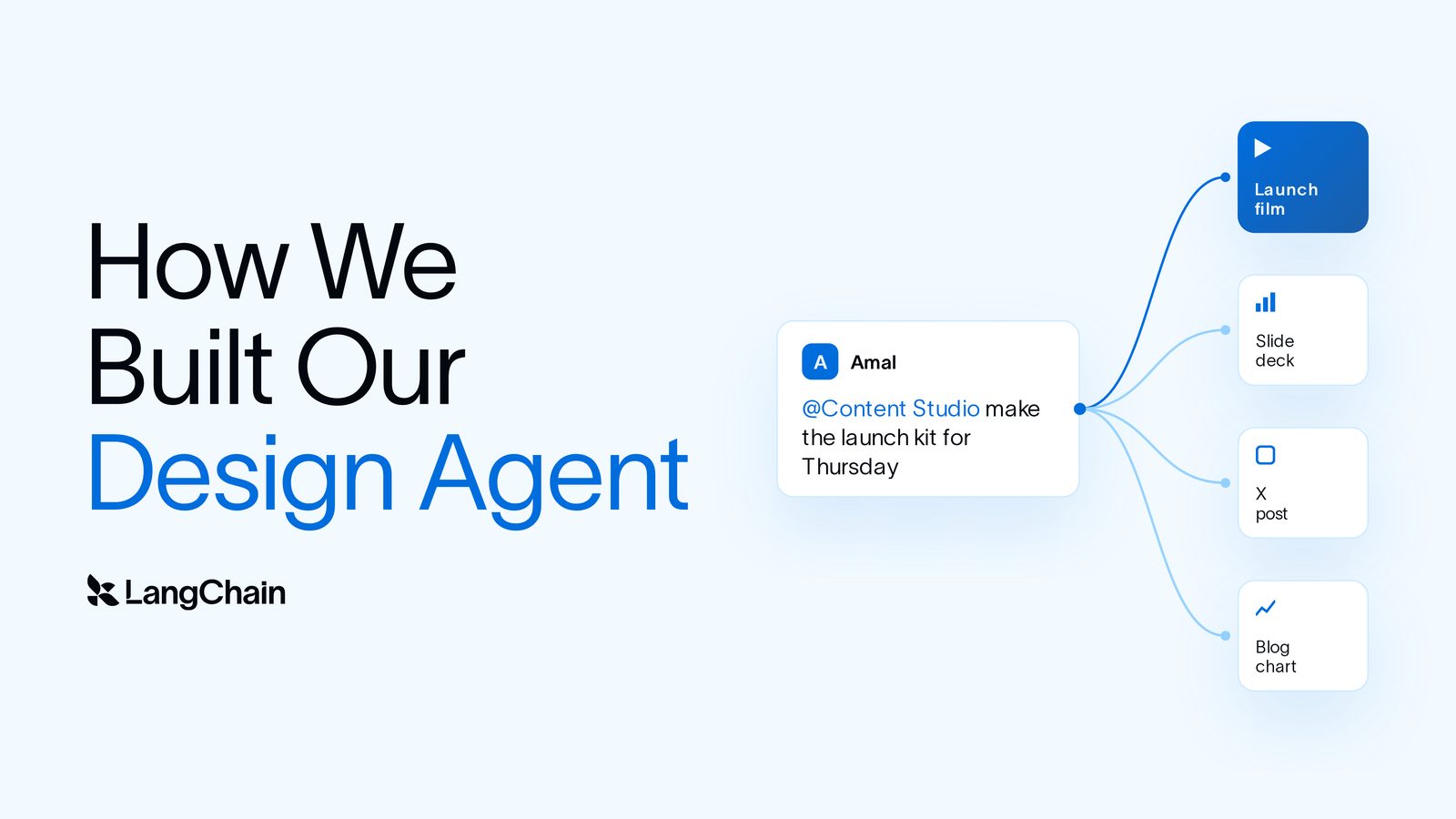
Content Studio evolved from a generator of subpar drafts into an essential GTM tool for LangChain following a four-month iteration cycle focused on corporate brand constraints. According to the development team, they spent four months teaching the agent their specific aesthetic preferences by correcting its errors publicly within the company. Early iterations produced standard generative artifacts, demonstrating that while the underlying model excelled at writing code, it lacked the necessary brand context.
Automating routine design tasks through custom agentic pipelines reduces headcount pressure, but demands continuous context tuning. The agent was built entirely in-house on top of Managed Deep Agents by GTM Engineering in close collaboration with the design team. The product generates videos, social graphics, reconstructed UI images, and slide decks from a single prompt inside Slack.
Sandbox Infrastructure and Operational Expenditure
Technical execution relies on isolated environments and a multiplayer interface designed to handle multi-hour asynchronous tasks. As the system creators explain, Managed Deep Agents provides a controlled LangSmith Sandbox, Slack integration, managed tools, scoped agent memory, and run scheduling. Every generated asset is written in code, allowing teams to inspect renders and manage processes directly in Slack, where any team member can intervene during long-running background tasks.
Taste comes from context. Models already write good code, but they need your designers’ principles, guardrails against AI slop, and the reasoning behind feedback to make work that looks like yours.
The economics of running the agent show a sharp drop in infrastructure overhead. The median query now costs approximately 50 cents in model expenses, down from roughly 8 dollars in mid-September, while the developers' proprietary codebase shrank by about 80% after migrating to Managed Deep Agents.
Scaling Metrics and Process Transformation
Practical deployment scaled across a wide array of internal and external company workflows. Content Studio has delivered over 3,000 assets company-wide, including more than 80 slide decks, one of which powered LangChain's most-viewed organic YouTube video.
Three out of four prompts originate outside the marketing department, and 75% of users are recurring weekly visitors. As the developers point out, hardcoded rules designed to patch the weaknesses of foundational models inevitably degrade as underlying architectures evolve, requiring regular codebase trimming as AI capabilities expand.
What doesn’t add up
What turns an automated content pipeline from a generator of generic design artifacts into a workable internal tool? Four months of public error correction across the company showed that agent performance depends on embedding specific brand context rather than relying purely on the underlying model's coding abilities. Maintaining hardcoded workarounds creates continuous maintenance tension, as expanding foundational model capabilities forces teams to repeatedly clean up obsolete code.