Standard LLM interactions are plagued by an 'explainer mode'—that irritatingly chirpy, emoji-laden persona that treats professionals like toddlers. As Laurentiu Raducu rightly observes, these surface-level summaries are worse than useless for mastering hard sciences. For engineers and technical leads, the goal isn't a bulleted list of definitions; it’s a functional mental model. To get there, we must force AI out of its default 'tutor' settings and into a 'plan mode.' By utilizing tools like CC or OpenCode, developers can pivot from consuming static text to demanding a systematic deconstruction of knowledge where the model first architectures a foundational database, validates it, and then commits those concepts into executable code.
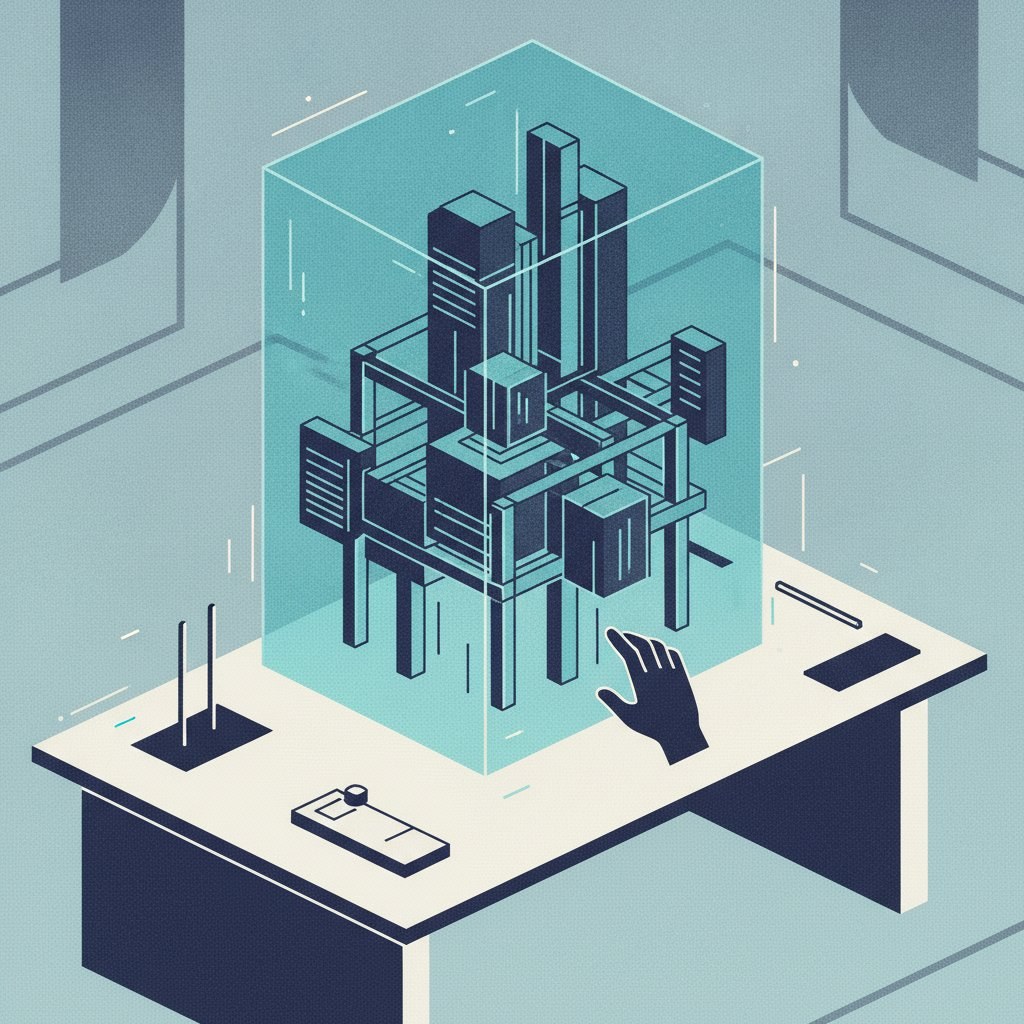
This methodology effectively turns an LLM into a factory for interactive, low-poly simulation environments, gamifying the mastery of industrial workflows. Raducu demonstrated this by building ChipTycoon, a browser-based simulator that visualizes semiconductor manufacturing. Instead of reading about lithography, users interact with a visual logic similar to Rollercoaster Tycoon. The simulation tracks the process from raw quartz sand through the furnace to final data center delivery, all hosted via GitHub Pages. By mapping abstract technical hurdles to tangible objects and UX controls, the AI moves from being a mere narrator to becoming the architect of a working system.
For the enterprise, this marks the end of the road for static, soul-crushing corporate training decks. The real value of generative models in a technical context lies in their ability to generate custom, on-demand training environments where hypotheses are verified through code rather than multiple-choice questions. By integrating intuitive puzzles based on real manufacturing constraints, these simulations ensure knowledge retention that traditional search-based research simply cannot match. We are moving toward a future where we don't ask an AI to explain a process—we ask it to build a sandbox where we can break it, fix it, and finally understand it.