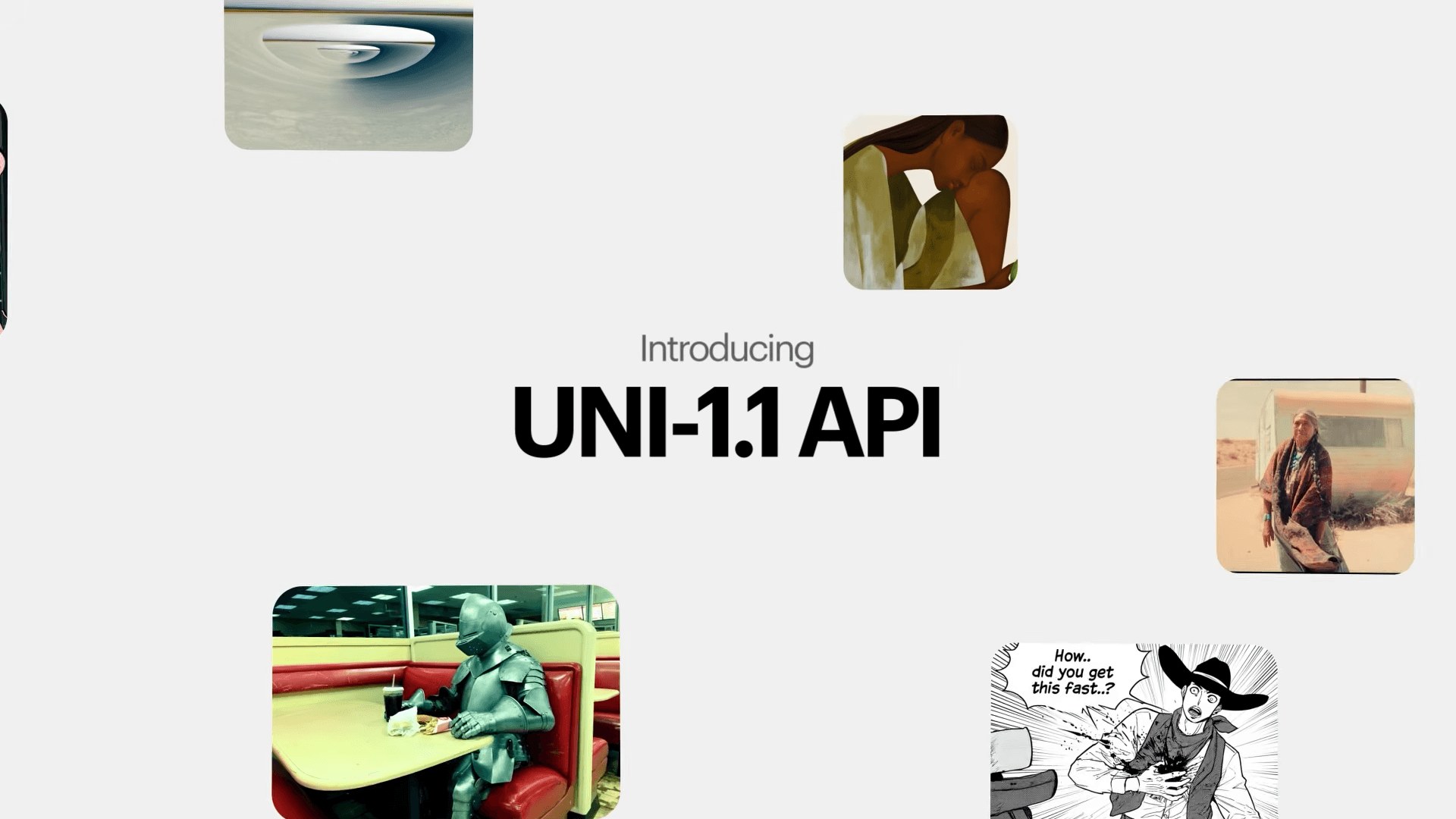
Luma is going on the offensive against industry heavyweights with the launch of its Uni-1.1 model API. While OpenAI and Google scramble to maintain premium pricing for media generation, Luma is undercutting the market with the grace of a bulldozer. According to the latest benchmarks from the Artificial Analysis Arena, Uni-1.1 has firmly secured its spot in the top 10 rankings, nipping at the heels of the established flagships. For AI startup founders and CTOs, the message is clear: the era of prohibitive tariffs for high-quality visual content is officially over.
The technical specs are compelling: the model supports 2048-pixel resolution with pricing starting at just $0.04 for standard images and $0.10 for the "max" version. However, the real blow to competitors lies in the reference image mechanism. Luma’s documentation reveals that developers can feed the model up to nine reference images at a mere $0.003 each. This isn't just cost-saving; it’s a direct assault on the business models of tech giants, where content personalization previously cost customers a small fortune.
Architecturally, Uni-1.1 mimics agentic systems. Luma has confirmed that the model includes built-in "reasoning" mechanisms—features previously restricted to web interfaces for iterative editing. The REST API now allows these agentic workflows to be embedded directly into enterprise solutions. Essentially, the market is being offered an engine that refines composition details autonomously, freeing developers from the need to build complex wrappers around a base model.
Strategically, Luma is targeting the heart of corporate spending: cloud infrastructure. The company is currently preparing deep integration with the AWS environment. This is a calculated move to ensure the model resides within the same security perimeter as client data. While OpenAI and Google rested on their ecosystem laurels, Luma turned high-resolution photorealism into a commodity. Now, the market leaders will have to defend their margins through actual cost reduction rather than flashy presentations—a shift they seem ill-prepared for.