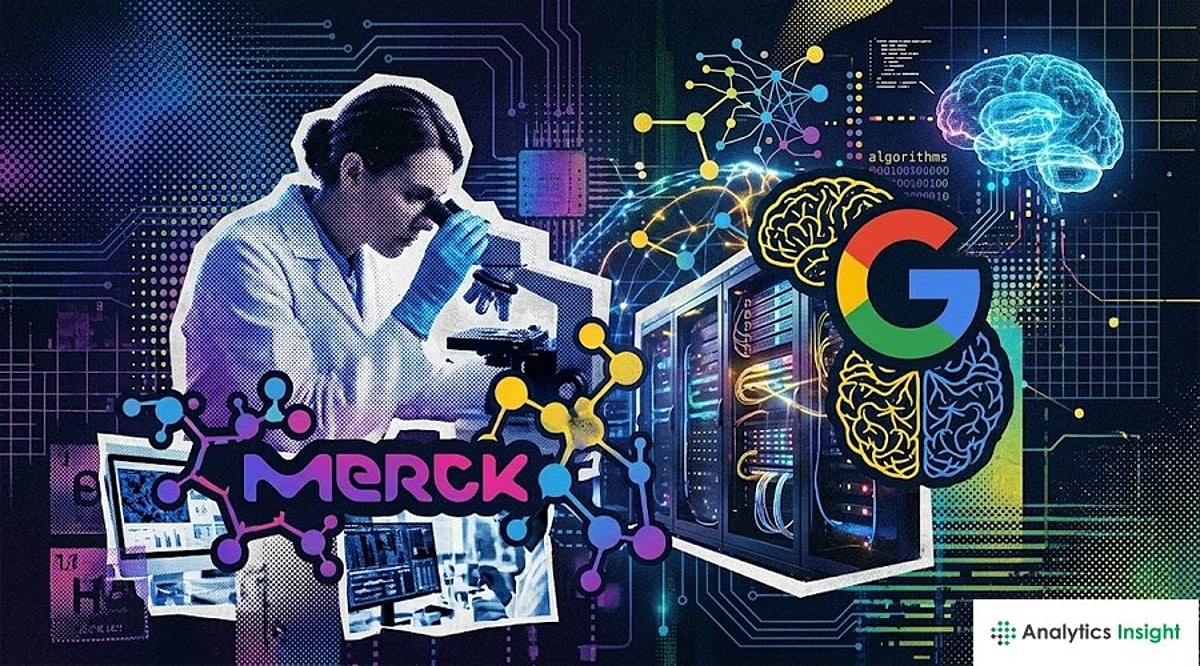
The era of pharmaceutical giants limiting themselves to cautious AI "pilot projects" has officially come to an end. At the Google Cloud Next conference in Las Vegas, Merck (known as MSD outside the U.S. and Canada) and Google Cloud announced a landmark 10-year partnership valued at up to $1 billion. This deal represents more than just a lease on computing power; it is an admission that proprietary models must be fully integrated into the industry’s most sacred process: the drug discovery cycle. While Big Pharma previously utilized niche neural networks for specific tasks like protein folding, Merck’s Chief Information and Digital Officer, Dave Williams, confirmed the corporation is now embedding Gemini Enterprise across its entire "digital backbone."
The deal is a strategic move to solve the industry’s most persistent headache—the agonizingly long time-to-market for new drugs. Merck plans to automate the complex regulatory reporting and data digitization that have hindered Research and Development (R&D) for decades. According to Google Cloud CEO Thomas Kurian, AI agents will work alongside Merck’s 75,000 employees, optimizing everything from computer-simulated experiments to supply chain management. The scale of the investment signals Merck’s confidence that savings in compliance and accelerated research timelines will more than offset the massive checks they are now cutting to Google.
However, this surge in productivity comes at the cost of technological sovereignty. Deep integration creates a classic risk of "vendor lock-in." By moving from isolated tools to a unified Google ecosystem, Merck is effectively outsourcing the management of its institutional knowledge to a third party. Williams confirmed the collaboration is set for at least a decade, cementing what looks like a long-term dependency. Merck is betting that a centralized "AI brain" is more critical to success than technological independence. In today's market, competitive advantage in pharmaceuticals is increasingly defined not by lab equipment quality, but by the depth of cloud infrastructure integration. For the rest of the industry, the signal is clear: disjointed AI experiments no longer move the needle, and drug development has finally transformed into a software-driven industry.