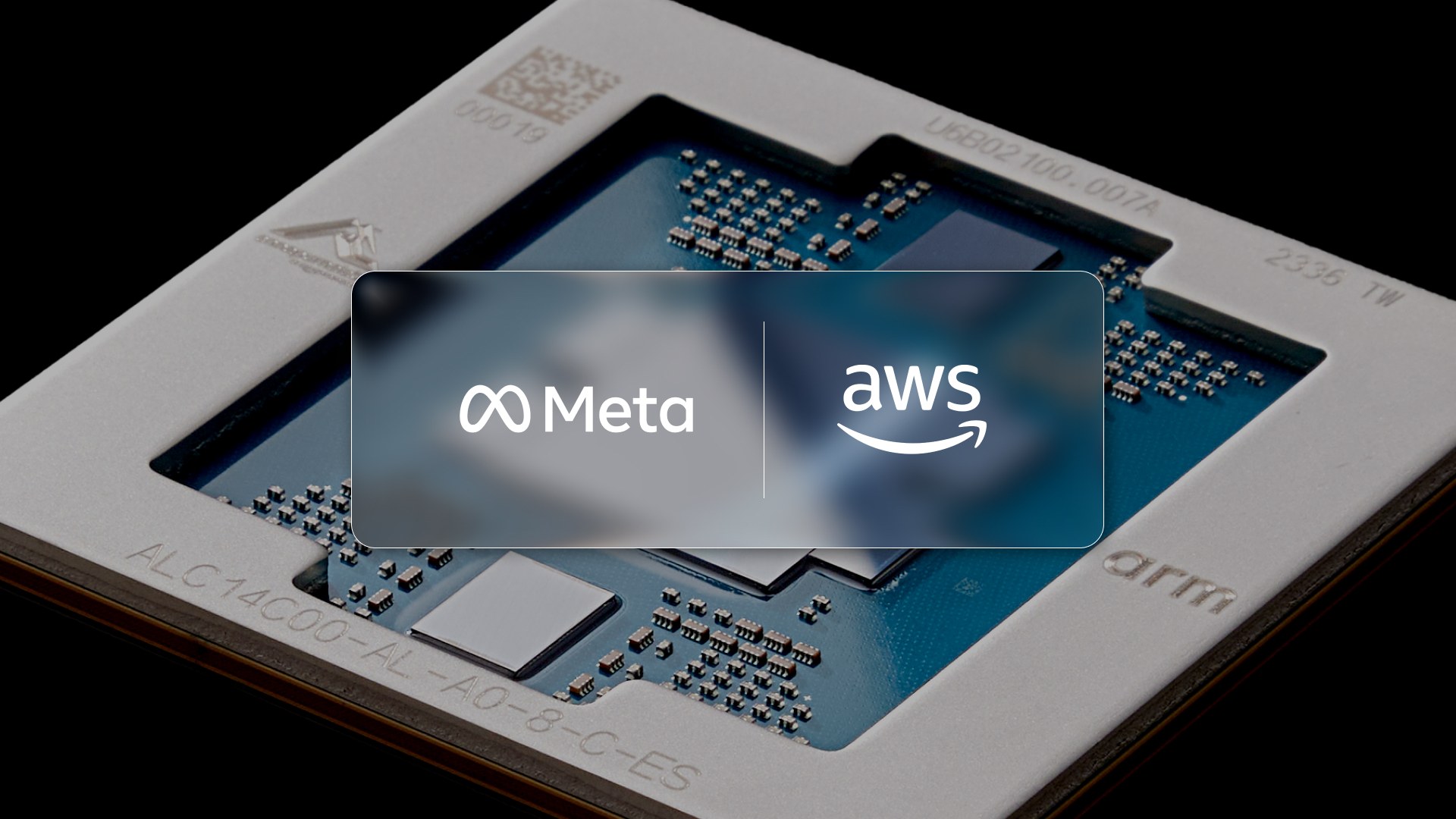
Mark Zuckerberg has concluded that over-reliance on Nvidia is becoming too costly for business. According to reports from The Decoder, Meta is procuring tens of millions of Amazon Graviton 5 processor cores. This strategic maneuver positions the Facebook parent company as one of AWS’s largest customers and officially signals the end of the 'GPU-only' era. While Jensen Huang’s chips continue to operate at their limits training heavyweight models, ARM processors are becoming the foundation for the industry’s next evolutionary phase: Agentic AI.
Meta’s logic is hyper-pragmatic. Autonomous agents do not require the colossal raw compute power of GPUs as much as they need precise task orchestration and logic execution. Using power-hungry GPUs for these purposes is akin to driving a nail with a microscope: expensive and highly inefficient. Shifting to ARM architecture allows for a radical reduction in Total Cost of Ownership (TCO) and operational expenses for inference—the execution of pre-trained models. This shift enables Meta to scale agent systems without catastrophically impacting corporate margins.
The deal with AWS is more than just a capacity lease; it is a critical step in a strategy for 'processor sovereignty.' Zuckerberg has no intention of remaining perpetually dependent on external vendors. According to The Decoder, Meta unveiled a specialized processor for AGI (Artificial General Intelligence) tasks as early as March, developed in collaboration with ARM. Utilizing Graviton 5 today serves as a way to stabilize the workload of agentic systems on a familiar architecture, ensuring a seamless future migration to proprietary hardware.
A clear division of labor is emerging within the industry: GPUs remain the 'brute force' tool for neural network training, while CPUs are becoming the critical nodes for planning and coordinating autonomous systems. Meta had previously deployed Nvidia Grace processors and diversified its supply chain with AMD solutions, but the sheer scale of the current Amazon contract underscores a shift: the future of inference belongs to energy efficiency.
For the broader business world, this is a significant signal: the era of mindlessly burning resources on GPUs is coming to a close. Operational efficiency now demands a hybrid approach where ARM architecture takes on the role of the dispatcher, keeping AI maintenance costs within reasonable limits.