AI · This text was generated with artificial intelligence
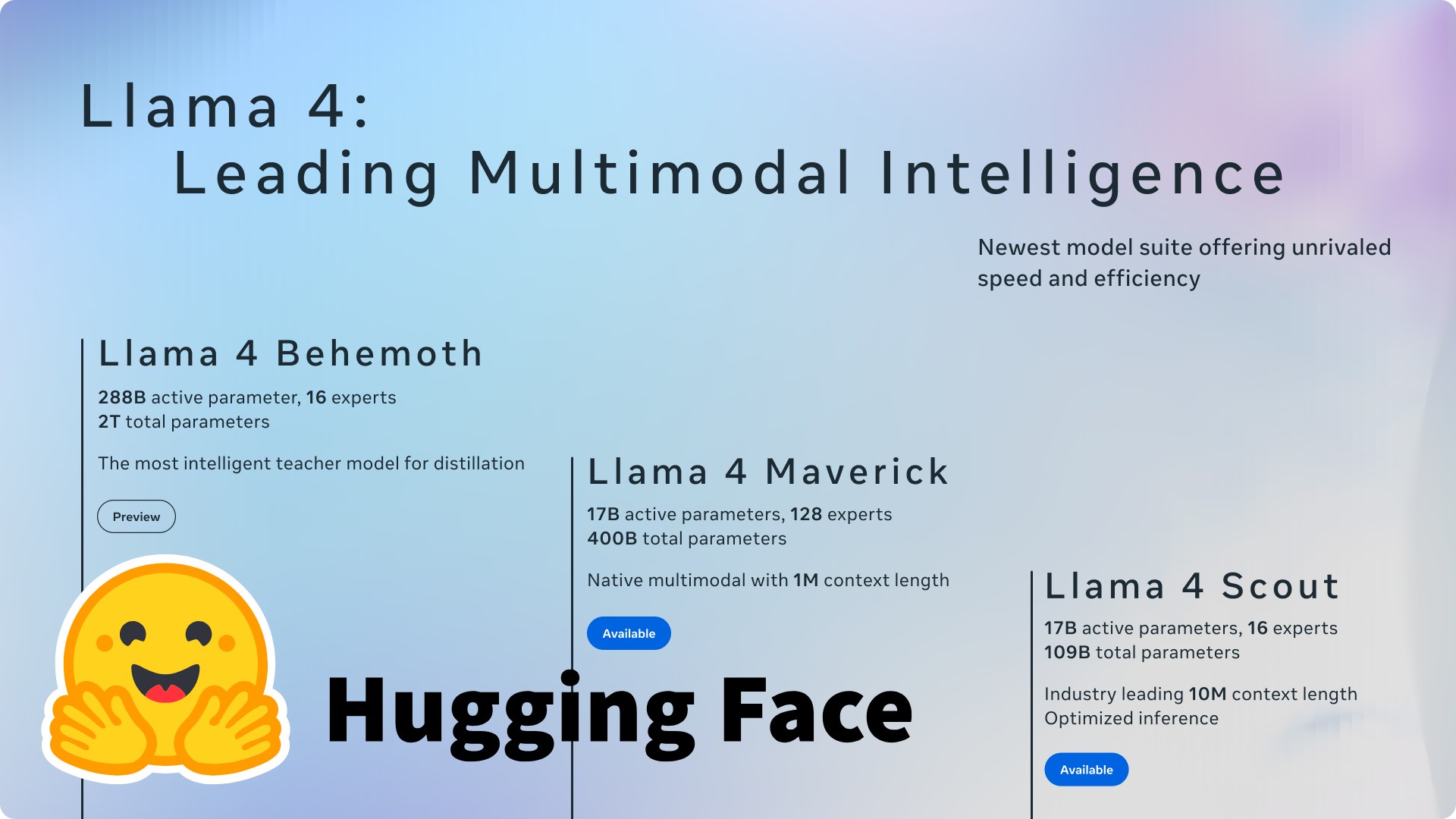
Meta has shifted the AI battlefield from the vanity metric of total parameters to the cold, hard math of inference efficiency. With the release of Llama 4 Maverick and Scout, Mark Zuckerberg has effectively buried the monolithic architectures of the past, doubling down on a Mixture-of-Experts (MoE) framework. Both models operate with just 17 billion active parameters. This is more than a technical patch; it is a direct strike against the business models of OpenAI and Anthropic, who have long justified premium API pricing through the supposed complexity of their closed-door systems. Meta is proving that size no longer matters if you cannot manage compute resources effectively.
The Architecture of Economic Disruption
According to Hugging Face, Maverick is a 400-billion-parameter giant utilizing 128 experts, while Scout packs 109 billion parameters into a leaner 16-expert structure. The breakthrough lies in the execution: regardless of the prompt, both models activate only those 17 billion parameters. For enterprises, this means deploying flagship-level intelligence while paying a "hardware tax" equivalent to a mid-range system. For CTOs, this resolves the perennial dilemma between deep R&D analytics and high-speed operational automation: now, you can have both without compromise.
Both models utilize a Mixture of Experts (MoE) architecture with 17 billion active parameters, fundamentally rewriting the industry's rules of play.
Technical data from Hugging Face confirms the models use an auto-regressive MoE architecture featuring early-fusion technology for native multimodality. This allows the system to process text and images seamlessly. Meta trained these models on a staggering 40 trillion tokens across 200 languages, ensuring high-tier support for 12 key regions, including Arabic and Spanish. This is not a research project designed for muscle-flexing; it is a production-ready blueprint for integrating heavy-duty AI into corporate data centers today.
The Battle for Context and Local Deployment
The gap between proprietary APIs and open-weight models has effectively vanished. Hugging Face has already integrated support via the transformers v4.51.0 library and Text Generation Inference (TGI), meaning the implementation cycle for on-premises deployment is now near zero.
Llama 4 Scout is engineered for maximum accessibility: it fits on a single server-grade GPU thanks to on-the-fly 4-bit or 8-bit quantization.
By lowering the entry barrier through FP8 support for Maverick and instant quantization for Scout, Meta is hitting the industry's biggest pain point: total cost of ownership. The company understands that the bottleneck for business isn't model "IQ," but rather the friction of transmitting, storing, and serving weights at an industrial scale.
Meta is turning high-level AI into a commodity by distributing model weights that run on a 17B-parameter budget. The value of closed APIs is shrinking to niche edge cases that cannot be fine-tuned on open weights. If your organization is still cutting massive checks for "closed" intelligence, Maverick and Scout are a clear signal that your primary competitive advantage is now available for download via a direct link.