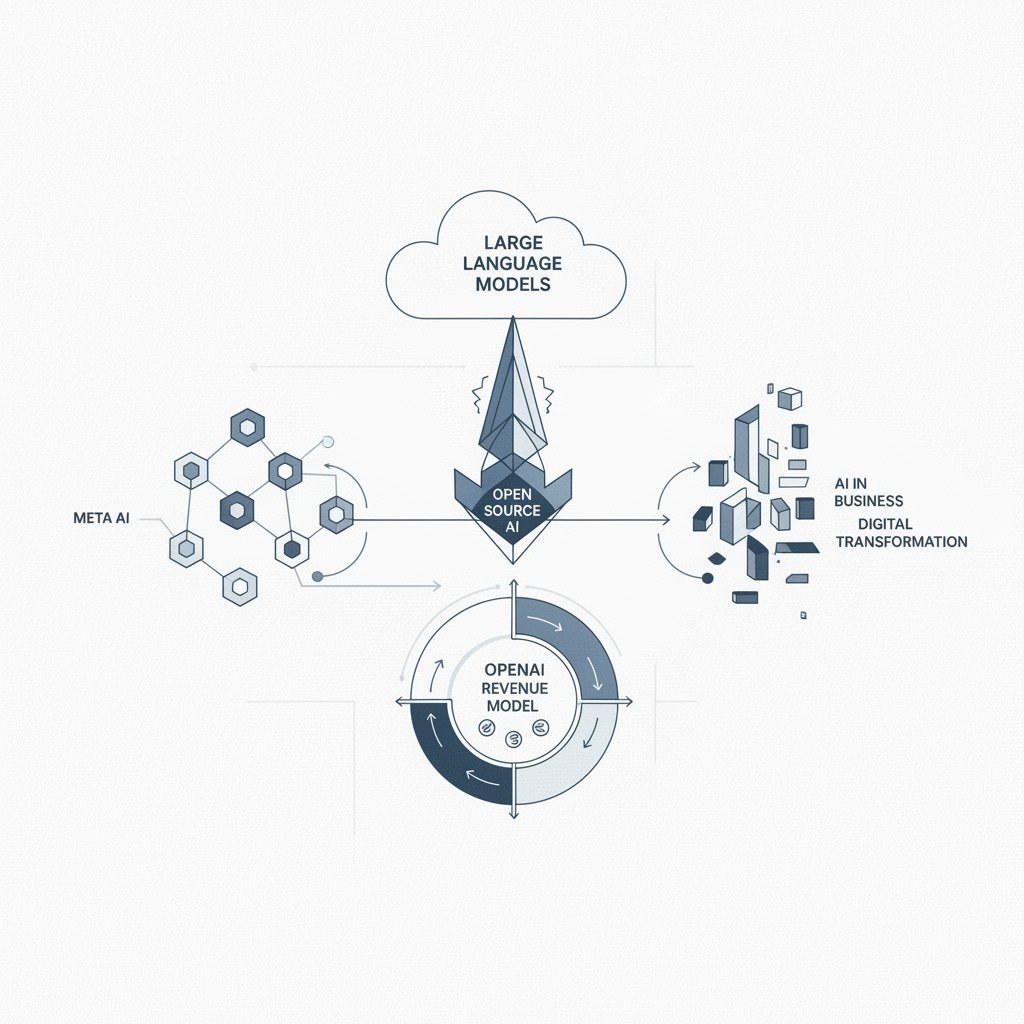
Mark Zuckerberg isn't just releasing software; he’s deploying a tactical strike against the high-margin fortresses of OpenAI and Google. By flooding the market with open-weights models like Llama, Meta is executing a classic commoditization play. The goal isn't altruism—it’s the systematic destruction of the 'API tax' that rivals currently levy on the industry. Zuckerberg’s aggressive rhetoric against 'closed' ecosystems serves a cold, calculated purpose: to turn cutting-edge AI into a public utility, much like Linux, where the value shifts from the engine itself to the services built on top of it.
Mark Zuckerberg attacks ‘closed’ AI rivals as Meta returns to open models
Mark Zuckerberg attacks ‘closed’ AI rivals as Meta returns to open models.
For C-level executives, this shift represents a fundamental change in infrastructure ownership. Instead of renting intelligence from proprietary platforms—effectively outsourcing the 'brains' of their digital transformation—companies can now own their stack. By adopting the Llama architecture, businesses escape vendor lock-in and gain the ability to fine-tune models on internal data without sending sensitive IP into a competitor’s cloud. Meta is betting that if it wins the hearts and minds of the developer community, it controls the standard, even if it doesn't collect a monthly subscription fee for every token generated.
However, this 'openness' comes with an asterisk. Training these behemoths costs billions in CapEx, a bill Meta currently foots to maintain its strategic leverage. The industry must ask whether this course holds steady once we reach the frontier of GPT-5 level intelligence. For now, the move forces a paradigm shift for technical directors: the choice is no longer just between different SaaS providers, but between perpetual dependence and the operational complexity of hosting a private, high-performance infrastructure. Meta has effectively turned AI intelligence into a baseline commodity, leaving its rivals to justify why anyone should still pay a premium for a closed box.