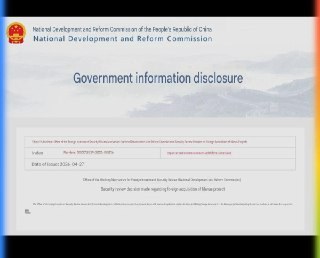
China’s National Development and Reform Commission (NDRC) has effectively killed Meta’s acquisition of the startup Manus. Even a $2 billion price tag failed to sway Beijing regulators, who blocked the transaction citing 'foreign investment security reviews.' The signal to the market was delivered with a heavy hand: the startup's founders have reportedly been barred from leaving the country, a blunt reminder that AI agent algorithms are no longer mere tradeable assets—they are national treasures.
From our perspective, this block is a textbook symmetrical response from Beijing to US chip export restrictions. While Mark Zuckerberg attempts to navigate the narrow path between Washington’s scrutiny and loyalty to Chinese partners, the NDRC is demonstrating that free-market logic is dead in the AI sector. Cutting-edge models are now classified as critical infrastructure. Owning an agent capable of autonomous problem-solving is now equated to controlling a strategic resource, where data security and sovereignty far outweigh commercial gain.
Meta continues to project optimism, suggesting the situation might still be resolved. However, when a dialogue escalates to travel bans for employees, you are no longer looking at a business negotiation—you are looking at an international incident. For investors and C-suite executives, the lesson is clear: M&A activity in the AI sector now carries political risks that no standard audit can mitigate. We are witnessing a new reality where a 'geopolitical default' on a deal is just as likely as a failure in technical due diligence.
Business leaders should audit their tech stacks immediately. If your critical AI tools are tied to jurisdictions at the epicenter of trade wars, the risk of a sudden loss of access is now greater than the likelihood of a technical glitch. In a world where algorithms are treated as weapons, there are no neutral zones left for business.