AI · This text was generated with artificial intelligence
The rapid spread of synthetic media across social feeds has finally hit platform economics. Over the past year, fully synthetic personas transitioned from experimental novelties into aggressive commercial drivers, eroding feed authenticity and cluttering ad real estate. As audiences grow weary of deceptive virtual influencers, platforms are prioritizing inventory protection and user trust over unchecked algorithmic arbitrage.
Mandatory Disclosures and Reach Penalties
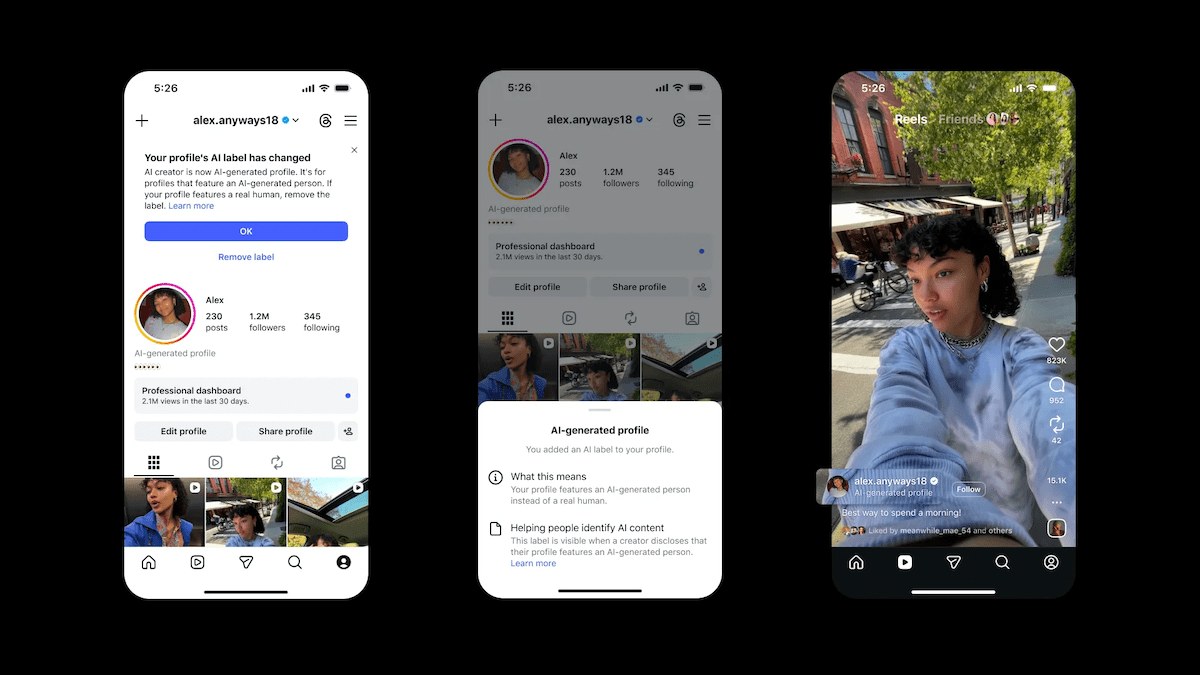
To clean up its creator inventory, Instagram is replacing its ambiguous “AI creator” tag with a direct “AI-generated profile” requirement. Under the revised policy, any account built around a persona generated or substantially altered via AI must explicitly carry this disclosure. Accounts that attempt to hide synthetic avatars face immediate, automated distribution penalties, choking organic reach across feeds, recommendations, and search.
“As generative AI becomes a bigger part of how people create, we’ve heard that people don’t like seeing a profile that seems human, only to find out later that the person featured is AI-generated,” Instagram stated in its official announcement. “They want to know when a profile features an AI-generated person.”
Importantly, Meta clarified that transparent accounts will not suffer penalization solely for adopting the label. Routine workflow tooling—such as editing photos, refining captions, or generating graphic assets—remains exempt from the profile-level mandate. The target is specifically deceptive persona masquerading, not production efficiency.
Deceptive Campaigns Force Platform Guardrails
The enforcement crackdown follows widespread abuse of synthetic influence. A Wired investigation exposed an undisclosed network of AI-generated male influencers promoting the dating app Goose on Instagram, with bots actively direct-messaging users to manufacture conversion funnels. In July, The New York Times tracked hundreds of synthetic wellness personas and bogus medical authorities selling supplements without credential verification or regulatory accountability.
For Meta, the calculus is straightforward: covert synthetic spam threatens brand safety, dilutes advertiser value, and invites regulatory scrutiny. As the company navigates an $18 billion settlement with U.S. states over adolescent platform impacts and reels from backlash over unconsented likeness generation, tightening creator guardrails is table stakes.
For marketing leaders and AI agencies, covert persona farming is no longer a viable growth hack. The arbitrage window has closed, leaving businesses to choose between verified, transparent synthetic assets or total distribution failure.