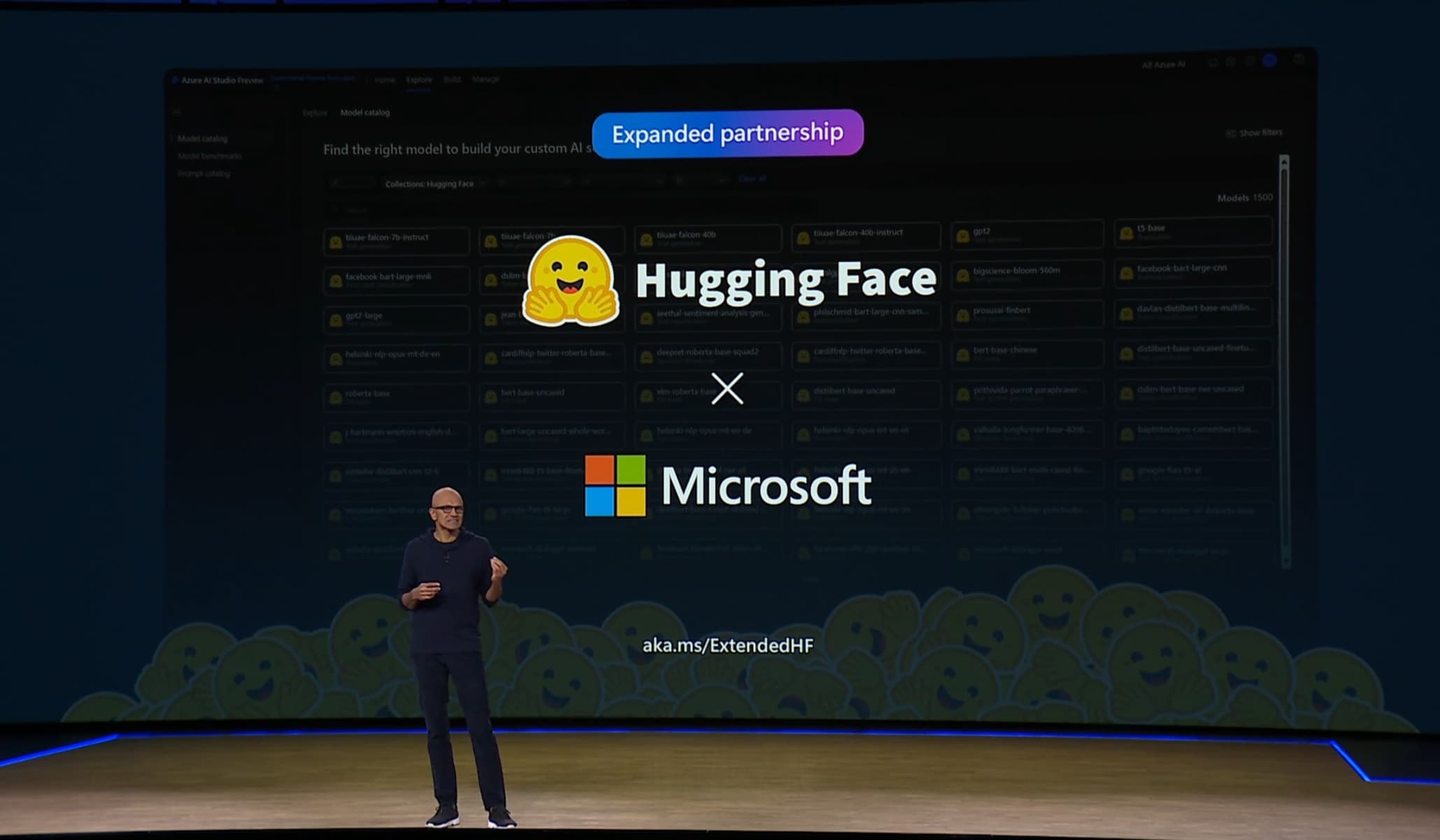
Microsoft Build 2024 saw an deepening of existing ties, notably with Hugging Face. This collaboration now makes popular open-source AI models, including Meta's Llama 3, Mistral 7B, and Cohere's Command R Plus, readily available within Azure. These models are accessible with a single click through the Azure Model Catalog and Azure AI Studio. In a reciprocal move, Microsoft has made its own Phi-3 models available on the Hugging Face platform. Further enhancing its AI infrastructure, Microsoft also introduced new virtual machines powered by AMD Instinct MI300X GPUs, touting optimized costs and performance through the Optimum-AMD library. While these developments sound promising, their true impact will only be demonstrated over time and by client spending.
The core of this partnership revolves around selling convenience rather than the models themselves, many of which are freely available. Microsoft is providing the Azure platform, along with its substantial computing power and development tools, thereby democratizing access to cutting-edge AI technologies for developers. Hugging Face solidifies its role as a central hub for AI models, with revenue generated from the utilization of these models on Azure servers. The associated costs, naturally, fall upon the users who rent these computing resources, representing a classic cloud business model where clients pay for ease of access and use.
For many companies that lack the resources to develop their own AI solutions, this partnership offers direct and rapid access to advanced AI capabilities. This accelerates AI adoption and broadens access to computational power previously available only to a select few. However, such deep integration could foster an over-reliance on the Microsoft ecosystem. When a comprehensive selection of leading open-source models is consolidated under the Azure umbrella, choices may become limited, increasing the risks of vendor lock-in.
The AI infrastructure market is clearly becoming a competitive battleground. Microsoft is actively seeking to strengthen its position, and competitors like Google with Vertex AI and AWS with SageMaker are undoubtedly preparing their responses. Simplified access to AI is a significant benefit for businesses, reducing the time to market for AI-driven products and services. Nevertheless, chief executives should carefully assess the risks associated with dependency on a single cloud provider.
Comparing pricing and offerings from competing cloud providers becomes crucial for striking an optimal balance between cost, performance, and freedom of choice. It is important to recognize that the "openness" in this context is largely a marketing strategy, with the ultimate cost borne by the customer through the rental of computing resources.