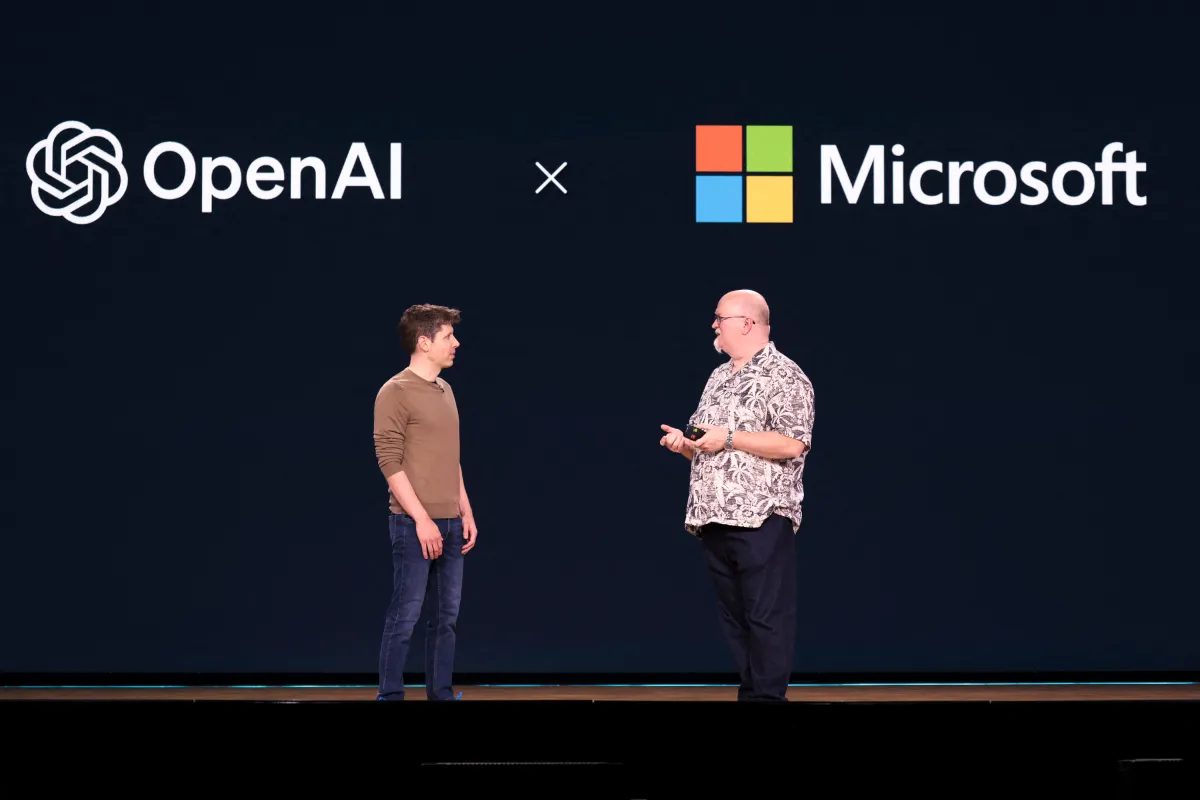
Microsoft generated $10 billion in revenue from commercial agreements with OpenAI, including revenue-sharing payments, for the quarter ending September 30, according to the company's financial report released on Wednesday.
This sum accounts for nearly 11% of Microsoft's total quarterly revenue of $92.3 billion. The relationship between these entities generates massive capital flows, raising questions about how these financial dependencies alter corporate strategies as partners increasingly compete for the same enterprise clients.
Financial Scale and Revenue Inflow
Microsoft's fiscal year begins in July, making the quarter ending September 30, 2026, the first quarter of fiscal year 2027. For the full fiscal year 2026, revenue from OpenAI reached $24.1 billion. Based on recent quarterly paces, Microsoft will pull in $40 billion annually from OpenAI-related deals.
Under the April 2026 agreement, OpenAI is required to continue sharing revenue with Microsoft through 2030, subject to a set cap, even though OpenAI is permitted to work with competing cloud providers. Market observers estimate that OpenAI remits 20% of its revenue to Microsoft under the previous deal, during which the software giant invested over $13 billion in the AI startup, though neither the AI lab nor Microsoft has publicly confirmed this percentage.
Outstanding Receivables and Equity Dilution
Despite substantial inflows, financial strain manifests in growing debt between the two companies. Microsoft reported $7.2 billion in outstanding receivables from OpenAI at the end of September, compared to $6 billion at the end of June. These funds represent amounts OpenAI owes for past transactions rather than additional revenue.
Microsoft also reported $7.2 billion in outstanding receivables from OpenAI at the end of September, compared to $6 billion at the end of June.
At the same time, the underlying capital structure of the partnership continues to shift. Microsoft's equity stake in OpenAI decreased slightly from approximately 25% in June to 24% in September. This continues a gradual decline from roughly 27% following the October 2025 recapitalization, although Microsoft did not specify what caused the dilution.
Structural Reorganization of the Partnership
Financial ties remain massive even as the baseline structure of the alliance transforms. The companies began loosening the bonds of their once-exclusive partnership in October 2025, when Microsoft relinquished strict control over OpenAI to give the startup more freedom in collaborating with other cloud providers. In exchange, OpenAI committed to purchasing an additional $250 billion in Azure service capacity under the October 2025 agreement.
For the full fiscal year 2026, revenue from OpenAI reached $24.1 billion.
What doesn’t add up
What lies behind the record-breaking revenue figures of tech's biggest AI partnership? Microsoft has turned the tie-up into massive quarterly cash inflows, yet OpenAI is steadily racking up unpaid balances to its primary backer. The software giant posts sparkling commercial revenue while absorbing mounting credit exposure from a partner that is simultaneously morphing into a direct competitor. OpenAI’s outstanding receivables owed to Microsoft rose to $7.2 billion by the end of September.
Our stories: OpenAI 2026 Financials: $9.3B Loss on $5.7B Revenue (June 20).