AI · This text was generated with artificial intelligence
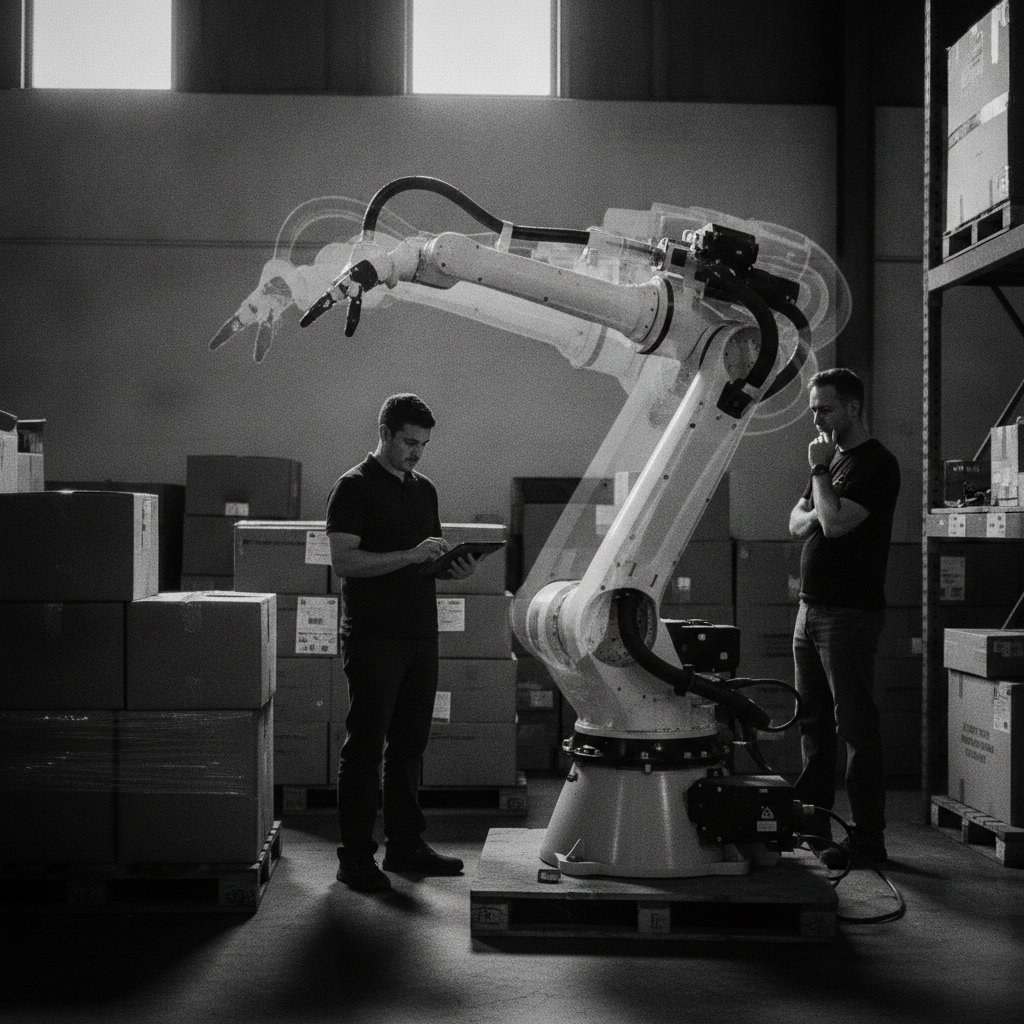
Traditional automation suffers from chronic "stuttering"—jerky movements caused by computational latency. Modern Vision-Language-Action (VLA) models force a robot to freeze and process environmental data before every new burst of movement. This reactive approach creates pauses that kill fluidity and stretch cycle times. As researchers from MIT note, robots effectively plan actions based on outdated information: by the time the algorithm finishes "thinking," the physical reality has already shifted.
A team led by MIT Professor Song Han, alongside colleagues from NVIDIA and Caltech, solved this by giving systems a "sense of the future." Instead of calculating the next step from the current position, the architecture predicts the robot's state several moves ahead. It constructs a new trajectory while the current action is still in progress. As Song Han explained, the goal was to make "physical AI" run faster without swapping motors for more powerful ones.
Key Research Milestones
Standard pick-and-place operation speeds doubled. Computational load on the system remained unchanged. Robotic manipulators adapted to dynamic tasks like table tennis.
"Our goal was to optimize planning logic so that hardware could be pushed to its physical limits without requiring any hardware upgrades," — Song Han, MIT Professor.
The result is a twofold acceleration of standard pick-and-place operations without additional compute costs. The research preprint on arXiv demonstrates that the same manipulators can now handle dynamic tasks like table tennis or Whack-a-Mole. This marks a fundamental shift: robots are evolving from discrete executors into fluid, autonomous systems simply by updating their planning logic.
For logistics operators, this offers a way to double warehouse throughput without purchasing new hardware. The software solution eliminates the hidden "tax" of computational pauses, proving that the next leap in efficiency will come from state modeling rather than a race for faster actuators. If your automation feels sluggish, the bottleneck is likely a desync between thought and action, not the physical limits of the machinery.