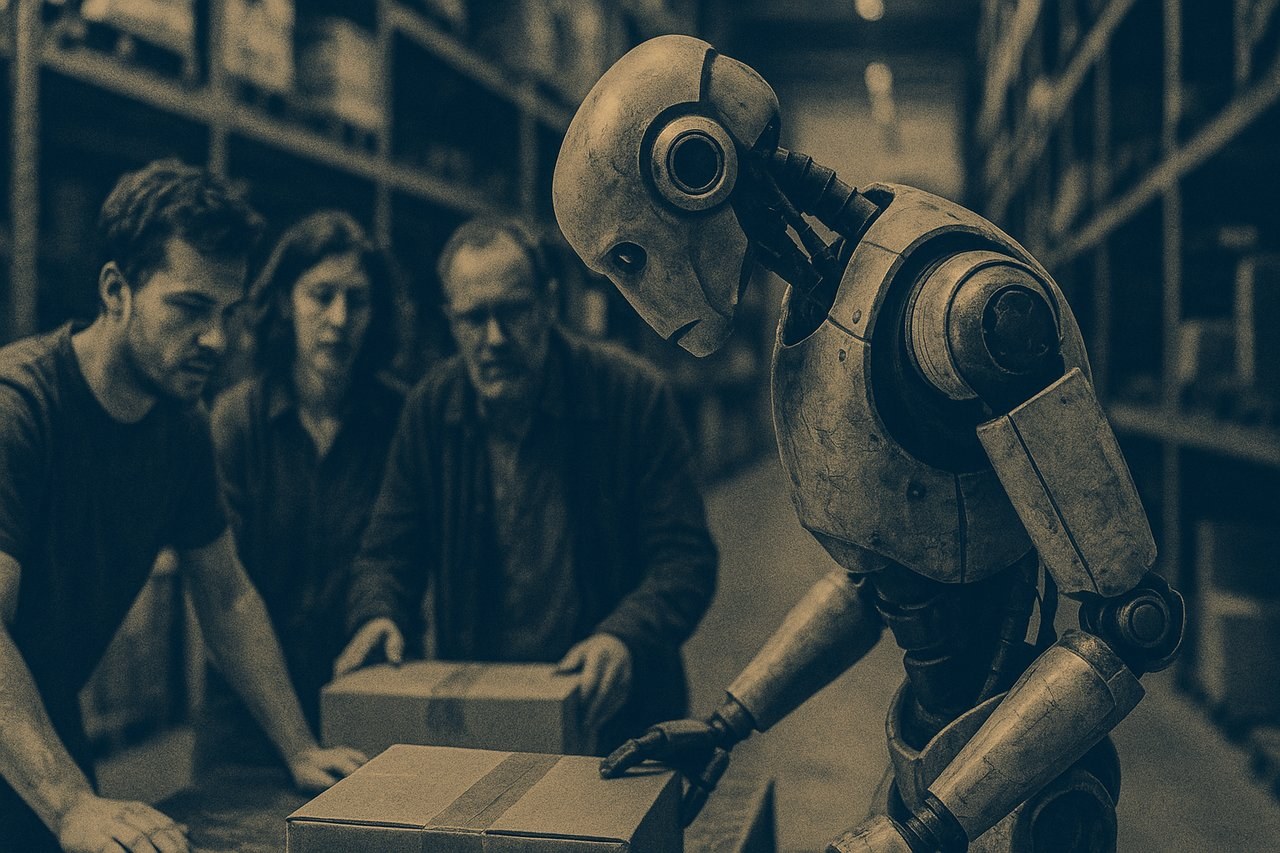
The human factor is not just about mistakes; it is about cognitive overload, which turns robot training into a literal minefield. When an operator demonstrates how to move a coffee cup, they cannot physically monitor every variable. Consequently, they might focus on the tilt of the mug while completely ignoring its proximity to an expensive laptop. Current AI models interpret this selectivity as a lack of priority: if the teacher didn't pay attention to the distance, the model assumes it doesn't matter. As a result, autonomous systems in real-world environments begin to take risks simply because they misread the context.
The Problem of Underspecified Features
A team of researchers from MIT—Elena Merkur, Nick Walker, and Andrey Bobu—classifies this as a problem of "underspecified features." Robots currently fail to distinguish between a user's genuine indifference and their typical lack of attention. To bridge this gap, the authors developed a framework that analyzes the statistical footprint of feature variability. If a specific parameter "drifts" across different demonstrations, the robot flags it as questionable.
"Instead of playing a guessing game and provoking incidents, the system switches to a Targeted Explanations method."
Targeted Explanations and Training Efficiency
Using natural language, the robot reports its uncertainty—explicitly stating, for instance, that it does not understand how critical the distance to the laptop is—and requests a corrective demonstration. In tests using a Franka manipulator arm, this approach showed a multi-fold advantage in reward function recovery accuracy compared to passive data collection.
Business Perspectives: The Economy of Trust
For businesses, this represents a fundamental paradigm shift: moving from extensive data accumulation to high-quality feedback loops. The economy of trust here is built on an agent's ability to detect ambivalence in its own rules before it leads to material damage. Shortening the feedback cycle allows for faster and cheaper deployment in unstructured environments, as a robot that knows what to ask requires significantly fewer hours of manual supervision.
Reduced costs for training data preparation. Enhanced operational safety in office and home environments. Faster integration of autonomous systems into complex business processes.
Industry Takeaway
It is time to stop feeding algorithms "perfect" data that humans are naturally incapable of providing. The future of industrial automation lies in active alignment, where the agent independently audits its own logical gaps. If your robot doesn't know how to doubt your instructions, it is unfit for work outside of a sterile factory floor.