AI · This text was generated with artificial intelligence
Protein design has spent years trapped in a circular trap: designing functional molecules while judging algorithms by how closely they copy nature. Conventional computational biology operates on a two-step framework—generating a target 3D backbone and predicting an amino acid sequence to fit it. Yet benchmark validation routinely penalized non-native solutions, ignoring conformational flexibility and the reality that distinct sequences can fold into identical functional structures.
Amy E. Keating, head of the MIT Department of Biology and senior author of the study published in PNAS, pointed directly to this systemic bias:
"For years, the field has measured success by asking whether a model can reproduce the protein sequence that evolution happened to select — our work shows that this isn't the best metric for protein design."
In biological reality, individual sequences undergo dynamic polymorphic conformational shifts. Anchoring machine-learning pipelines to evolutionary mimicry restricts generative pipelines from charting viable molecular architectures that evolution simply bypassed.
Capturing Pairwise Interactions and Managing Noise
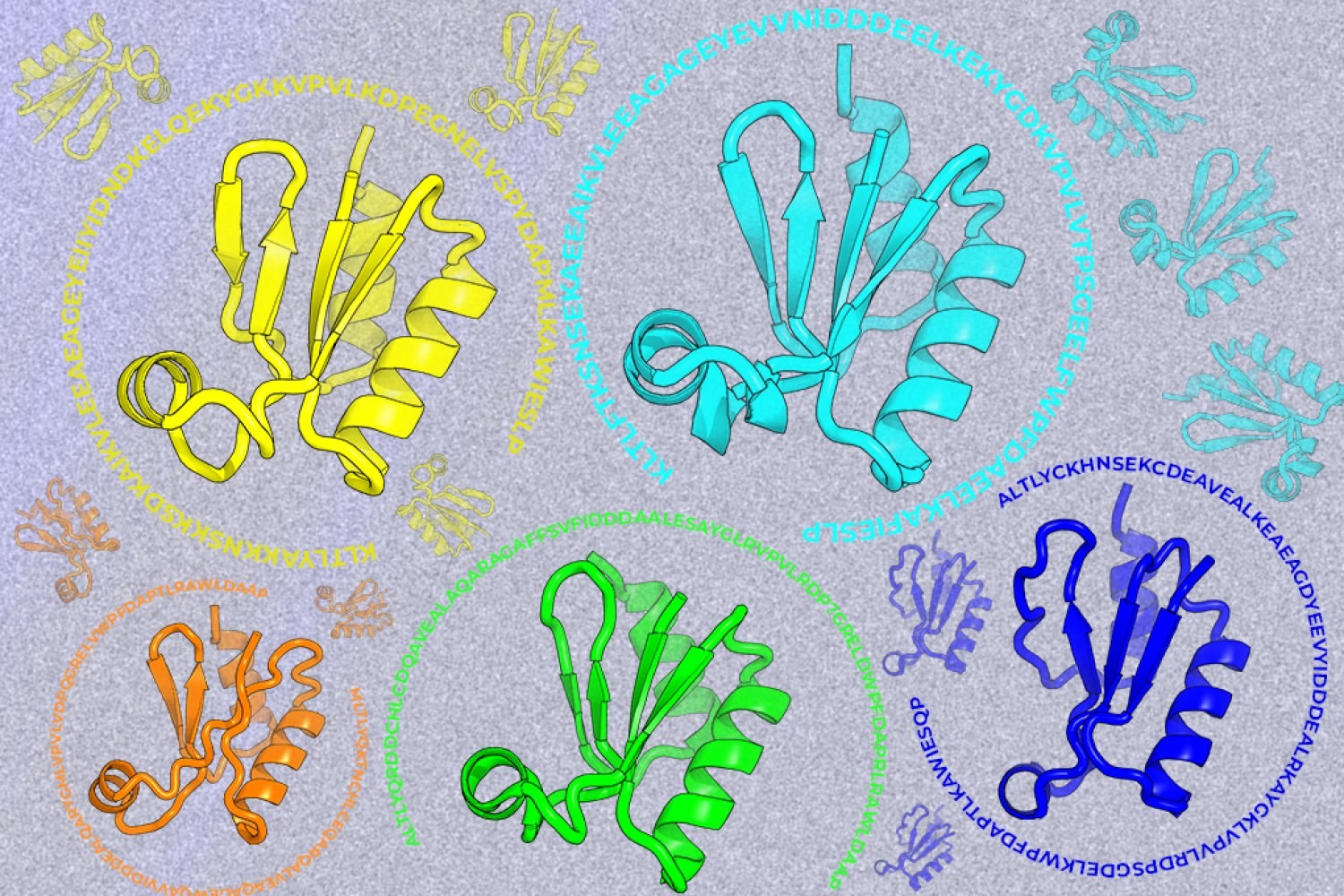
To decouple generative search from natural templates, MIT researchers developed PottsMPNN. The architecture incorporates physical constraints governing structural stability and pairwise residue interactions. Lead author Foster Birnbaum examined why leading standard models remained brittle when handling conformational plasticity, refactoring sequence-energy landscape modeling to prioritize physics-based stability over native sequence matching.
Scientific Implications and Validation Boundaries
For biotechnology and pharmaceutical pipelines, breaking evolutionary dependency expands candidate search spaces for targeted therapeutics, reduces expensive physical wet-lab screening cycles, and improves synthetic binder stability. However, commercial deployment faces hard bottlenecks: in silico energy landscapes still require rigorous in vitro binding validation, non-immunogenic profiling in complex cellular environments, and long-term assay screening to bridge the gap between computational drafts and scalable biotherapeutics.