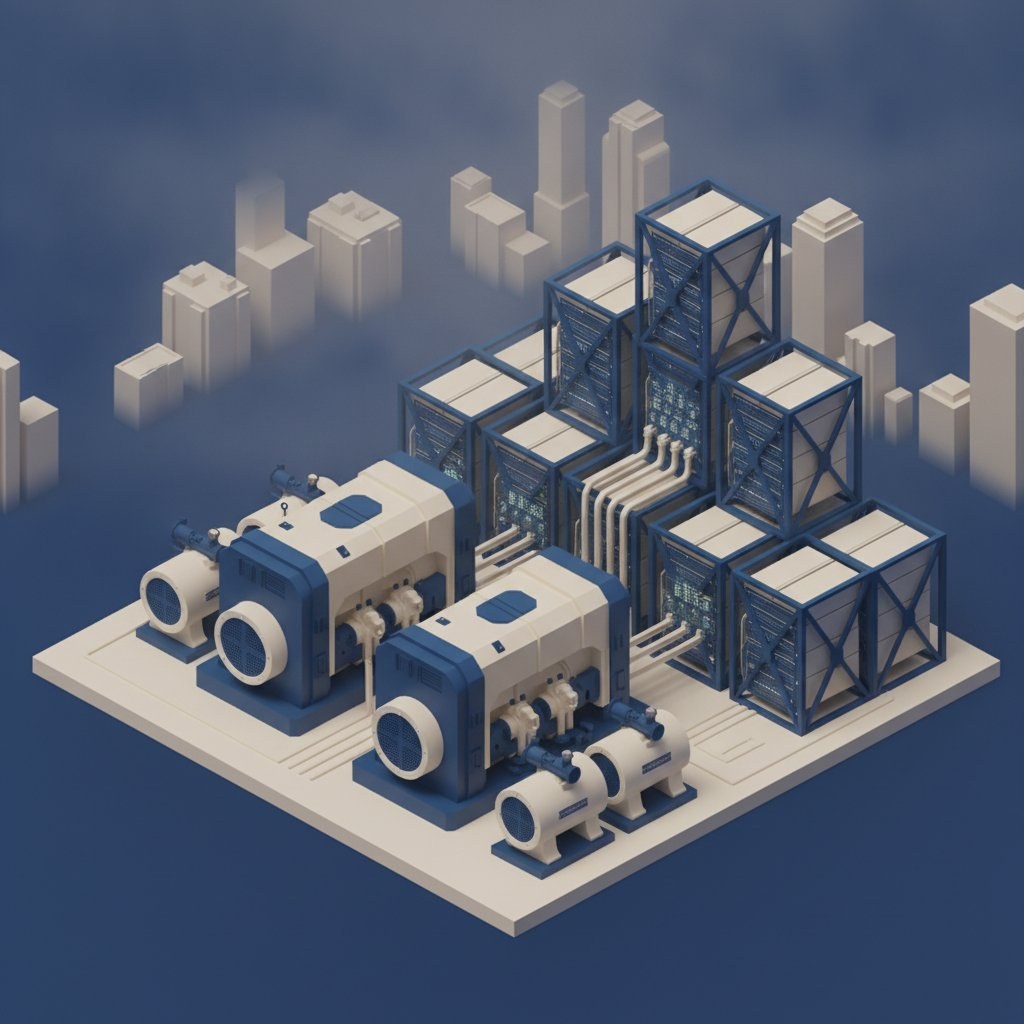
The infrastructure crisis in the capital has entered a phase of outright deficit. According to Pavel Kulakov, CEO of OXYGEN, approximately 75% of Moscow's districts are now officially classified as energy-deficient. For businesses, this marks the end of the era of rapid scaling: deploying a decent computing cluster for AI tasks is physically impossible today. Facilities launched in 2023–2024 are packed to capacity, and new sites are simply not receiving permits for grid connections.
The Appetite Problem
The issue lies in consumption. While a standard server rack consumes 5–10 kW, modern GPU clusters devour tens or even hundreds of kilowatts. The city’s power system was never designed for such spikes. As a result, the market has shifted toward exotic survival mechanics: data center owners are forced to build their own power plants using gas reciprocating engine (GRE) units. This is not an innovative breakthrough, but a gesture of desperation fueled by a domestic gas surplus following the collapse of exports.
Self-generation technically allows electricity prices to stay around 3.86–4.6 rubles per kWh, but this comes at the cost of bloated CAPEX.
Investors are mass-purchasing Chinese GRE units at 85,000–100,000 rubles per kW. While this is half the price of sanctioned European equivalents, it still turns a routine data center launch into a heavy-duty energy investment project with an unpredictable ROI.
Business Implications
Capacity shortages have become a harsher bottleneck for autonomous system implementation than the scarcity of GPUs or talent. Rising colocation and cloud tariffs are just the tip of the iceberg. Any ambitious AI transformation project now risks hitting the physical limit of the power outlet.
In business terms, this means power constraints are now the primary ceiling for growth. CEOs must revise long-term budgets and demand more than marketing promises from providers. You need a legally binding power reservation plan to ensure your infrastructure can scale alongside your ambitions.