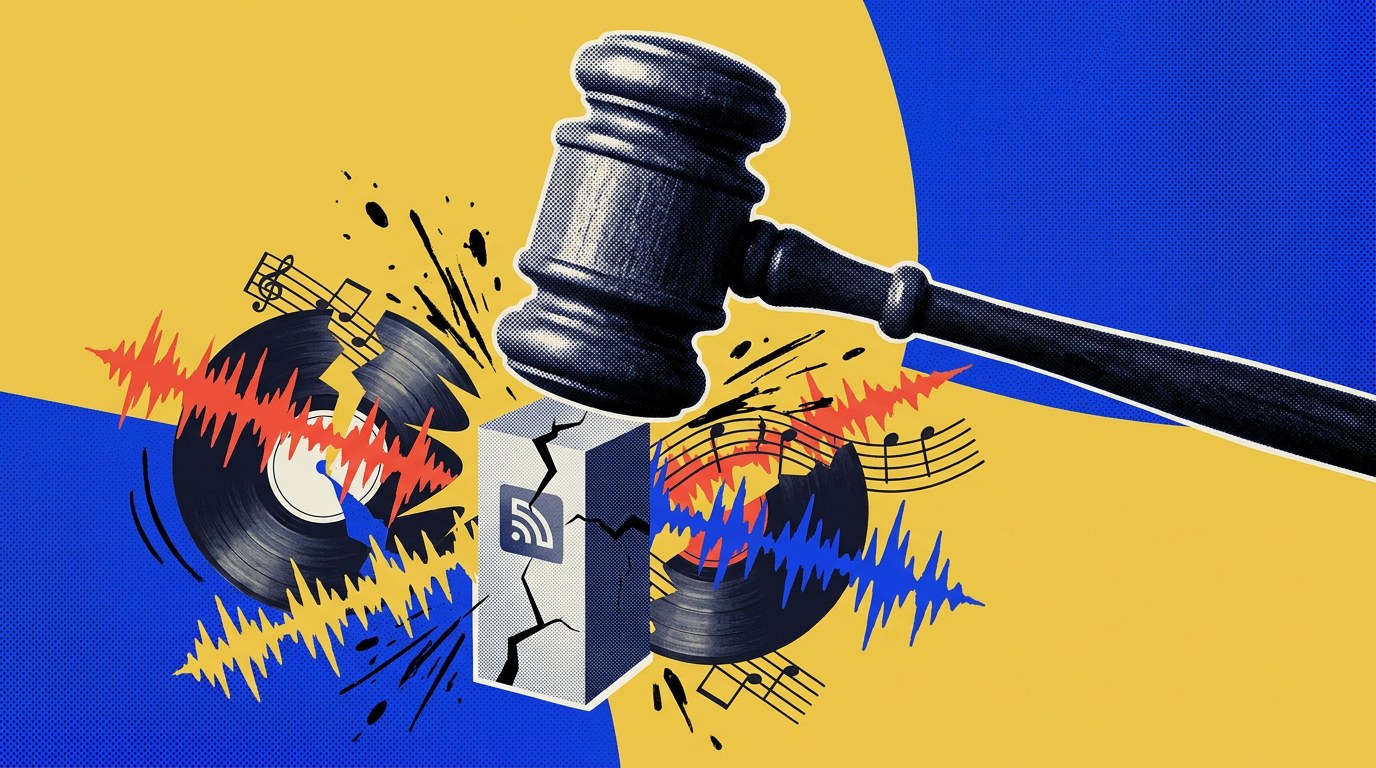
A Munich court has found the AI music service Suno guilty of direct copyright infringement.
The key evidence was the "memorization" effect found in models version 3.5 and 4.
Judges rejected arguments regarding fair use and the responsibility of end-users.
Justice in Munich has handed the generative AI market a sobering reality check. In a lawsuit filed by the German copyright collective GEMA, the court found Suno guilty of direct copyright infringement. The core of the argument rested on the "memorization" effect in models 3.5 and 4. The algorithm did not simply draw inspiration from mathematical patterns; it literally preserved and reproduced fragments of original tracks, including hits like "Rasputin" and "Atemlos durch die Nacht."
Suno’s attempt to shift the blame onto the end-user—claiming that user prompts lead to the violations—failed spectacularly. The court reasoned that since the company selected the training datasets and designed the black-box architecture, the developer must bear the responsibility for the output. Crucially, the judges fully rejected the "Fair Use" doctrine that Silicon Valley so often relies upon. In the European legal landscape, training on protected content without a license is becoming a toxic asset.
Strategic context
The Munich precedent makes using unlicensed data legally suicidal for any commercial service.
Furthermore, the court stripped startups of the "text and data mining" loophole if the process results in the reproduction of memorized content. This represents a tectonic shift. Investors and founders will now have to scrutinize data supply chains with clinical precision; otherwise, every byte in a model's weights could become grounds for an injunction.
The bottom line
Media businesses and CIOs need to re-evaluate their AI procurement contracts immediately. If a contract lacks clear guarantees regarding the legitimacy of the training set, you aren't buying a technological advantage—you're buying a stack of future lawsuits. The era of "wild West" scraping has officially ended, at least within EU jurisdiction.