AI · This text was generated with artificial intelligence
The industry-standard Adam optimizer, which has held a monopoly on neural network training for a decade, is facing an existential threat from a newcomer called Muon. Research from the National University of Singapore and Yale confirms that Muon delivers nearly a two-fold increase in LLM training efficiency. In business terms, this translates to a direct opportunity to slash compute costs by 50% without compromising the quality of the final model.
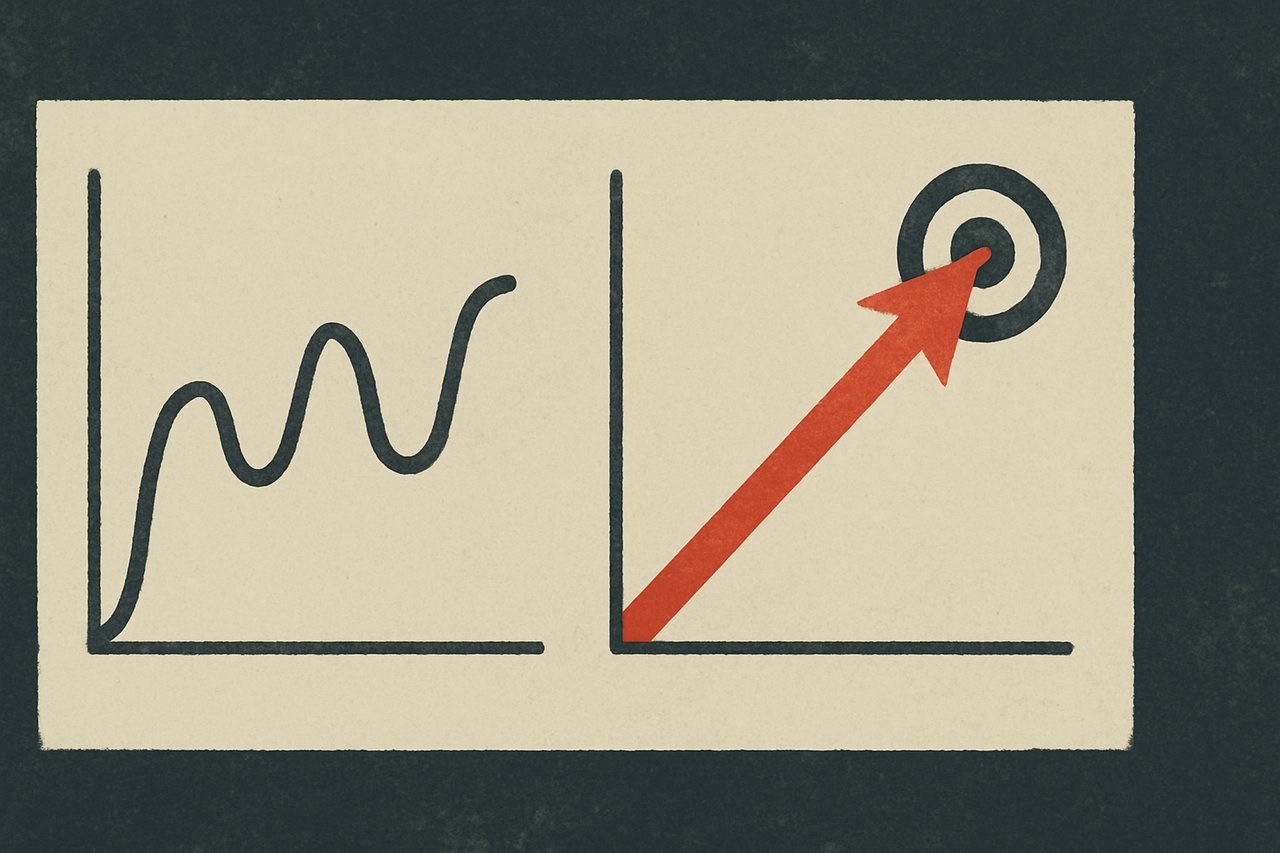
While Adam blindly trudges through the loss function landscape, Muon leverages matrix analysis to bypass geometric obstacles. The secret lies in the spectral normalization of the gradient momentum matrix. As researchers Shuche Wang and Fengzhou Zhang point out, Muon’s key advantage is minimizing the so-called "curvature penalty." Using second-order Taylor approximations, the authors demonstrated that Muon selects flatter training trajectories. Where Adam hits "sharp" regions of the loss function and is forced to slow down, Muon maintains an aggressive pace of error reduction.
Key Features of the Muon Architecture
Spectral normalization of gradients to stabilize weights. Utilization of second-order Taylor approximations instead of first-order. Minimization of the Normalized Directional Sharpness (NDS) metric. Consistently high convergence speed during late-stage pre-training.
"The implementation of Muon transforms training from a chaotic wander into high-precision navigation across the loss function landscape."
This algorithm is particularly valuable for handling unbalanced, Zipf-distributed data—a chronic headache when preparing datasets for heavy models. By reducing Normalized Directional Sharpness (NDS), Muon turns training into a surgical operation. During the mid-to-late stages of pre-training, where every tenth of a perplexity point is a hard-won battle, Muon’s superior control over intra-layer curvature becomes a decisive advantage.
For CTOs and AI leads, switching to Muon isn't just cosmetic tuning; it's a rigorous P&L optimization. In an era where GPU scarcity and costs are the primary bottlenecks to scaling, ignoring second-order inefficiencies is essentially paying a voluntary "curvature tax." Given its mathematical foundation and the benchmark-proven 2x hardware throughput upside, adopting Muon will soon become the baseline requirement for any company serious about building its own frontier models.