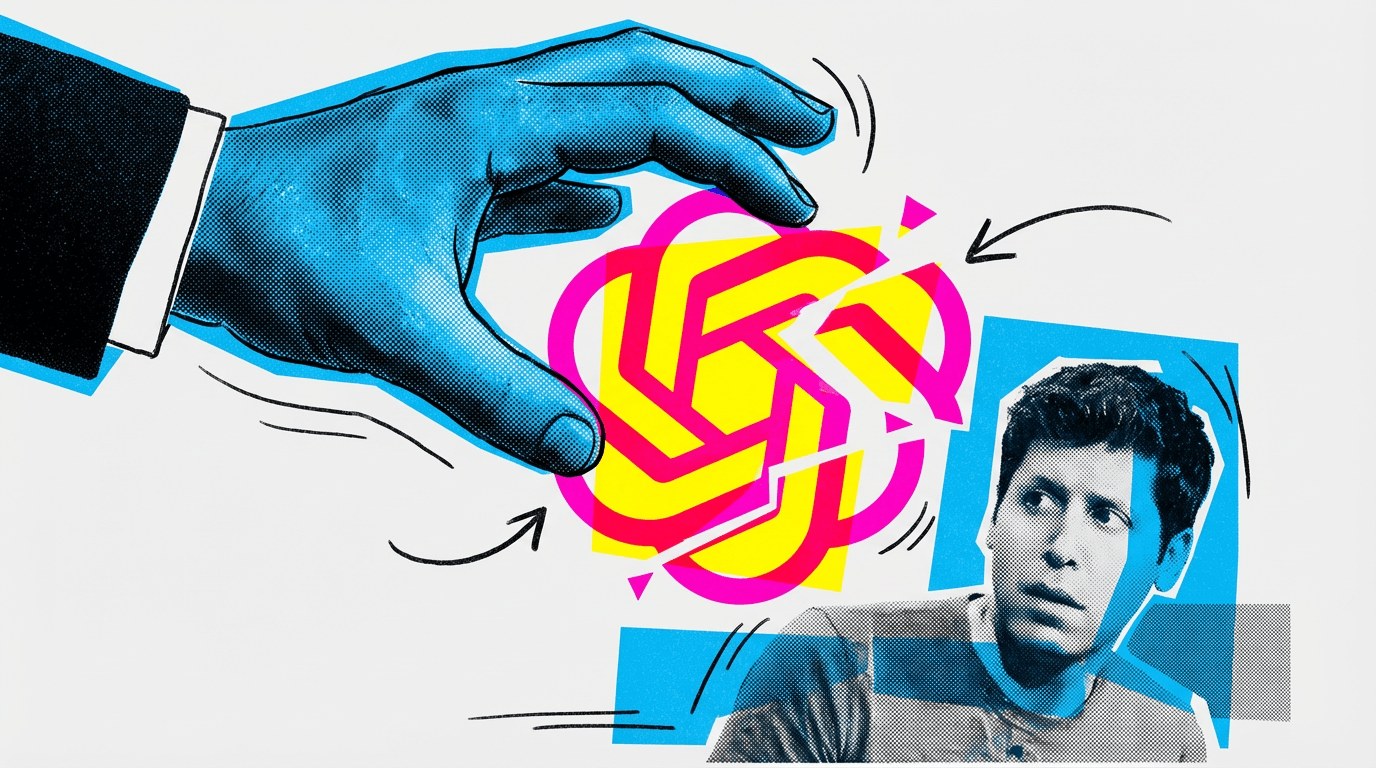
Elon Musk appears to be escalating his conflict with OpenAI from personal grievances to a full-scale operation to regain control of the company. His recent lawsuit, initially dismissed by many as the product of wounded pride, has suddenly acquired significant financial and ideological dimensions. Musk is now insisting that any potential multi-billion dollar payouts related to OpenAI's valuation, which exceeds $852 billion and hints at an imminent IPO, should be directed to a hypothetical non-profit foundation. Notably, Sam Altman is conspicuously absent from the proposed foundation's membership.
Musk's attorney, Marc Toberoff, states that his client "is not seeking a single dollar for himself," suggesting the motive is not revenge but an effort to return OpenAI to its original principles, as articulated by its co-founders and early investors. Musk's financial gambit directly targets the core accusations against OpenAI: that the company has betrayed its non-profit mission for considerable personal enrichment. He demands that leadership, including Altman and Greg Brockman, declare their stakes and profits within this proposed foundation.
Given OpenAI's ambitions and its market capitalization, such a maneuver could lead to more than just a reshuffling of founding documents; it could fundamentally alter the ownership structure and, consequently, its relationship with Microsoft. The central challenge is clear: how to reconcile a declared non-profit status with the generation of billions in profit, which Musk contends are being diverted elsewhere rather than serving the stated mission.
However, as is often the case, where there's smoke, there might be fire, but the fire itself could be artificial. Certain documents from 2017 suggest that Musk was not only aware of the creation of OpenAI's for-profit arm but actively participated in its development. This stance somewhat contradicts his current rhetoric. OpenAI itself has characterized the lawsuit as a "harassment campaign driven by ego, envy, and a desire to slow down a competitor," filing complaints with the California and Delaware Attorneys General. The open question remains: will this legal battle lead OpenAI back to its foundational roots, or is it merely another tactical move by Musk seeking to reassert control over a project he believes has spiraled out of control?