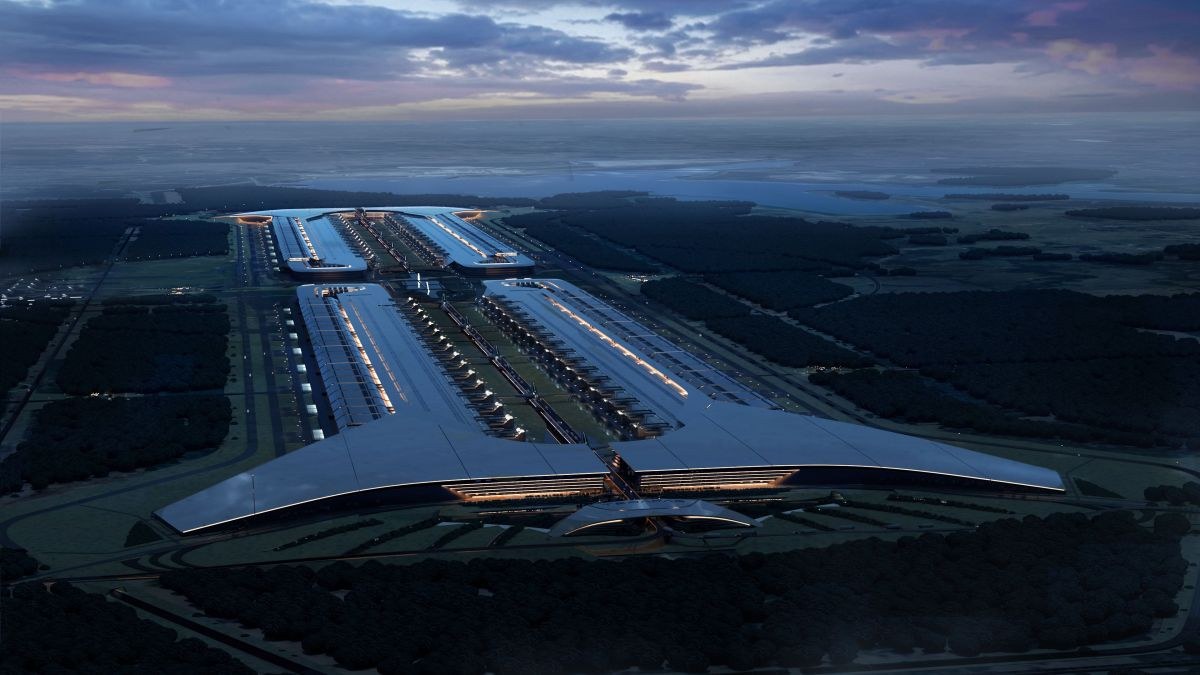
Tesla and SpaceX are officially done playing by the rules of the fabless semiconductor game. The industry-standard model of designing chips and praying for capacity at TSMC or Samsung is being scrapped for something far more aggressive. According to TechCrunch, Elon Musk’s companies are pouring an initial $16.8 billion into 'Terafab'—a sprawling manufacturing complex in Grimes County, Texas. This isn't just another factory; it’s a strategic hedge against compute scarcity. By pulling manufacturing, packaging, and testing under one roof, Musk is insulating his empire from the whims of global foundries and geopolitical instability. The logic is as blunt as it is expensive: the compute requirements for a fleet of autonomous robots and orbital data centers have simply outgrown what the open market can reliably deliver.
The Architecture of Vertical Integration
SpaceX is already framing the facility as the most valuable building on Earth, with a footprint exceeding 100 million square feet. This isn't about vanity metrics; it’s about hardware-software recursion. When you own the fab, the feedback loop between chip architecture and the final product—be it an Optimus robot or a Starlink satellite—shrinks from months to weeks. Per SpaceX’s official documentation, the site will produce logic and memory devices specifically optimized for edge inference.
“The facility will be an advanced semiconductor fab that will bridge the divide between current global chip supply and the compute demand of the future,” a post on SpaceX’s website reads.
This infrastructure provides the skeletal support for the Cybercab and SpaceX’s space-based compute nodes. By controlling the stack from the transistor up, Musk is effectively bypassing the bottlenecks of the traditional semiconductor industry. It’s a closed-loop system where AI development isn't throttled by a third-party’s production schedule.
Economic and Logistical Footprints
Terafab’s arrival in the Texas semiconductor corridor is a massive disruption for the regional labor market. SpaceX estimates the project will require at least 3,000 employees from Grimes and Brazos counties. While the initial $16.8 billion sounds steep, it’s merely the down payment. SpaceX filings suggest a multi-phase roadmap with total expenditures potentially hitting $119 billion. This level of capital commitment signals a permanent divorce from external silicon partners. Interestingly, even Intel is trying to find a seat at the table, though TechCrunch notes the legacy giant remains tight-lipped about its specific role in the project.
“Terafab will be epic in both its mission and in its sheer size, designed to build new compute at an unprecedented scale and speed,” according to SpaceX.
To mitigate local friction, the facility is opting for water from the Gibbons Creek Reservoir to avoid depleting local groundwater—a necessary move given the immense resource requirements of chip fabrication. Despite local skepticism regarding tax incentives and transparency, the project is being positioned as a generational shift for Texas industrial capacity.
The era of the 'lean' AI giant is hitting a wall. For those at the top of the food chain, software superiority is no longer enough if you can't guarantee the silicon it runs on. Musk is betting that to win the race for robotaxis and planetary networks, you have to own the machines that build the chips. It’s a brutal, capital-intensive pivot that transforms a code-heavy competition into a war of physical manufacturing dominance.